
Heavy-Duty Braking Systems for Armored Vehicles: Why Bigger Brakes Are Not Enough
Armoring changes far more than the weight shown on a scale. Ballistic glass, ballistic steel, reinforced doors, run-flat systems and other protective components increase the energy that the brakes must manage during every deceleration. This is why heavy-duty braking systems for armored vehicles should be selected around the completed vehicle—not simply ordered as larger versions of the original brakes.
An armored SUV may perform adequately in one controlled stop yet develop longer pedal travel, increased pad wear or reduced braking consistency after repeated stops. The real engineering challenge is maintaining predictable braking performance across different operating conditions, vehicle loads and temperatures.
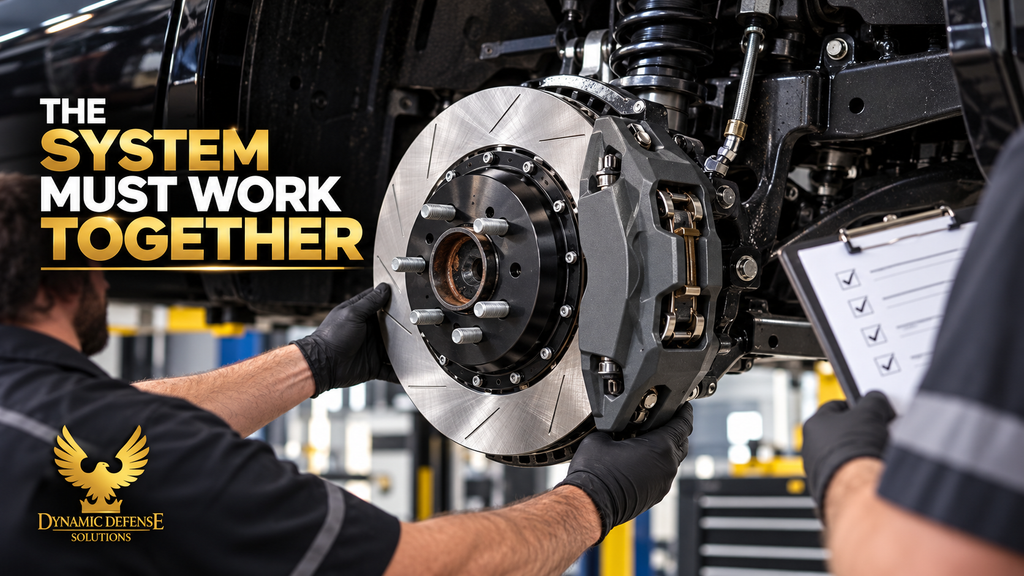
A suitable braking upgrade therefore needs to consider the complete system: vehicle mass, axle loading, rotor thermal capacity, caliper and master-cylinder compatibility, pad characteristics, brake fluid, wheel clearance, tyres, run-flat inserts and electronic control systems.
Why Added Armor Changes Braking Demand
The kinetic energy that must be managed during braking can be represented by:
Kinetic energy = ½ × vehicle mass × velocity²
At the same speed, increasing vehicle mass increases the energy that must be converted during a stop. Speed has an even greater effect because it is squared in the equation.
This energy is largely converted into heat at the brake friction surfaces. After armoring, the original brake system may therefore be required to absorb and dissipate substantially more heat than it handled in the standard vehicle.
The effect is not limited to emergency braking. Urban security vehicles may repeatedly accelerate and stop in traffic. Convoy vehicles can face frequent speed changes, while vehicles operating in mountainous areas may experience long downhill braking periods.
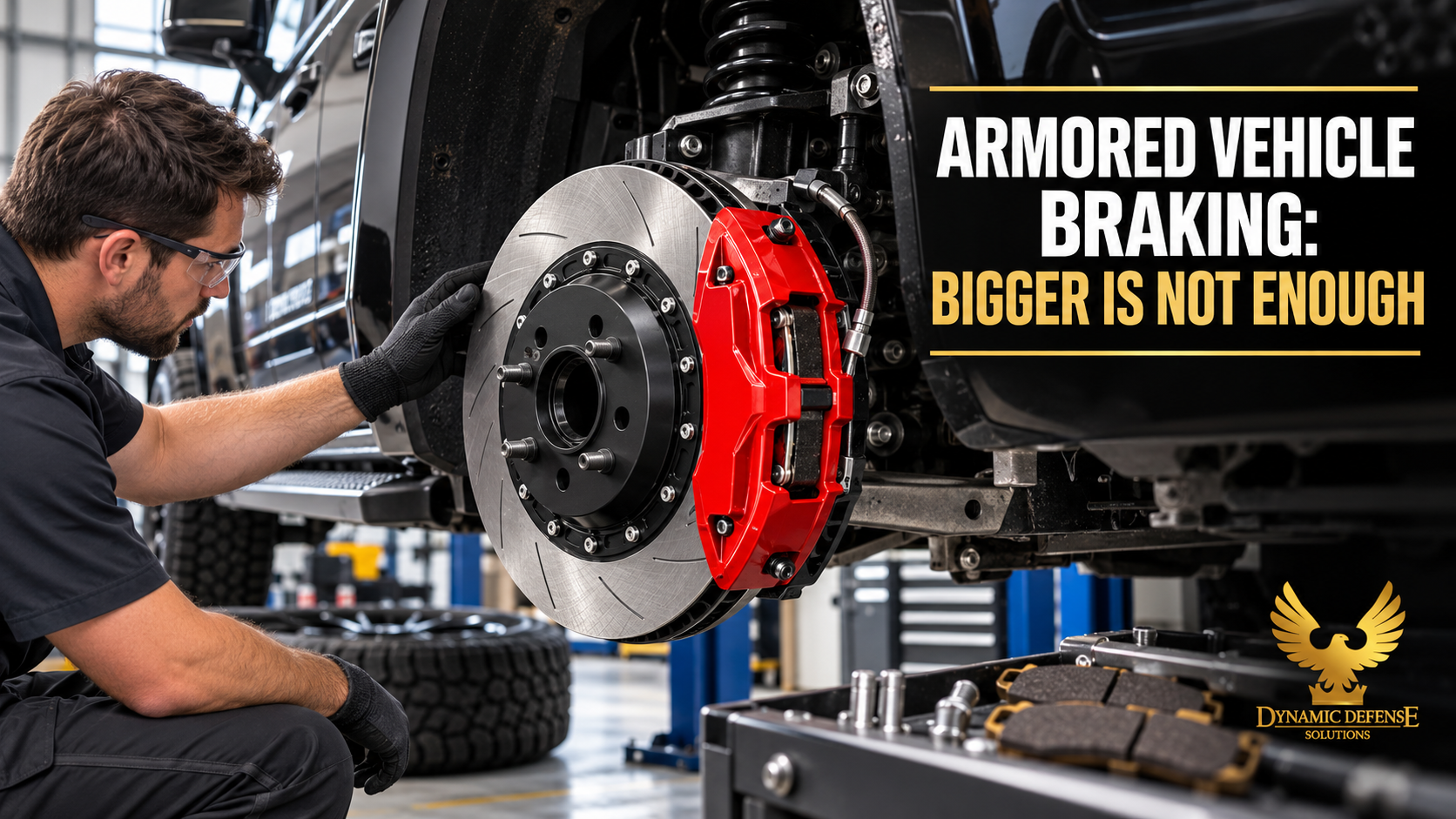
For these applications, heavy-duty braking systems for armored vehicles must be evaluated for repeated-stop consistency rather than appearance or a single headline rotor size.
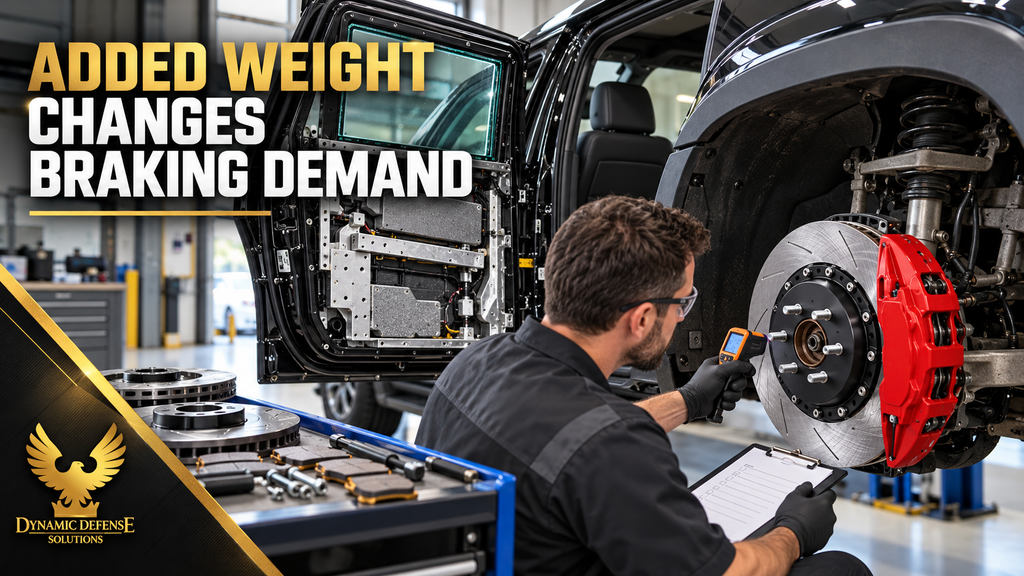
Heavy-Duty Braking Systems for Armored Vehicles Must Manage Heat
Brake torque is important, but thermal capacity is often what separates a visually impressive upgrade from a properly engineered solution.
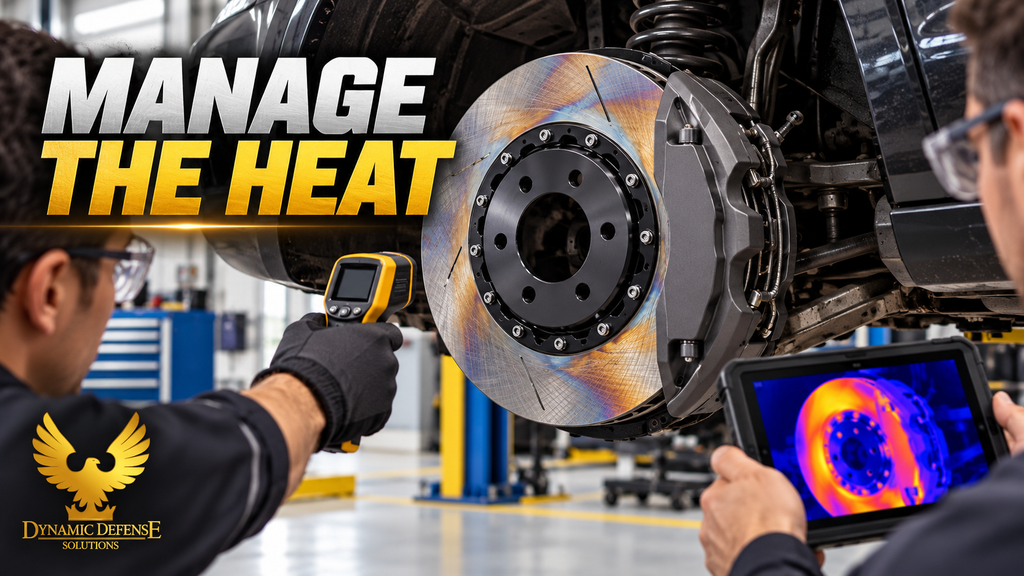
Larger or thicker ventilated rotors may provide more mass to absorb heat and more surface area to release it. Appropriate ventilation can also help control temperatures during repeated braking. Brembo similarly explains that increased disc thermal capacity and stability can contribute to more consistent performance over time.
However, rotor diameter alone does not define braking performance. The design of the ventilation channels, rotor thickness, material, pad contact area and airflow around the wheel all influence temperature management.
If the rotor repeatedly exceeds its intended temperature range, several problems may appear:
- Reduced friction performance or brake fade
- Accelerated pad wear
- Thermal cracking or rotor distortion
- Brake-fluid overheating
- Changes in pedal feel
- Increased vibration or judder
A properly specified system should maintain predictable response across the vehicle’s expected operating cycle—not only during a short road demonstration.
Why Bigger Rotors and More Pistons Are Not Enough
A large multi-piston caliper may look suitable for an armored SUV, but piston count alone does not confirm that the system is correctly matched.
Caliper piston area affects hydraulic force and pedal behaviour. Changing it without considering the master cylinder can produce excessive pedal travel or an unnecessarily hard pedal. Caliper stiffness, seal design, mounting brackets and pressure distribution across the pad also matter.
The brake pads must suit the rotor material, vehicle weight, temperature range and expected driving cycle. A very aggressive compound may operate poorly when cold, create excessive rotor wear or be unsuitable for normal road use. A comfort-oriented pad may provide good low-temperature behaviour but struggle under repeated high-energy stops.
Brake fluid and hoses are also part of the system. Fluid that absorbs moisture over time can experience a lower boiling point, increasing the possibility of vapour formation and a soft pedal under high thermal load. Brembo notes that moisture absorption may lower brake-fluid boiling performance and contribute to vapour lock.
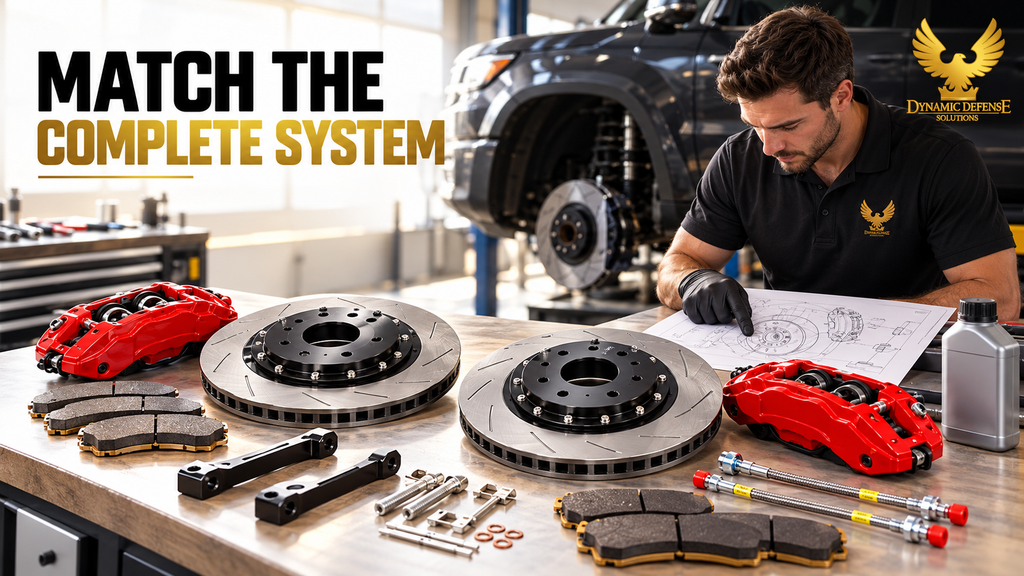
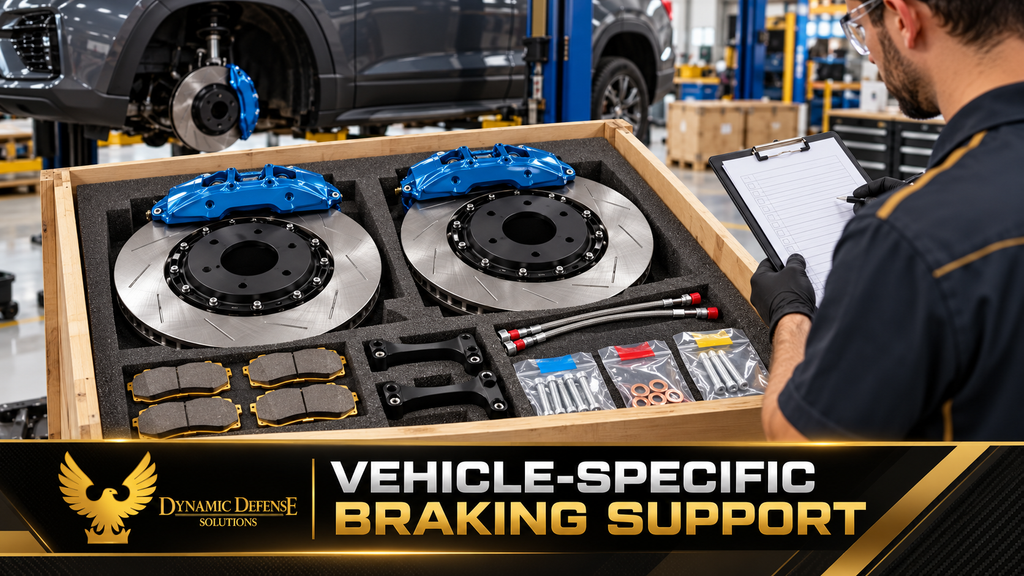
For this reason, heavy-duty braking systems for armored vehicles should be supplied as matched assemblies wherever possible, including compatible rotors, calipers, pads, brackets, hoses and installation hardware.
Axle Loads and Brake Balance Must Be Considered Together
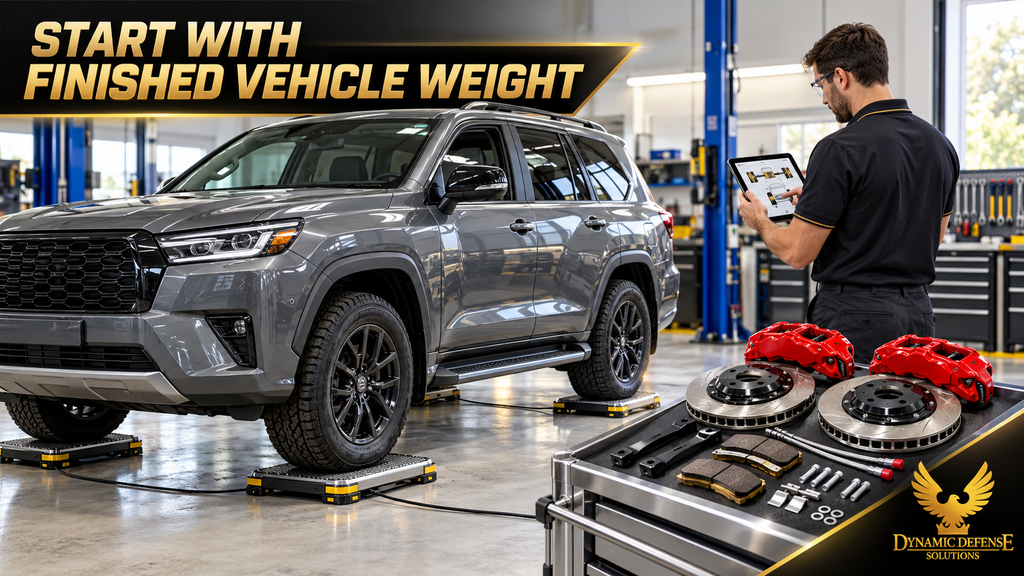
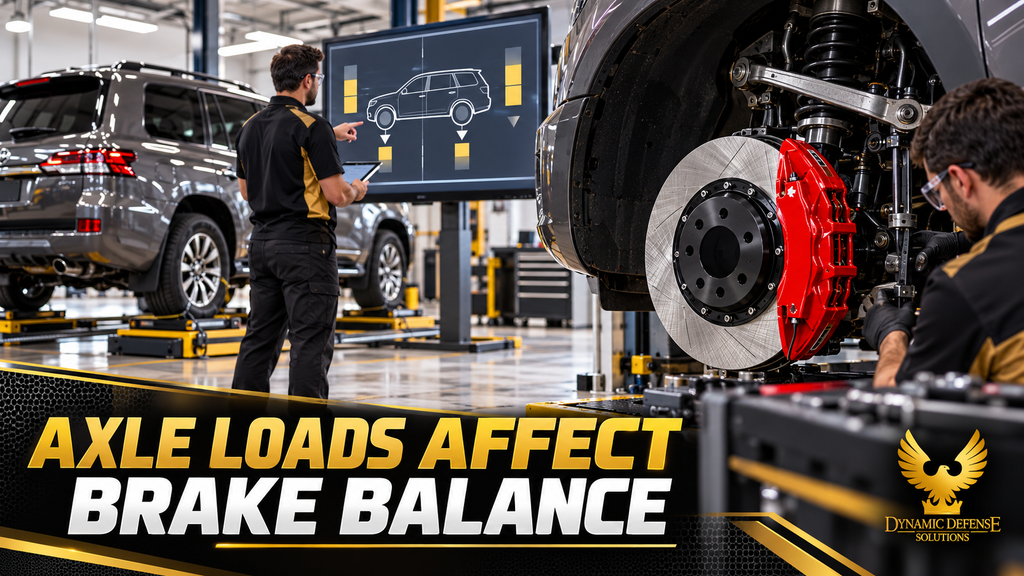
Total vehicle weight is only one part of brake selection. The front and rear axle loads provide more useful information about how the finished vehicle carries its added protection.
Ballistic windshields, front-door glass and engine-compartment protection can increase the front axle load. Rear-cabin steel, cargo-area armor, fuel-system protection or carried equipment may shift more load toward the rear.
During braking, additional dynamic load transfers to the front axle. The braking system must manage this transfer without creating premature front-wheel lock, weak rear-brake contribution or instability.
Brake balance should not be changed casually. The original vehicle’s ABS and electronic stability control systems are calibrated around specific wheel-speed behaviour, hydraulic response, tyre characteristics and vehicle dynamics.
Selecting heavy-duty braking systems for armored vehicles therefore requires the completed front and rear axle weights—not merely an estimate of how many kilograms of armor were installed.
This is also why braking and suspension selection should be coordinated. A vehicle with insufficient front suspension control may experience excessive pitch under braking, changing tyre loading and driver confidence. Our related article on heavy-duty suspension for armored vehicles explains this relationship in more detail.
Wheel and Run-Flat Compatibility Cannot Be Ignored
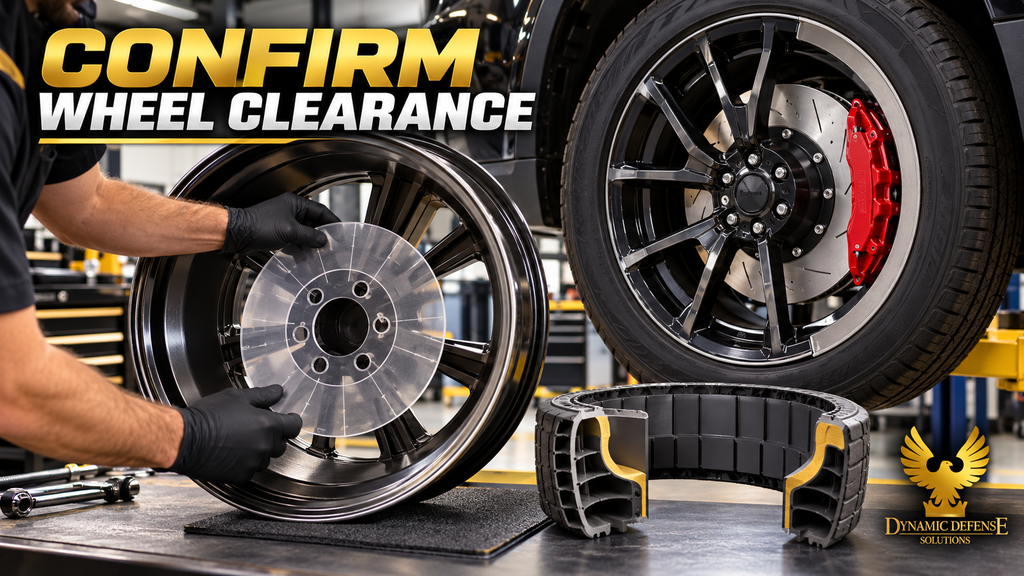
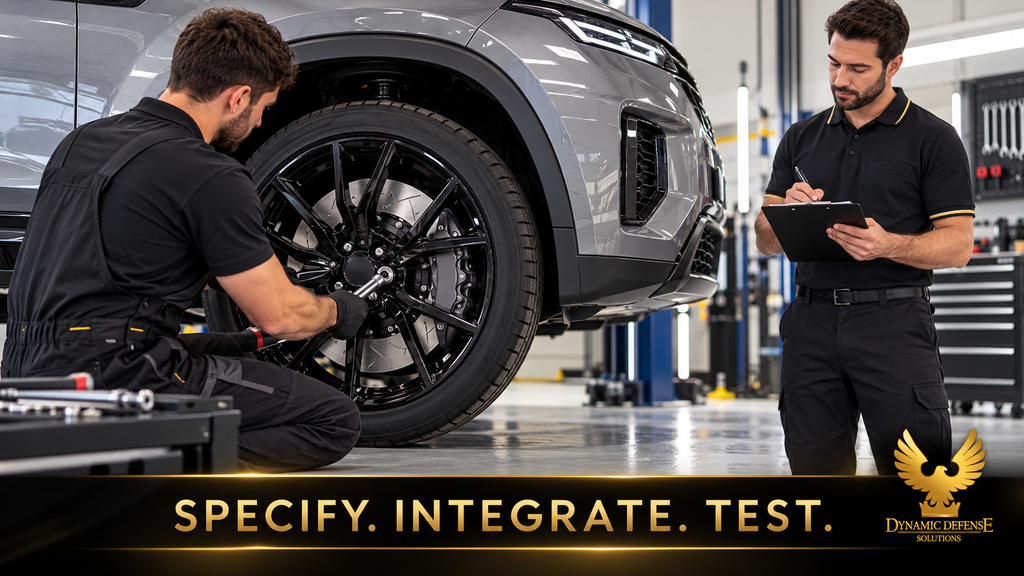
A brake kit must physically fit inside the selected wheel. Rotor diameter, caliper width, spoke profile, wheel offset and radial clearance should all be confirmed before production or shipment.
The situation becomes more complex when the wheel contains a run-flat insert. Internal wheel geometry may restrict available space, while changing the wheel or offset can affect brake clearance and suspension geometry.
Tyres also influence the braking result. Even a high-capacity brake system cannot generate more road force than the tyre and surface can transmit. Tyre construction, load rating, pressure, tread condition and road grip remain important.
When heavy-duty braking systems for armored vehicles are being selected alongside run-flat systems, the wheel, tyre, brake and insert should be treated as one assembly. Read our guide to run-flat systems for armored vehicles for further specification points.
A physical brake-clearance template or verified wheel drawing is preferable to relying only on the nominal wheel diameter.
Completed-Vehicle Testing Is Essential
Component specifications do not automatically confirm the performance of the completed protected vehicle.
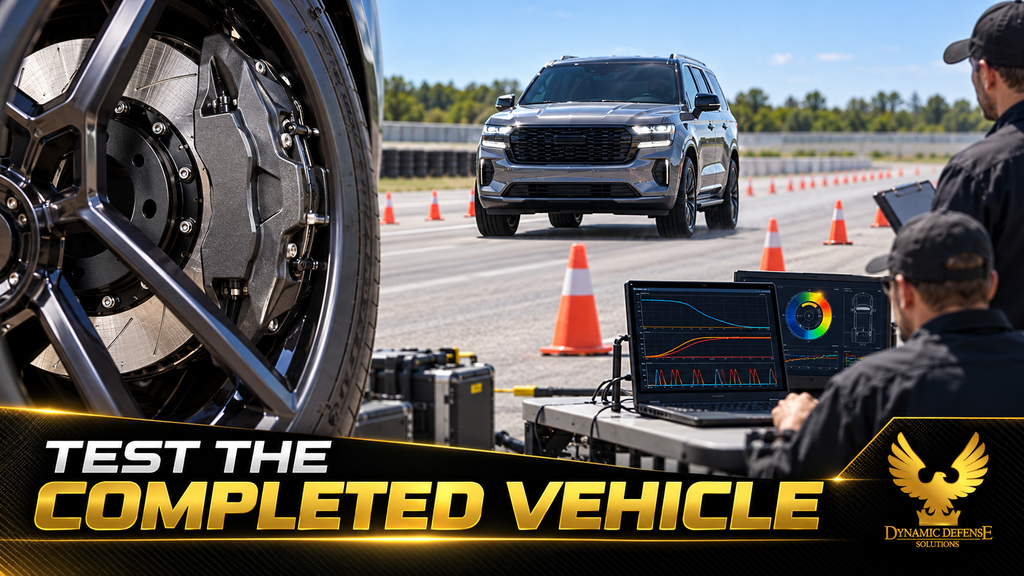
A rotor or caliper may have its own quality documentation, but the installed vehicle still needs relevant inspection and testing. Installation quality, brake bleeding, wheel alignment, tyre condition, axle loading and electronic-system operation can all affect the result.
Testing should be planned according to the intended vehicle category, market and applicable regulatory requirements. For example, UN Regulation No. 13-H covers approval provisions for passenger-car braking, while other vehicle categories and markets may follow different requirements. The applicable standard should be determined for the specific project rather than assumed.
A practical validation programme may include:
- Cold braking response
- Stops from different speeds
- Repeated-stop or fade assessment
- Brake recovery after heating
- Pedal travel and pedal-force evaluation
- ABS and stability-control operation
- Straight-line stability
- Loaded and unloaded vehicle conditions
- Parking-brake performance where relevant
- Inspection for fluid leaks, interference and abnormal wear
The purpose of heavy-duty braking systems for armored vehicles is not simply to create a stronger first stop. It is to provide repeatable, controllable braking for the finished vehicle’s actual weight and operating environment.
Information Required Before Selecting a Braking Solution
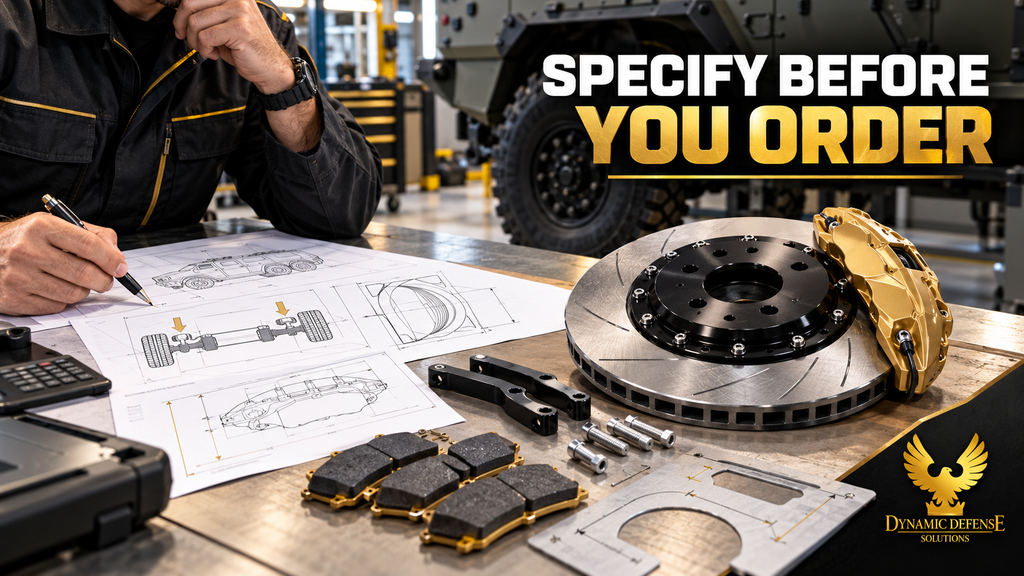
Manufacturers, converters and protected-vehicle workshops can reduce fitment problems by providing complete project information before a brake solution is selected.
Useful information includes:
- Exact vehicle make, model, year and variant
- VIN or chassis details where appropriate
- Engine, drivetrain and axle configuration
- Original brake dimensions and caliper type
- Finished vehicle weight
- Front and rear axle loads
- Intended payload and passenger load
- Wheel diameter, width, offset and internal profile
- Tyre size and load rating
- Run-flat type, if fitted
- Intended operating environment
- Expected duty cycle
- Required regulatory or customer testing
- Clear photographs and physical measurements
Selecting heavy-duty braking systems for armored vehicles from incomplete information can create problems even when the individual components are well manufactured. Common issues include caliper-to-wheel interference, incorrect brackets, unsuitable hydraulic balance and inadequate thermal capacity.
Final component selection should remain vehicle-specific and should be verified by competent engineers or qualified conversion specialists.
DDS Support for Protected-Vehicle Braking Projects
Dynamic Defense Solutions supplies specialized armored-vehicle components for international projects and supports manufacturers, converters, integrators and workshops rather than positioning itself primarily as a vehicle-armoring bodyshop.
DDS can support relevant projects with braking solutions selected around the vehicle platform and available technical information. Where required, this can be coordinated with other related components such as heavy-duty suspension, run-flat systems, ballistic glass, ballistic steel and vehicle-specific hardware.
When heavy-duty braking systems for armored vehicles are requested, DDS works to establish the vehicle configuration, finished weight, axle loads, wheel arrangement and intended application before confirming a suitable solution.
Supplying a larger caliper without checking the rest of the vehicle may solve one issue while creating another. The objective should be a compatible component package that can be correctly installed and validated by the vehicle builder.
Conclusion: Specifying Heavy-Duty Braking Systems for Armored Vehicles
Added protection changes vehicle mass, heat generation, axle loading and dynamic behaviour. A suitable brake upgrade must therefore go beyond larger rotors or a higher piston count. Rotor capacity, caliper hydraulics, pad compound, brake fluid, wheel clearance, tyres, run-flat compatibility and electronic systems all need to work together.
Properly selected heavy-duty braking systems for armored vehicles begin with accurate project data and finish with completed-vehicle testing. Material or component quality remains important, but it cannot replace correct integration and validation.
Manufacturers, armoring companies, security-vehicle businesses, workshops and protected-mobility integrators can contact Dynamic Defense Solutions to discuss vehicle-specific braking requirements and related armored-vehicle components.
Send Us Your Inquiries Today
SIMILAR PRODUCTS
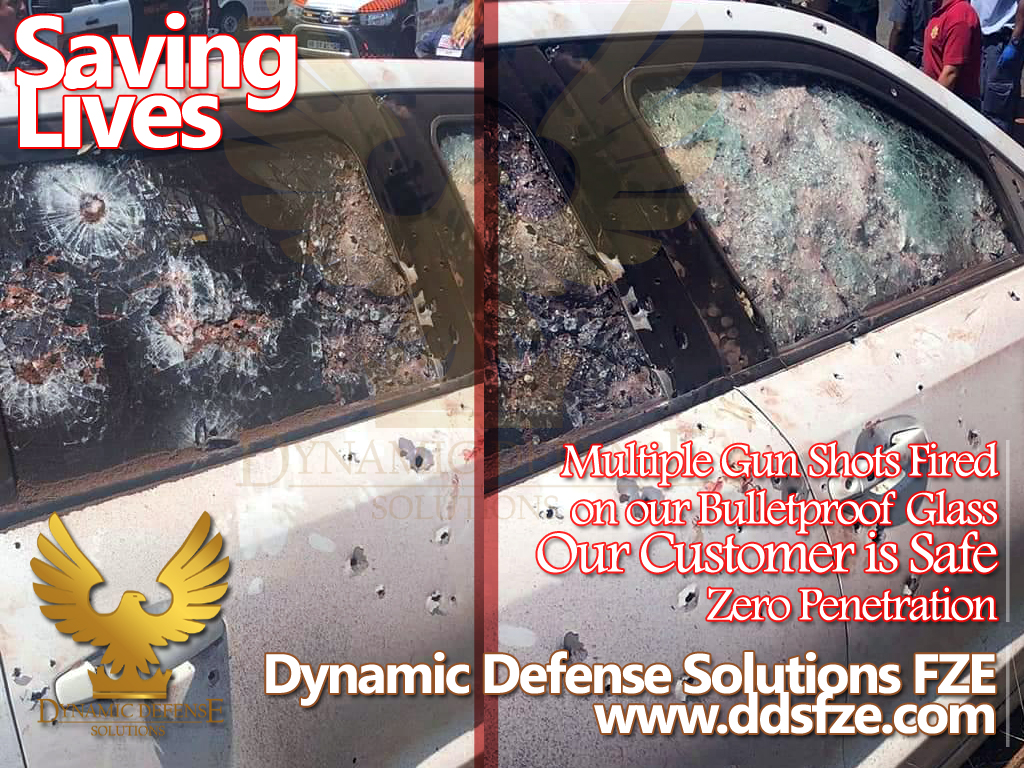
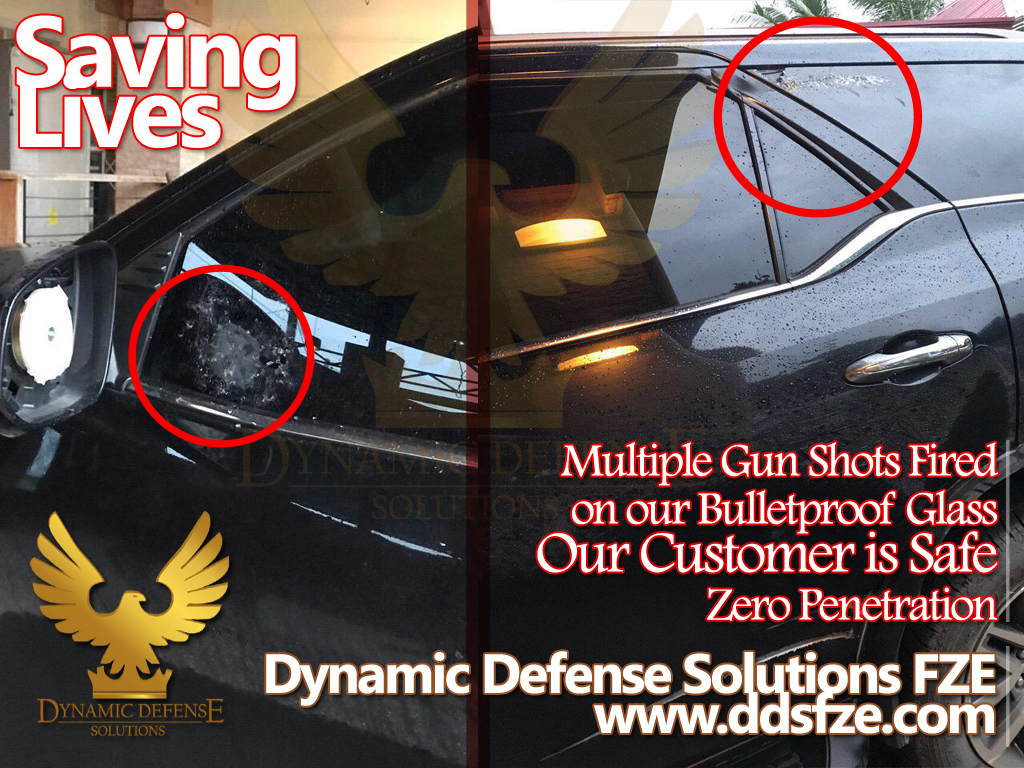
SUCCESSFULL STORIES
LOGISTICS SERVICES
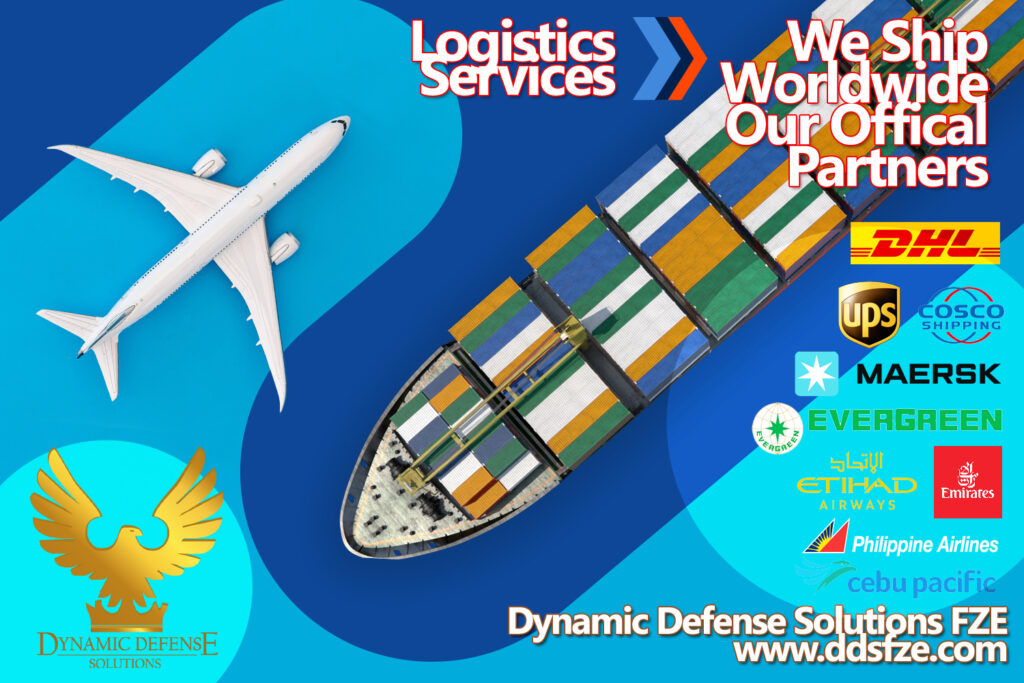
Supply Chain is core of our operational efficiency providing logistics services anywhere in the world for Armored cars and Armored cars parts. To date we have successfully shipped our products to many countries around the Globe. Our supply chain is supported by a dedicated team of highly capable and experienced logistic professionals. Offering freight by air, land or sea within efficient time frame
HAVE SUCCESSFULLY SHIPPED OUR ARMORED CARS PARTS TO MANY COUNTRIES AROUND THE GLOBE


RELATED BLOGS
Armored Vehicle Parts Ukraine: Complete Guide for TLC 76, 78, 79, Hilux & L200
Armored Vehicle Suspension Systems: Why They Matter More Than You Think
Prado 250 Armored Car Parts & Protection Kit