Lexus GX 550 Bulletproof Glass | Complete Ballistic Glass Solutions

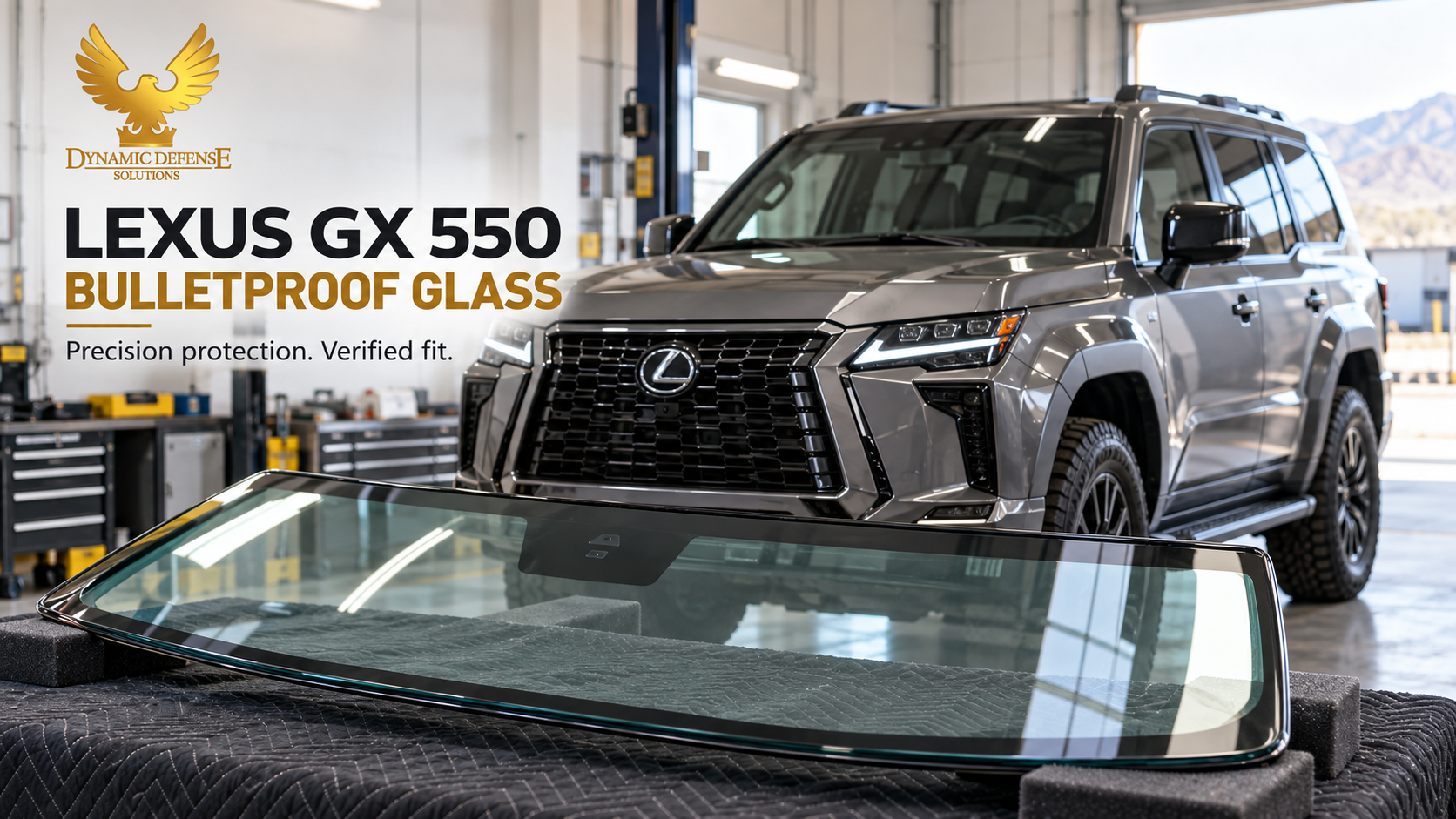
Lexus GX 550 Bulletproof Glass

Lexus GX 550 Bulletproof Glass: Precision Protection for a Modern Luxury SUV

The 2026 Lexus GX 550 combines premium comfort with serious off-road capability. Lexus equips the current GX with a 349-horsepower twin-turbo V6, full-time four-wheel drive and seating for up to seven passengers, while selected configurations can tow up to 9,096 lb. Lexus

For an armored conversion, however, the base vehicle is only one part of the equation. Transparent protection must provide ballistic resistance without sacrificing visibility, dimensional accuracy or correct vehicle integration. This is where professionally engineered Lexus GX 550 Bulletproof Glass becomes essential.
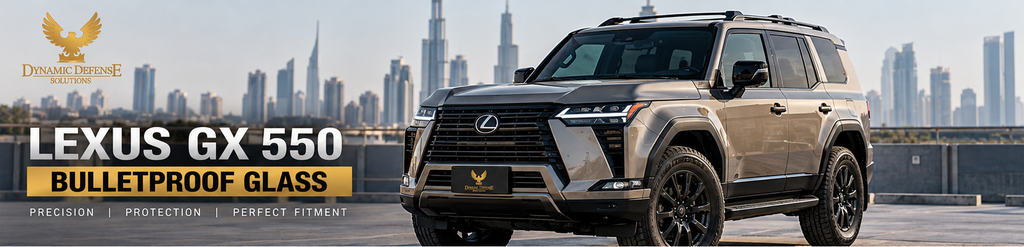
Lexus GX 550 d 1

Why Vehicle-Specific Ballistic Glass Matters

Bulletproof glass should never be treated as simply a thicker version of an OEM window.

The GX 550 uses modern glazing geometry, advanced driver-assistance technology and carefully engineered body openings. Each piece of Lexus GX 550 Bulletproof Glass therefore needs to be manufactured around the actual vehicle specification.

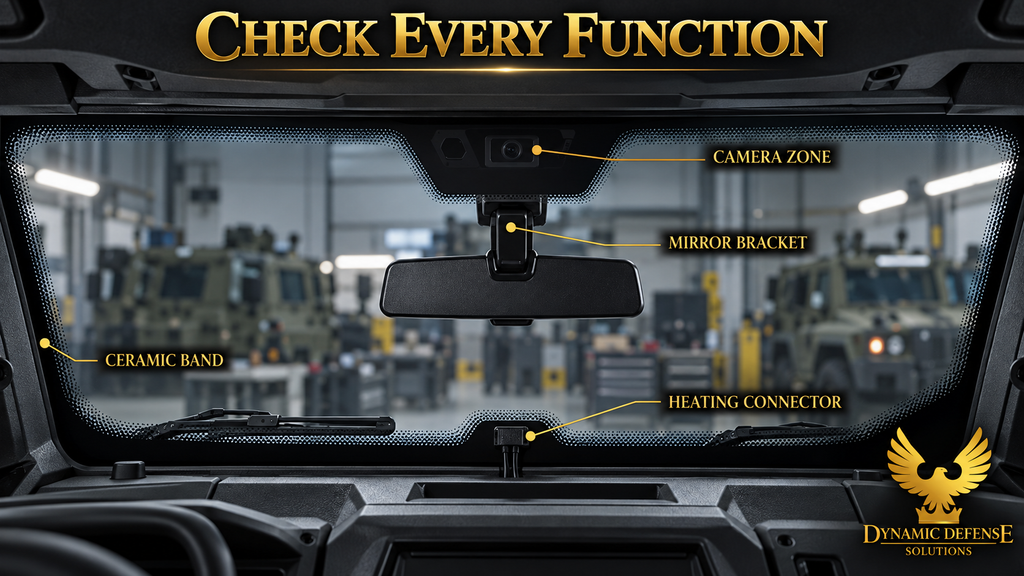
Important details include curvature, overall dimensions, ceramic borders, glass thickness, edge step, sensor locations and the way the transparent armor overlaps with the surrounding opaque armor.

Even a small deviation can create fitment problems during installation.
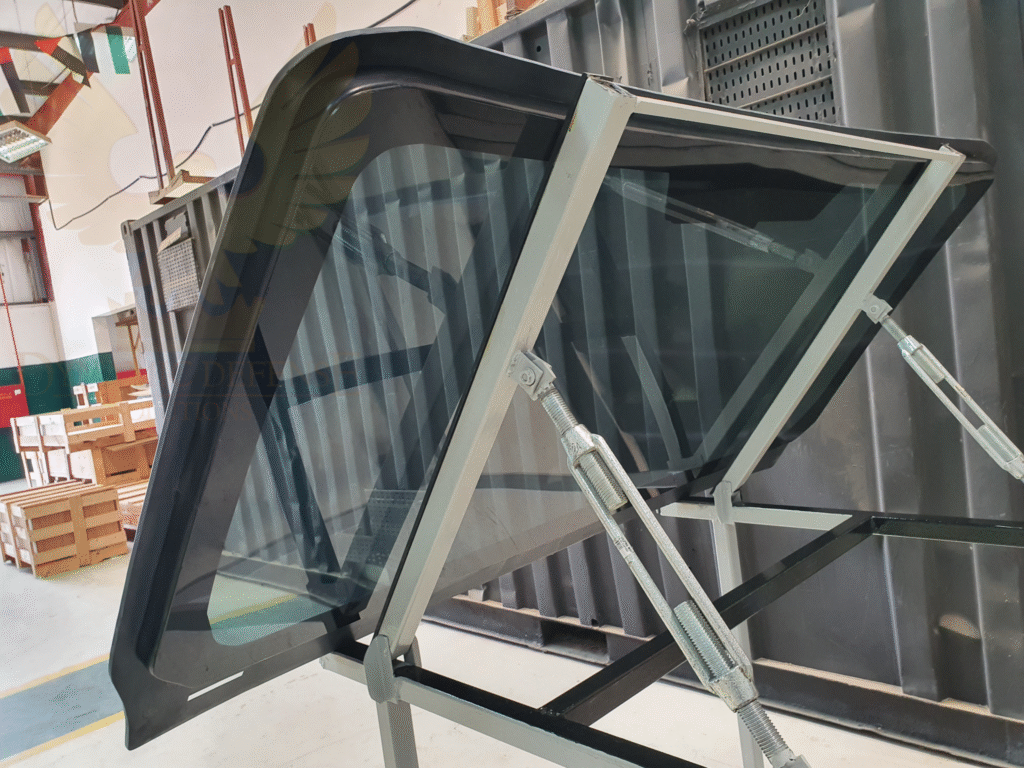
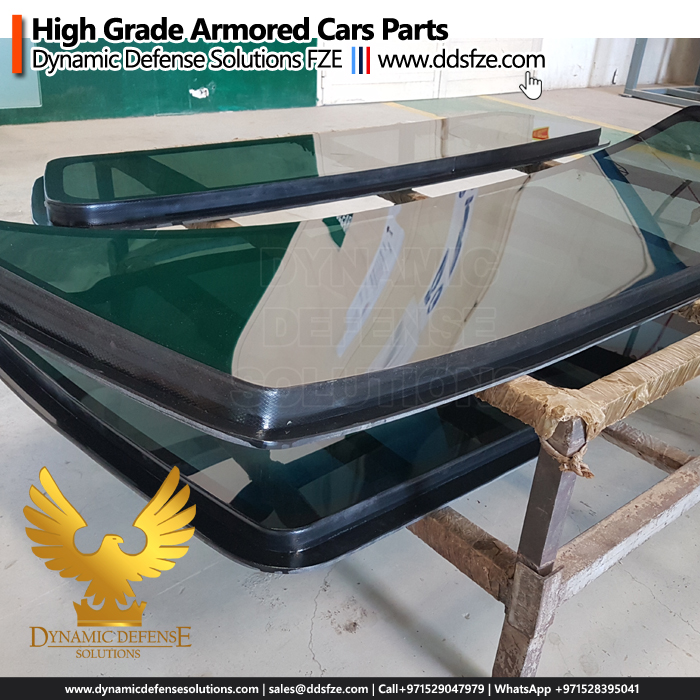
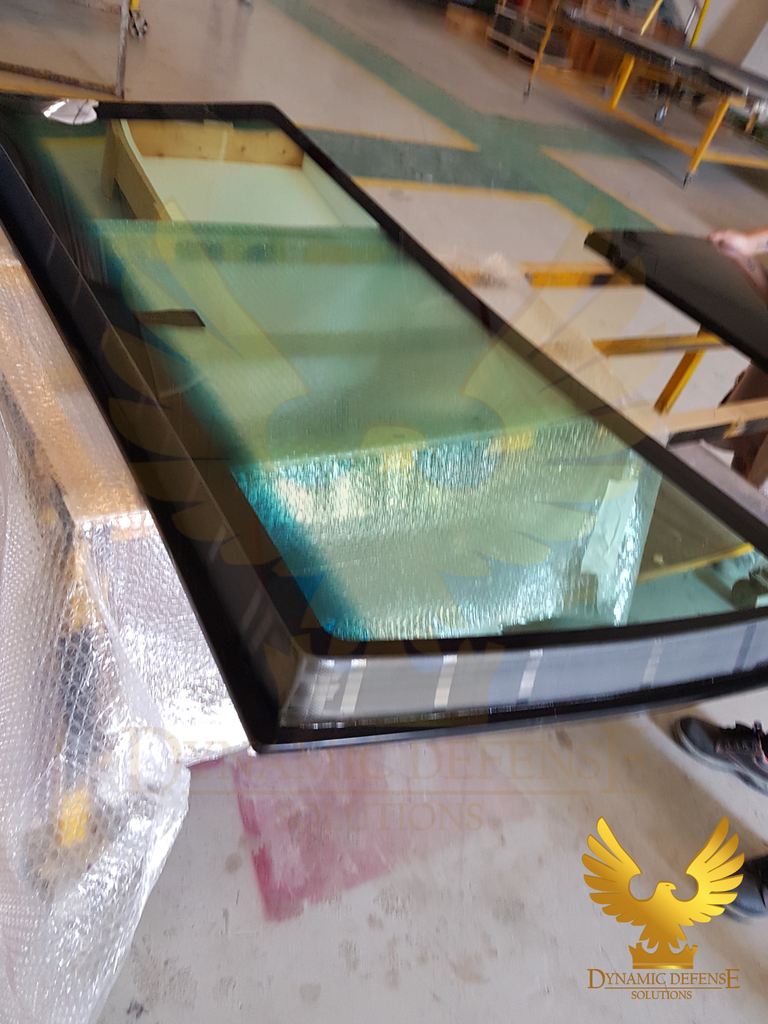
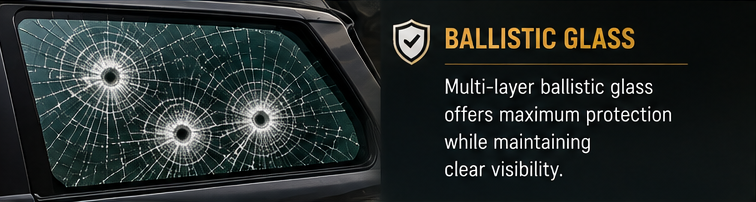
Bulletproof Glass

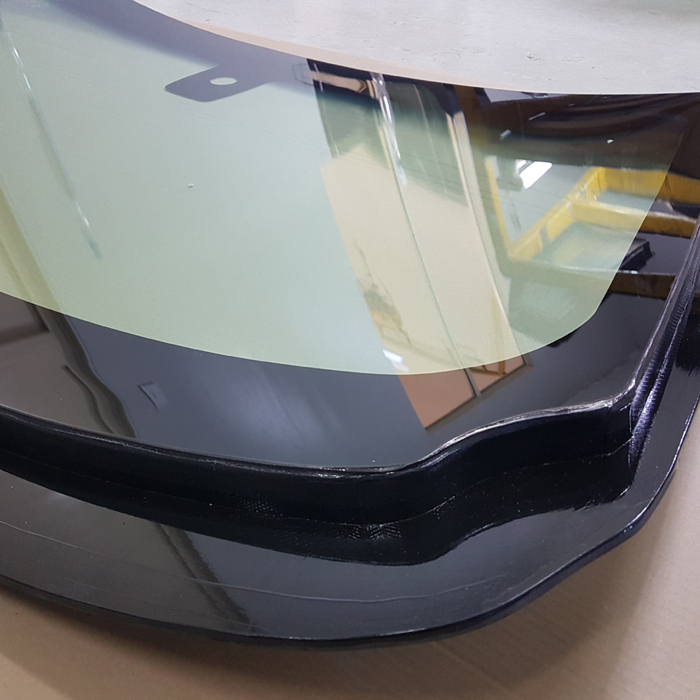
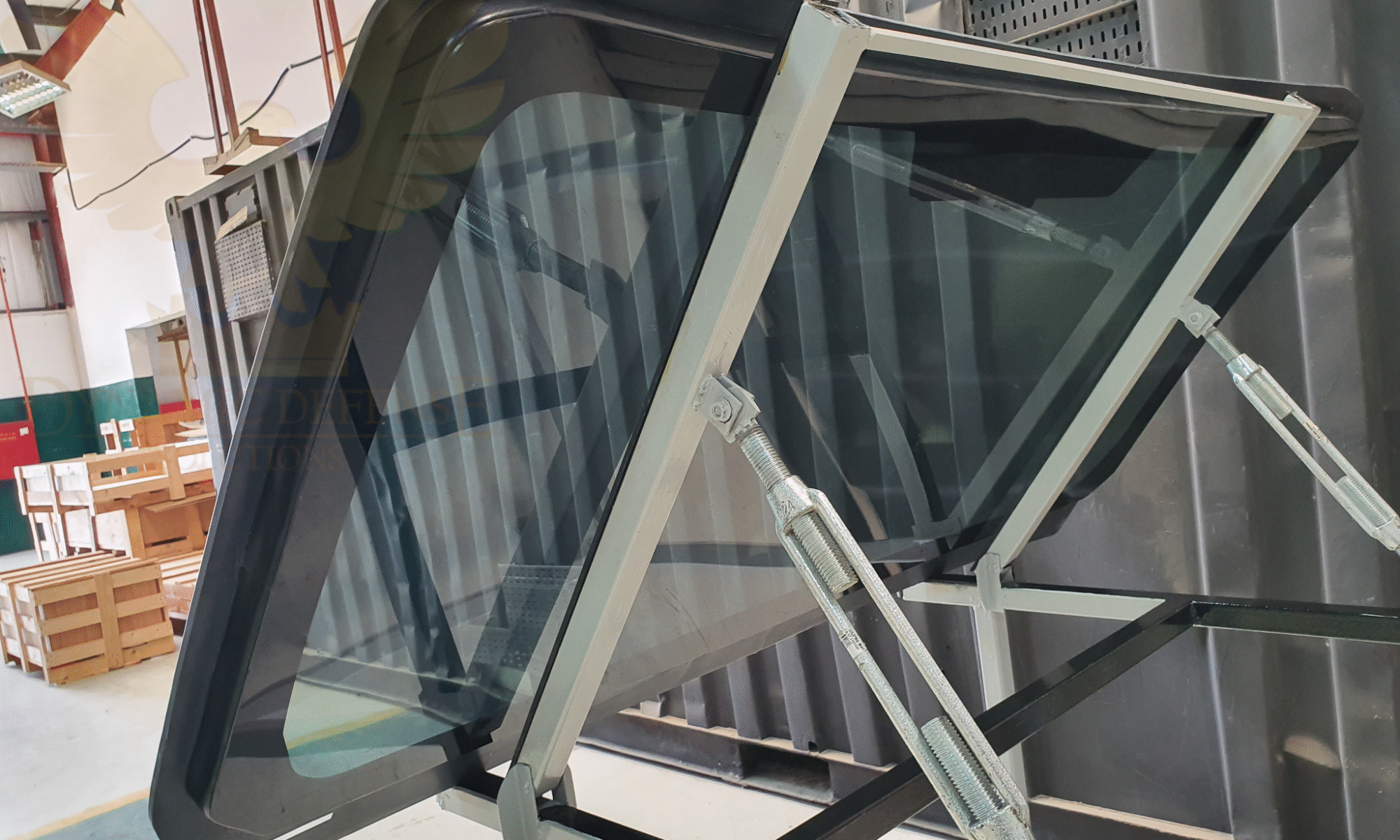
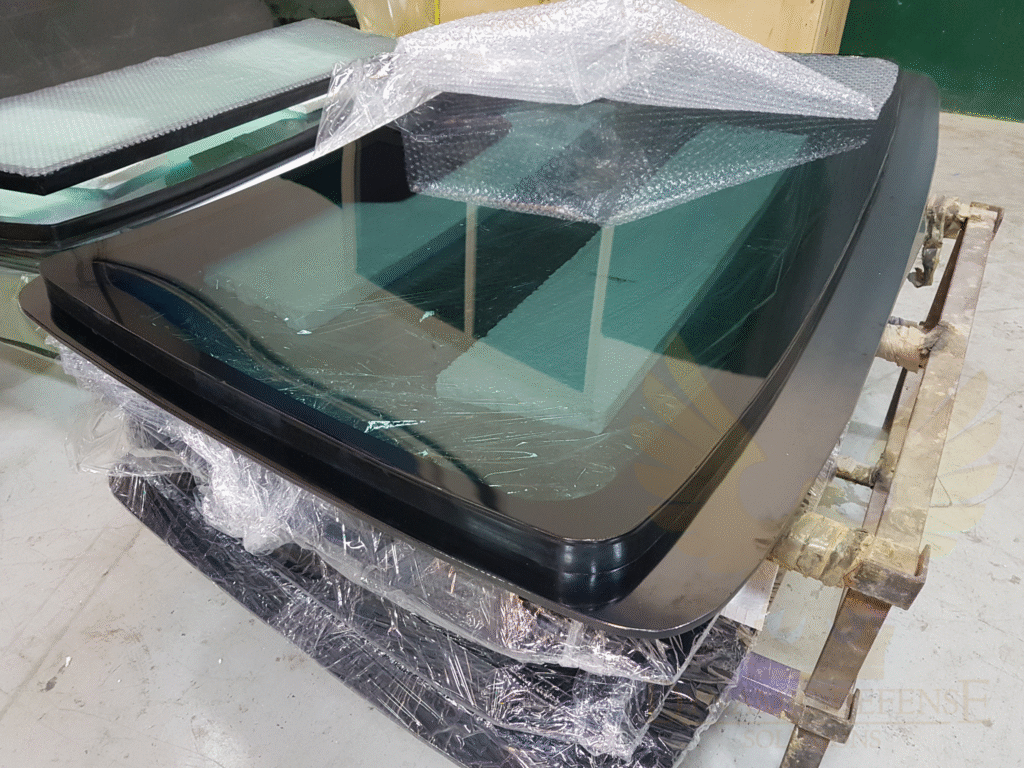
Ballistic Windshield for the Lexus GX 550

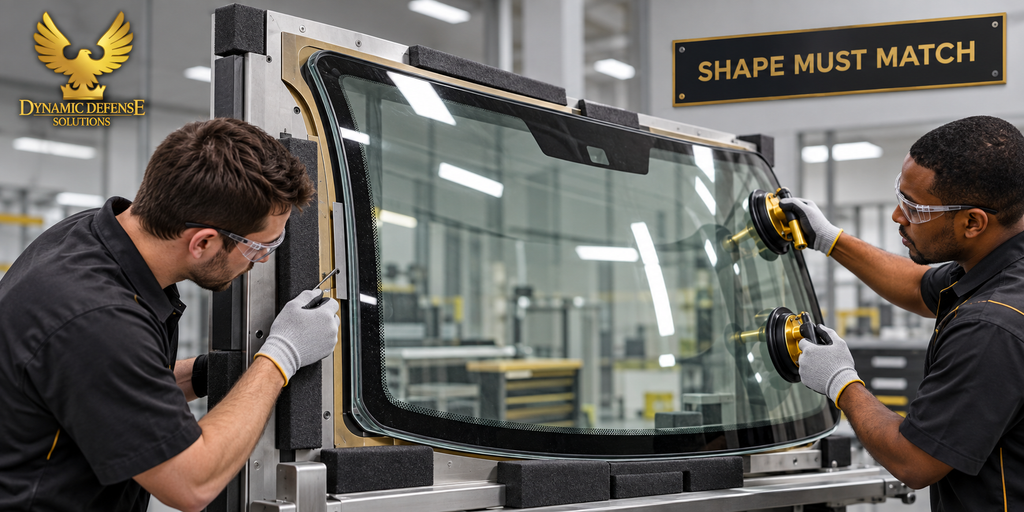
The windshield is normally the largest transparent armor component on an SUV and one of the most technically demanding pieces to produce.

A high-quality Lexus GX 550 Bulletproof Glass windshield must combine ballistic resistance with clear visibility and accurate curvature.

The GX also comes standard with Lexus Safety System+ 3.0, so the windshield area is connected with modern driver-assistance functionality. Lexus

For armoring companies, this means the upper windshield area, camera locations, mounting brackets and other vehicle-specific details need to be considered before production.

The goal is not simply to make the windshield stronger. It must also fit the vehicle correctly.
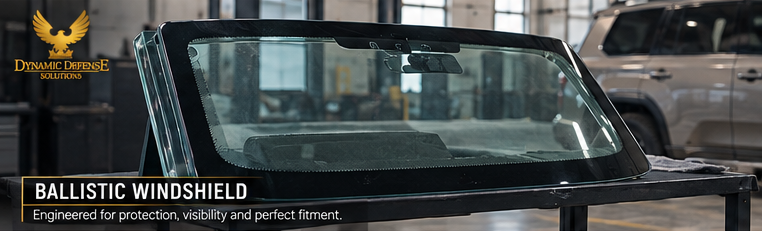
Lexus GX 550 Ballistic Glass Show1

Front and Rear Door Ballistic Glass

Door glass introduces another engineering challenge because ballistic glazing can be significantly thicker and heavier than standard automotive glass.

When producing Lexus GX 550 Bulletproof Glass for the front and rear doors, several factors need to be considered:

  • Available space inside the door
  • Required glass thickness
  • Steel overlap
  • Rubber seals
  • Interior trim clearance
  • Window lifter or fixed-glass design
  • Door-frame geometry

For many armored vehicles, the final glazing configuration is determined by both the desired ballistic protection level and the design adopted by the armoring company.

Accurate dimensions are therefore critical.
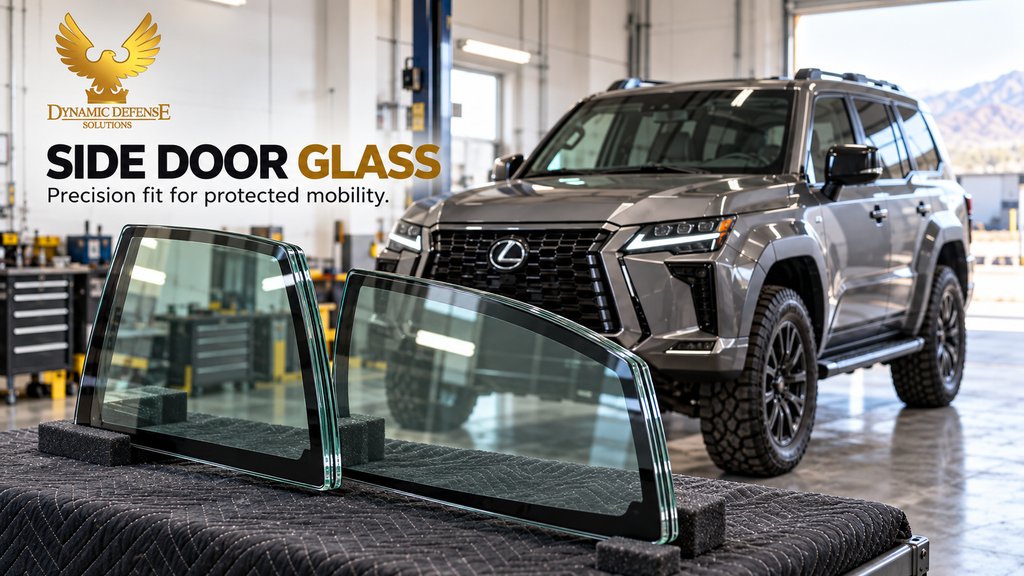
ChatGPT Image Oct 15 2026 01 58 47 PM 3

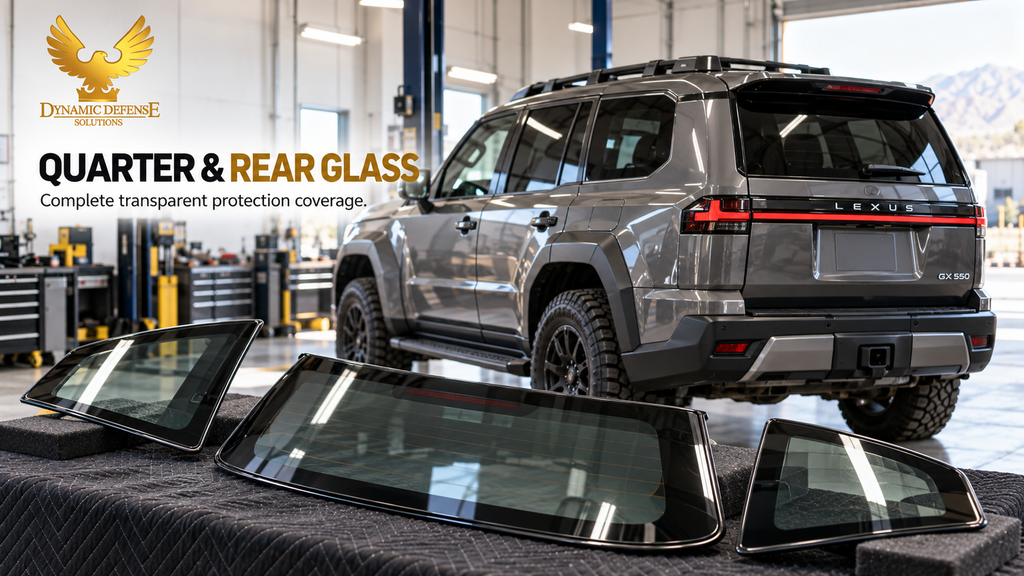
Quarter Glass and Rear Glass Protection

Transparent protection should cover more than just the windshield and front windows.

A complete Lexus GX 550 Bulletproof Glass package can also include quarter glass and rear hatch glazing, depending on the armoring design.

These smaller pieces are equally important because the protective system must provide continuity around the entire passenger compartment.

The edges of the glass need to coordinate correctly with the surrounding armor to create appropriate overlap between transparent and opaque protection.

In a professional armored build, every piece forms part of the same protection envelope.
ChatGPT Image Oct 15 2026 01 58 49 PM 4

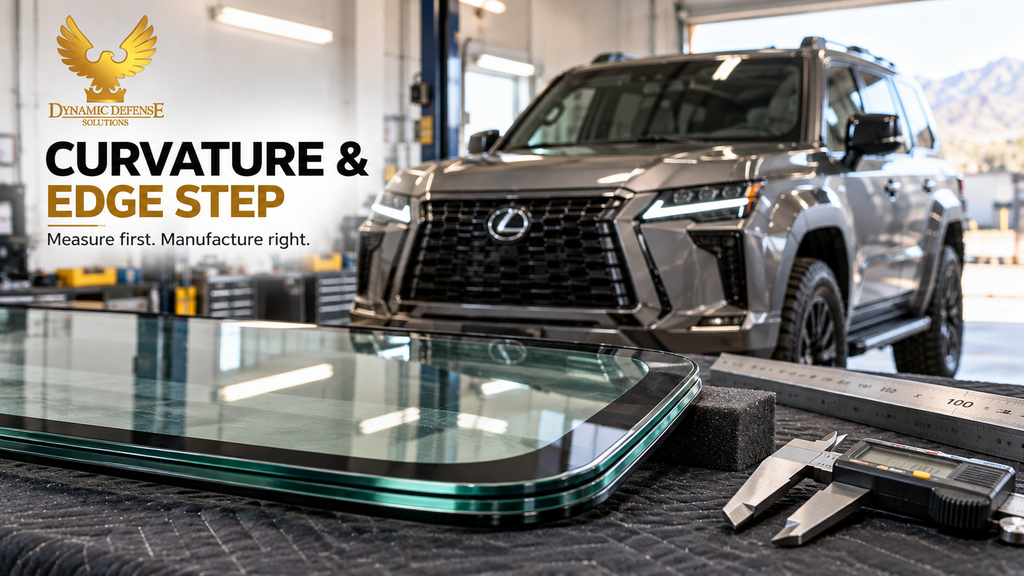
Why Curvature and Edge Step Are Critical

Ballistic glass is substantially thicker than conventional automotive glass.

Because of this, simply copying the outside shape of the OEM glass is not enough.

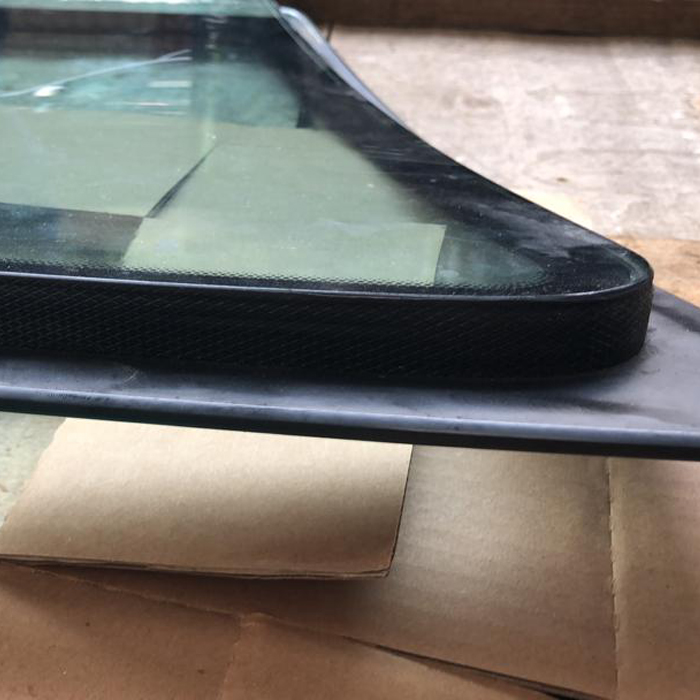
Correct curvature must be reproduced so the glazing follows the body opening accurately, while the edge-step configuration needs to match the armoring design.

For Lexus GX 550 Bulletproof Glass, the correct edge step helps accommodate increased thickness while supporting suitable sealing and overlap with the surrounding armor.

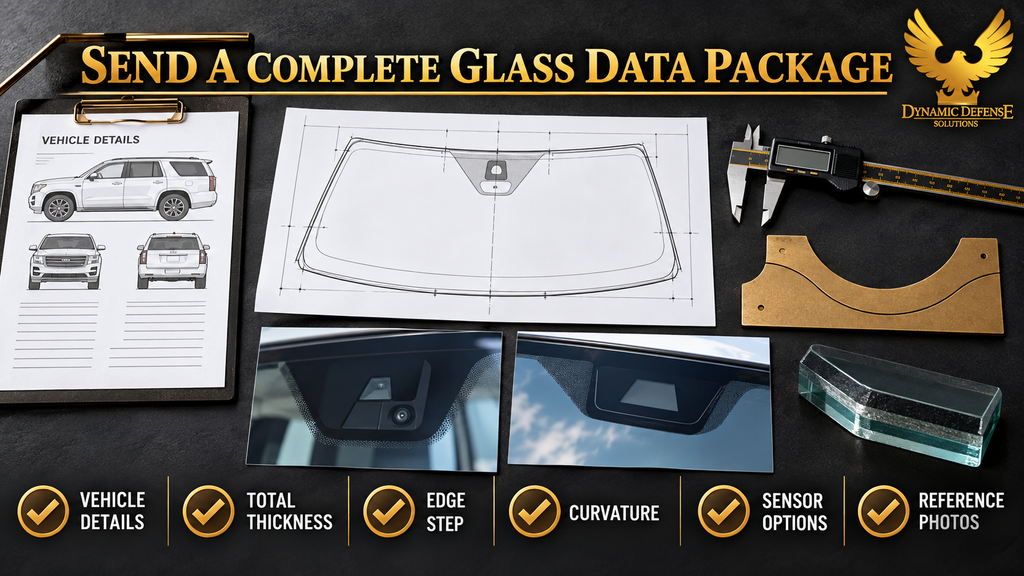
This is why Dynamic Defense Solutions recommends verifying OEM glass, technical drawings, templates or detailed measurements before production.

Measure first. Manufacture right.
ChatGPT Image Oct 15 2026 01 58 51 PM 5

Selecting the Correct Ballistic Protection Level

Not every vehicle requires the same ballistic specification.

The appropriate protection level depends on the threat assessment and intended vehicle application.

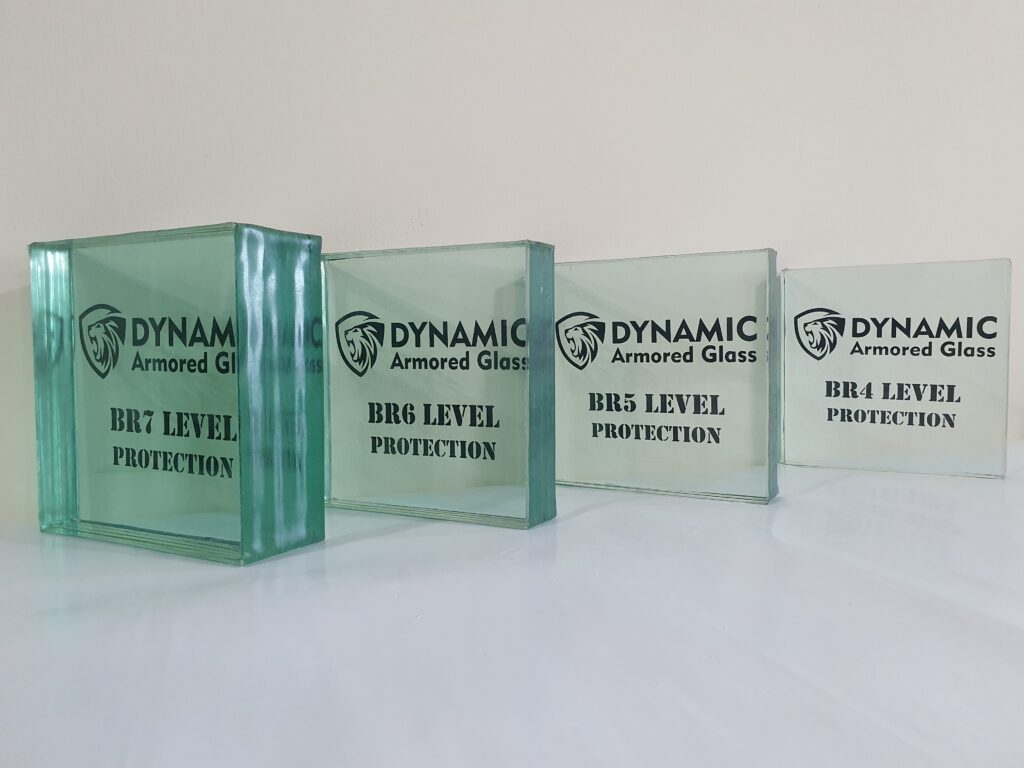
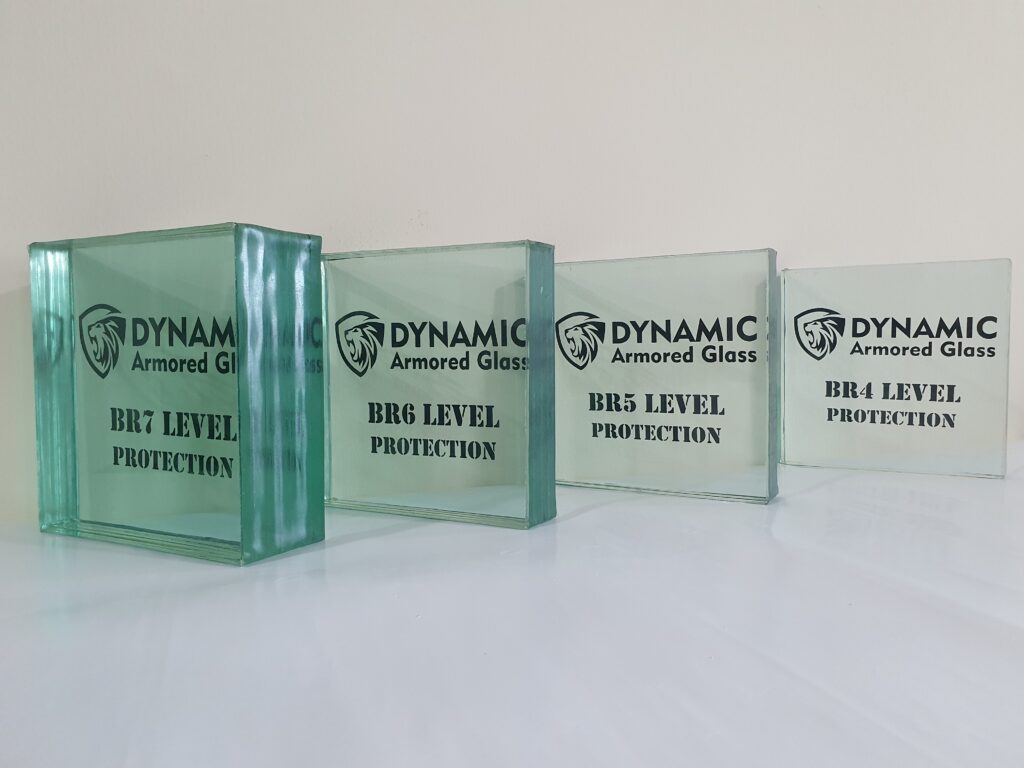
Dynamic Defense Solutions can support different ballistic glazing requirements, including projects commonly specified around BR4, BR5, BR6 and BR7 levels, subject to the required test standard and project specification.

Higher ballistic protection generally requires thicker and heavier glazing.

For this reason, Lexus GX 550 Bulletproof Glass should be specified according to the actual threat requirement rather than automatically choosing the highest available protection level.

This helps achieve a better balance between protection, glass thickness, vehicle weight and installation practicality.
Dynamic Armored Glass for Civilian Armored Vehicles

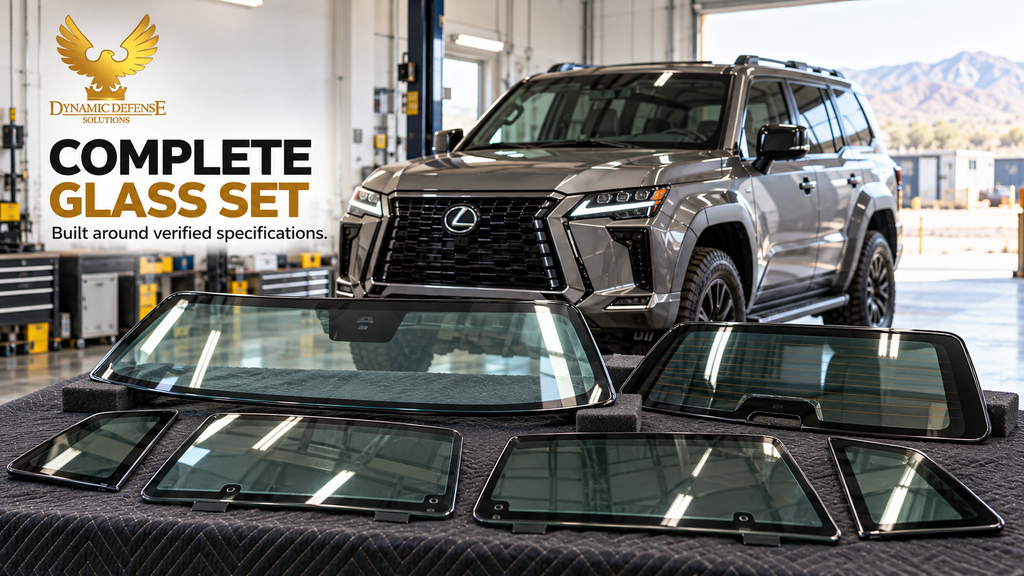
Complete Ballistic Glass Set for Lexus GX 550

For professional armoring companies, sourcing all transparent armor components through one supplier can simplify a project significantly.

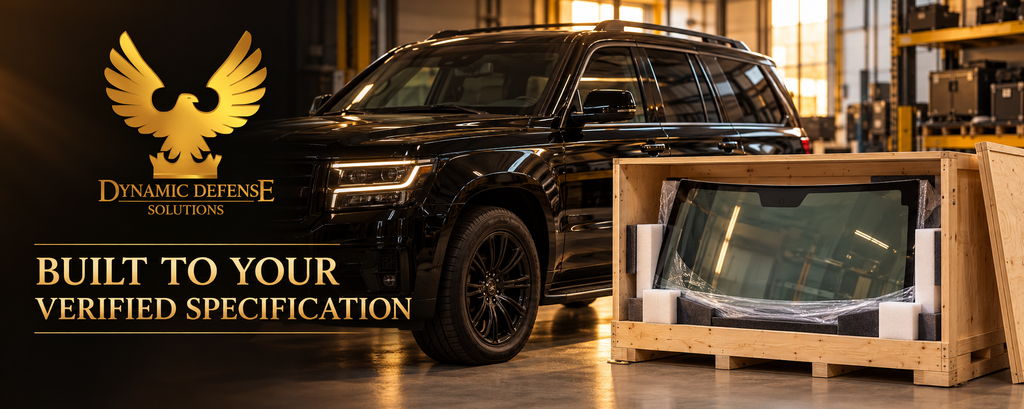
Dynamic Defense Solutions can supply a complete Lexus GX 550 Bulletproof Glass package according to the confirmed vehicle configuration and required protection level.

A complete set can include:

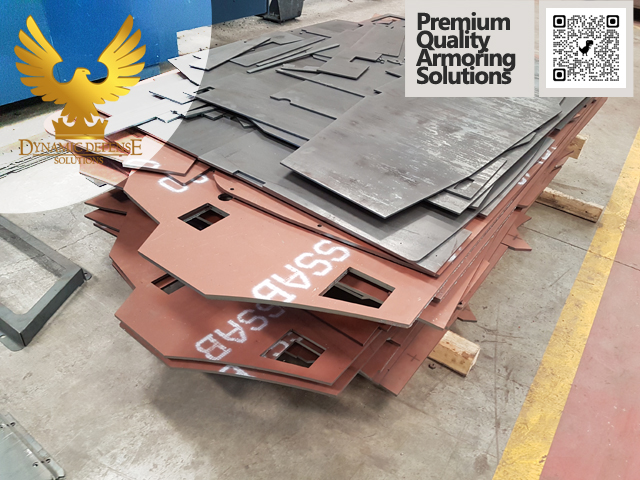
  • Ballistic windshield
  • Front door glass
  • Rear door glass
  • Quarter glass
  • Rear hatch glass

The objective is to provide one coordinated glazing package rather than unrelated individual pieces.

For fleet projects or repeat production, this can also improve consistency across multiple vehicles.
ChatGPT Image Oct 15 2026 01 58 56 PM 7

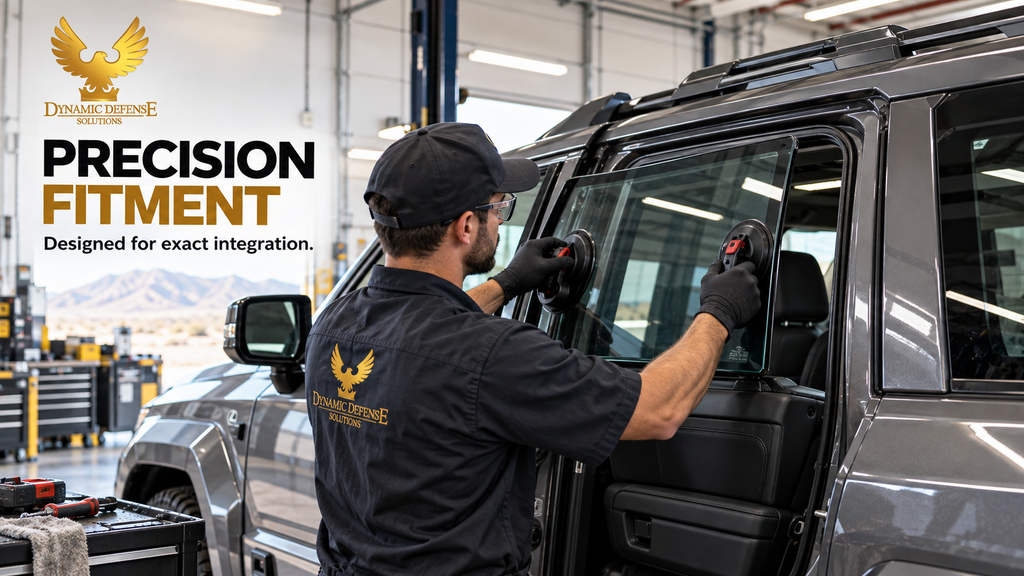
Precision Fitment Before Production

One of the biggest causes of difficulty in vehicle-specific ballistic glazing is producing glass from incomplete information.

At DDS, technical confirmation comes first.

Before manufacturing Lexus GX 550 Bulletproof Glass, the project can be reviewed against available references such as:

  • OEM glass
  • Physical templates
  • CAD or technical drawings
  • Confirmed width and height
  • Curvature information
  • Edge-step dimensions
  • Sensor and bracket positions
  • Ceramic border requirements

This verification process reduces the risk of receiving glass that is close in appearance but incorrect during actual installation.

For armoring workshops, correct fitment can save significant time during vehicle assembly.
ChatGPT Image Oct 15 2026 01 58 59 PM 8

Why Choose Dynamic Defense Solutions?

Ballistic glass manufacturing is not only about achieving a protection level.

For a vehicle-specific project, ballistic performance, optical quality, dimensions and installation requirements all need to work together.

Dynamic Defense Solutions supports professional armoring companies, vehicle converters and security businesses with ballistic glazing for a wide range of vehicle platforms.

For Lexus GX 550 Bulletproof Glass, our approach is simple:

Confirm the vehicle. Confirm the protection level. Verify the dimensions. Then manufacture.

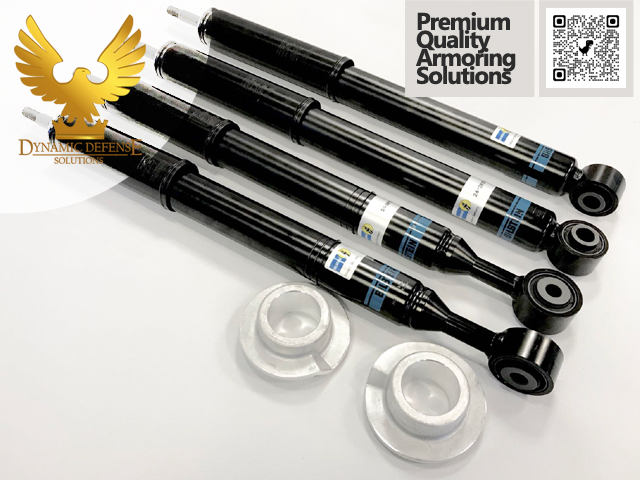
Whether the requirement is a single replacement windshield or a complete glass package for a fleet, DDS can work around the customer’s technical requirement.
Built for International Armoring Markets

The GX 550 is particularly suitable for demanding applications because it combines body-on-frame construction, full-time 4WD and strong towing capability. Lexus also offers the Overtrail range with additional off-road-focused features. Lexus

This makes the platform relevant for armored vehicle projects in regions such as the UAE, Saudi Arabia, Nigeria, Kenya, Ukraine, Africa and the wider Middle East.

For customers operating across different markets, the key is to source Lexus GX 550 Bulletproof Glass according to the actual vehicle configuration and required protection standard.
Dynamic Defense Solutionsp

Conclusion

The Lexus GX 550 is already engineered for strength, luxury and demanding environments, but an armored version requires transparent protection designed to the same level of precision.

From the windshield to the rear glazing, properly engineered Lexus GX 550 Bulletproof Glass must deliver three things together:

Protection. Optical clarity. Accurate fitment.

Dynamic Defense Solutions can support armoring companies with individual ballistic glass pieces or complete vehicle glass sets manufactured according to confirmed specifications.

For a Lexus GX 550 project, send us the vehicle details, required protection level, quantity and available glass specifications for review.

Send Us Your Inquiries Today


SIMILAR PRODUCTS

Armored Car Parts

SUCCESSFULL STORIES

LOGISTICS SERVICES

Supply Chain is core of our operational efficiency providing logistics services anywhere in the world for Armored cars and Armored cars parts. To date we have successfully shipped our products to many countries around the Globe. Our supply chain is supported by a dedicated team of highly capable and experienced logistic professionals. Offering freight by air, land or sea within efficient time frame

HAVE SUCCESSFULLY SHIPPED OUR ARMORED CARS PARTS TO MANY COUNTRIES AROUND THE GLOBE
Armored Vehicle Parts Ukraine: Complete Guide for TLC 76, 78, 79, Hilux & L200
Armored Vehicle Suspension Systems: Why They Matter More Than You Think
Prado 250 Armored Car Parts & Protection Kit

Run-Flat Systems for Armored Vehicles: Why Correct Fitment Matters

Armored SUV Run Flat Fitment Workshop 1
Untitled design 9

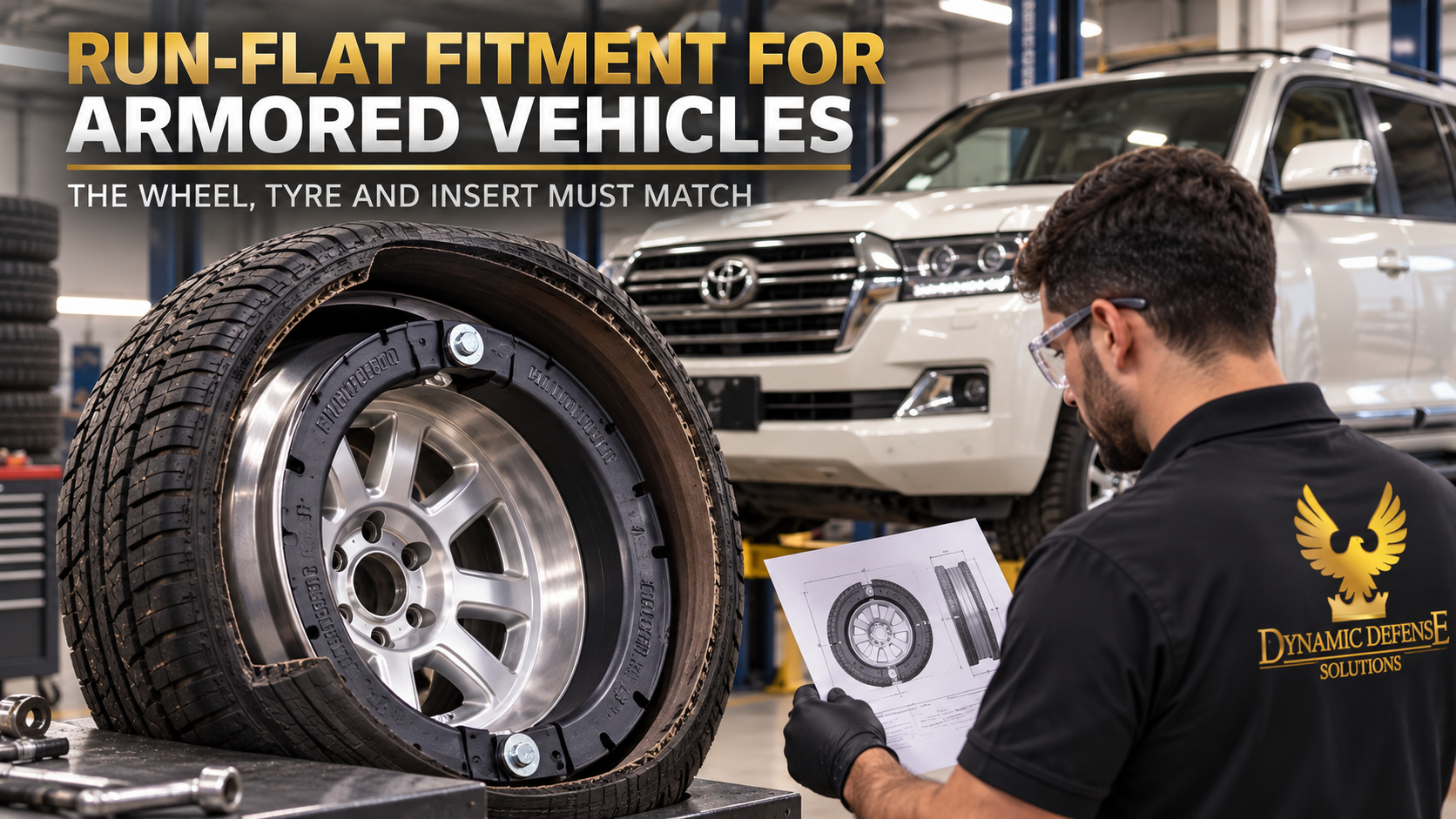
Run-Flat Systems for Armored Vehicles: The Wheel, Tyre and Insert Must Match

A run-flat insert is often ordered using only the tyre size. That information is important, but it does not always define the complete fitment.

Two protected vehicles may use tyres carrying the same sidewall designation while having different wheel widths, internal rim profiles, offsets or wheel constructions. Their completed axle loads may also be different. As a result, an insert suitable for one wheel-and-tyre assembly may not be suitable for the other.

Correctly specified run-flat systems for armored vehicles must be matched to the complete assembly: vehicle, operating weight, tyre, wheel and intended zero-pressure requirement.

For manufacturers and armoring workshops, confirming these details before production is much easier than discovering an incompatibility during installationโ€”or during a zero-pressure mobility test.

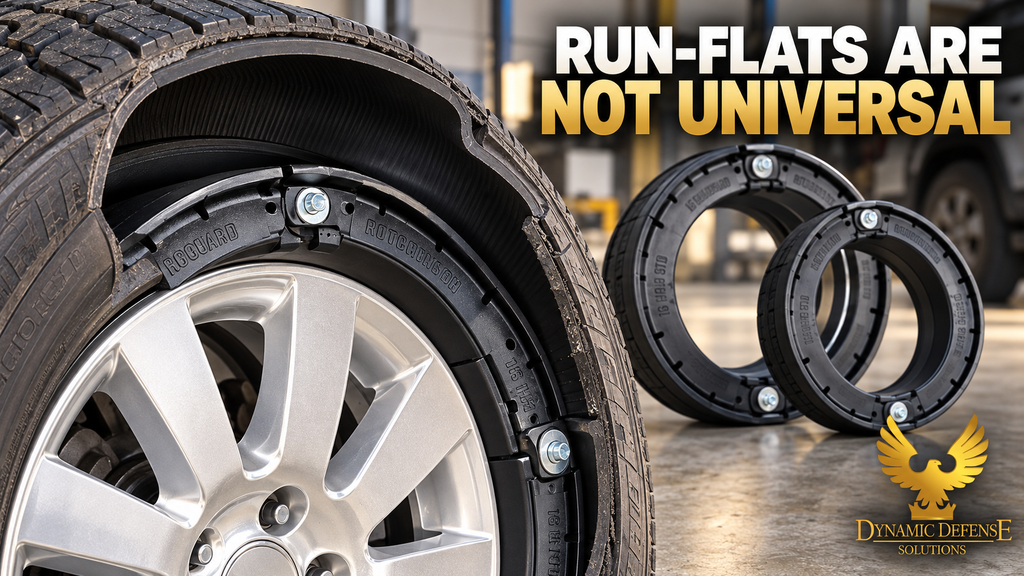
Why Run-Flat Systems for Armored Vehicles Are Not Universal

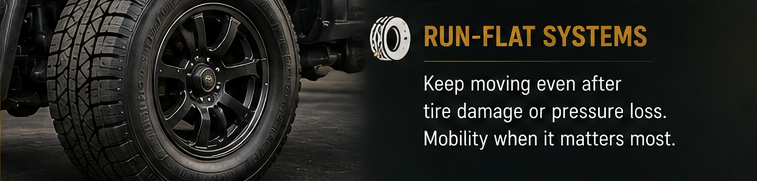
An internal run-flat insert supports a deflated tyre so the vehicle can retain limited mobility after pressure loss or tyre damage. Depending on its design, the system may also help retain the tyre bead and reduce the risk of the tyre separating from the wheel.

This is different from a self-supporting passenger-car run-flat tyre. Self-supporting tyres rely mainly on reinforced sidewalls. Internal run-flat systems use a separate support structure installed around or attached to the wheel.

The term โ€œrun-flatโ€ therefore covers several different technologies. It should not be treated as one universal product category.

Manufacturers offer different arrangements for different wheel designs and vehicle applications. Hutchinson, for example, separates systems intended for one-piece wheels from reinforced run-flat and beadlock arrangements used with two-piece tactical wheels.

When specifying run-flat systems for armored vehicles, buyers should confirm:

  • Whether the wheel is one-piece, two-piece or three-piece
  • The tyreโ€™s full size and construction
  • Wheel diameter and rim width
  • Internal wheel profile
  • Vehicle and individual axle loads
  • Required bead-retention function
  • Expected road and terrain conditions
  • Target zero-pressure distance and speed
  • Any applicable test or customer requirement

A product described simply as an โ€œ18-inch run-flatโ€ does not provide enough technical information to confirm compatibility.

run-flat systems for armored vehicles

Confirm the Wheel Construction Before Selecting the Insert

Wheel construction is one of the first details that must be established.

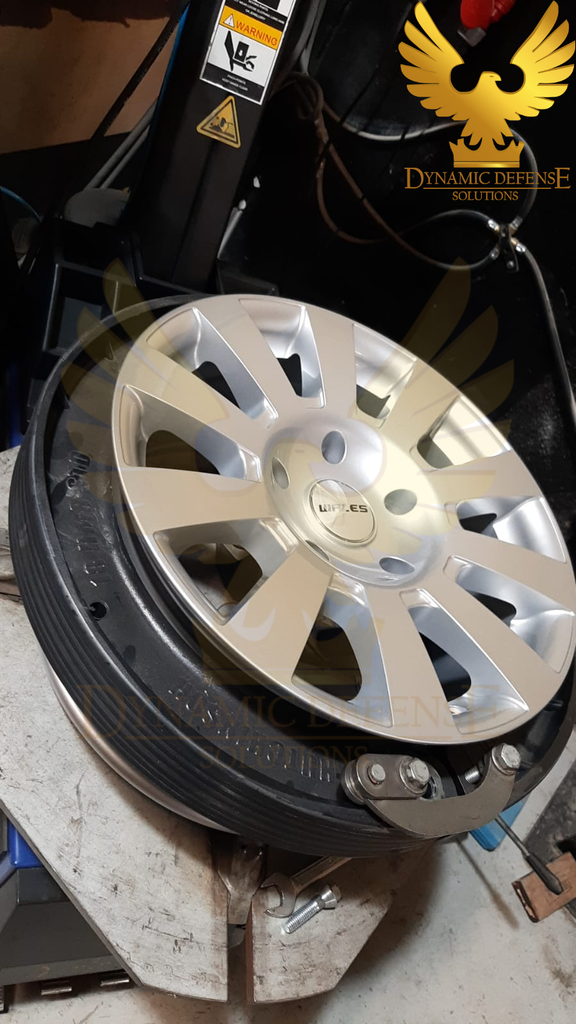
Many protected SUVs and pickups retain one-piece OEM-style steel or alloy wheels. These normally require a run-flat system that can be installed through the tyre opening using suitable fitting equipment.

Military and tactical vehicles may use two-piece or three-piece wheels secured with bolts. These wheels can accept different run-flat or beadlock arrangements because the wheel itself can be separated during assembly.

The terminology used for these products can vary between manufacturers. For example, RunFlat International identifies its Dynamic system for single-piece wheels and its Static system for multi-piece wheels.

This does not mean that every product described as โ€œdynamicโ€ or โ€œstaticโ€ follows an identical design. The relevant manufacturerโ€™s drawing, part number and fitting procedure should always be checked.

For run-flat systems for armored vehicles, a workshop should not assume that inserts designed around one-piece wheels can be transferred directly to multi-piece wheelsโ€”or the other way around.

The workshop should also identify the wheel material and inspect its condition. Cracks, deformation, corrosion, damaged bead seats or previous repairs can affect the suitability of the complete assembly, even if the insert dimensions are correct.

UNTITL3

Why Tyre and Rim Dimensions Both Matter

A tyre marking such as 265/60 R18 identifies several important characteristics, but it does not fully describe the wheelโ€™s internal geometry.

The same nominal tyre size can be approved for more than one rim width. Different wheels may also have different centre-well profiles, bead-seat arrangements and internal clearances.

The run-flatโ€™s inner profile must match the area where it sits on the wheel. Its outer diameter and support profile must also work inside the selected tyre.

If the outer support diameter is too small for the application, the tyre may collapse farther before engaging the insert. This can affect vehicle height, tyre deformation and the way loads are transferred during zero-pressure operation.

If the insert is too large, there may be inadequate inflated clearance between the run-flat and the tyreโ€™s internal crown. That can create installation difficulties and unwanted contact during normal operation.

This is why run-flat systems for armored vehicles should be manufactured or selected using verified dimensions rather than estimates based only on the vehicle model.

Useful wheel information includes:

  • Wheel diameter
  • Rim width
  • Manufacturer and part number
  • One-piece or multi-piece construction
  • Internal centre-well diameter and width
  • Bead-seat profile
  • Valve position and available clearance
  • Photographs or a physical sample where required

For repeat projects, the approved wheel specification should be controlled carefully. A later change in wheel supplier or design may require the run-flat fitment to be checked again.

Untitled design 8

Installation Is Part of Run-Flat Performance

Even a correctly selected insert can be compromised by poor installation.

Run-flat systems normally have a defined assembly sequence, hardware arrangement, tightening procedure and torque requirement. Some systems require specific lubricant or adhesive in designated areas, while others prohibit lubricant in certain contact zones.

Manufacturer instructions should take priority over general workshop practice. Hutchinson and other run-flat manufacturers publish dedicated installation, disassembly and inspection procedures because the system must function as a complete assembly rather than as an independent ring placed inside a tyre.

When installing run-flat systems for armored vehicles, the workshop should verify:

  • Correct segment orientation
  • Condition of bolts, clamps and locking hardware
  • Required fastener torque
  • Valve and TPMS clearance
  • Correct bead seating
  • Absence of trapped tools or assembly cords
  • Tyre condition after installation
  • Wheel balance
  • Air leakage
  • Rotation clearance inside the inflated tyre

Technicians should also avoid forcing an insert into a tyre-and-wheel combination for which it was not designed. A successful physical installation does not automatically confirm safe operating compatibility.

After assembly, the wheel should be inflated using the appropriate workshop safety procedure. For large or high-pressure assemblies, this may include a tyre inflation cage and remote inflation equipment.

SUV run flat ring installation 4

Zero-Pressure Performance Must Be Defined and Validated

A statement such as โ€œthe run-flat can travel 100 kilometresโ€ is incomplete unless the test conditions are known.

Zero-pressure capability depends on several factors:

  • Vehicle weight
  • Load carried by the affected wheel
  • Number and position of deflated tyres
  • Speed profile
  • Road surface
  • Ambient temperature
  • Tyre condition
  • Steering and braking inputs
  • Run-flat construction
  • Wheel and bead retention
  • Test duration

The FINABEL documents commonly referenced for security and military run-flat testing define controlled road or cross-country profiles. The 50 km and 100 km procedures include specified speed stages and requirements relating to tyre retention, steering, stability and continued vehicle operation.

These standards are useful reference points, but a supplier should not claim that every assembly achieves a particular FINABEL distance merely because the insert material or a similar product has been tested.

The claim should apply to the tested system and stated conditions.

Likewise, installing tested run-flat systems for armored vehicles does not automatically certify the complete vehicle. Wheel loading, tyre selection, installation and final-vehicle behaviour remain part of the application.

Where project requirements justify it, the finished vehicle should undergo controlled validation. The test plan can include:

  • Low-speed handling with reduced or zero pressure
  • Steering response
  • Braking stability
  • Tyre retention on the wheel
  • Insert movement relative to the rim
  • Heat development
  • Vibration
  • Component condition after the test

Tests involving deliberate tyre deflation should only be conducted under controlled conditions by suitably qualified personnel.

After actual run-flat operation, the system should be inspected according to its manufacturerโ€™s criteria. Some manufacturers recommend replacement after the system has operated in run-flat mode rather than returning the insert directly to service.

Validate zero pressure performance 6

Information the Supplier Needs Before Production

The quality of a run-flat proposal depends heavily on the information supplied with the enquiry.

For run-flat systems for armored vehicles, buyers should ideally provide:

  1. Vehicle make, model and year
  2. Finished vehicle weight
  3. Front- and rear-axle loads
  4. Full tyre designation
  5. Tyre manufacturer and model
  6. Wheel diameter and rim width
  7. Wheel manufacturer or part number
  8. One-piece, two-piece or three-piece construction
  9. Clear photographs of the wheel
  10. Internal wheel dimensions or a technical drawing
  11. Required quantity, including spares
  12. Intended road and terrain conditions
  13. Required zero-pressure performance
  14. Applicable customer or test standard

A physical sample wheel may be required where reliable drawings are unavailable or the internal profile is unusual. This is particularly relevant when the insert requires machining or adjustment to match the wheel accurately.

The finished axle load also matters. Armoring adds ballistic glass, steel or composite protection, reinforced doors, upgraded suspension and other components. The resulting load at each wheel can be significantly different from the standard vehicle specification.

Tyres and wheels must have suitable load ratings for the completed vehicle. The run-flat insert should not be used to compensate for an overloaded tyre or under-rated wheel.

Run flat wheel fitment intake 9

How run-flat systems for armored vehicles Supports Run-Flat Projects

Dynamic Defense Solutions supplies specialized armored-vehicle components for international projects. DDS supports manufacturers, armoring companies, security-vehicle builders, integrators and qualified workshops rather than positioning itself primarily as a vehicle armoring bodyshop.

For run-flat enquiries, DDS can review the vehicle, tyre, wheel and load information before proposing a suitable solution. Depending on the project, support may include inserts for common SUV and pickup applications, multi-piece wheel solutions or complete wheel-and-run-flat assemblies where applicable.

The approach to run-flat systems for armored vehicles should always be specification-led. The correct solution is not determined by wheel diameter alone.

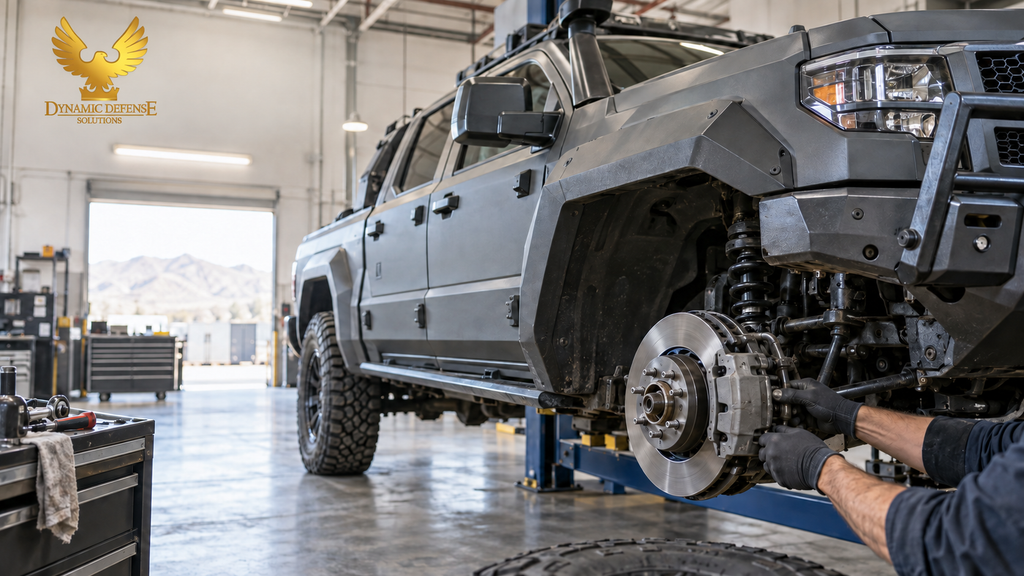
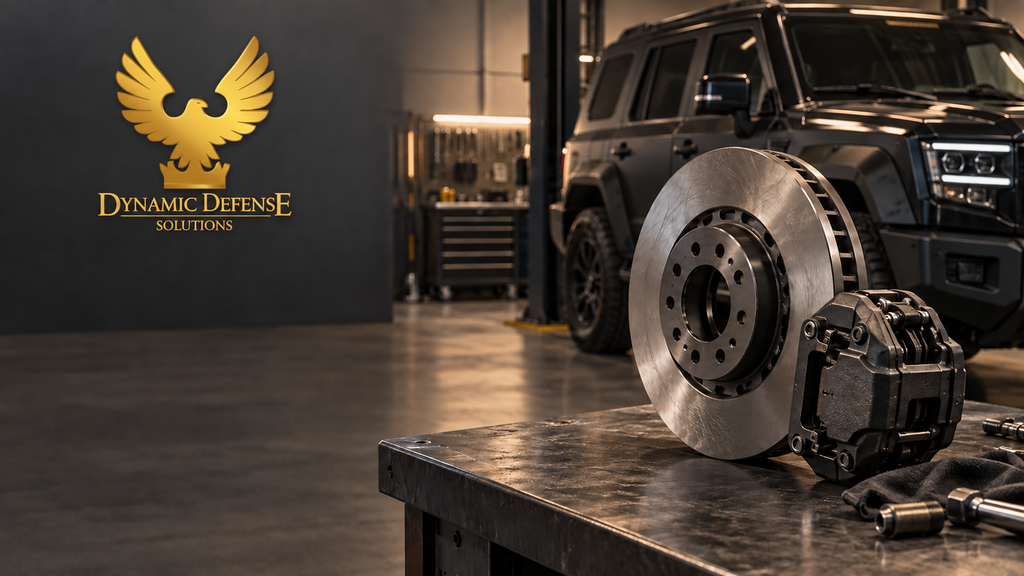
DDS can also support related protected-vehicle requirements, including heavy-duty suspension and braking components. These systems may need to be considered together because armoring weight and wheel-assembly mass affect vehicle dynamics, braking and suspension control.

Manufacturers and workshops are encouraged to send complete project data at the enquiry stage. Verified information helps reduce unnecessary modification, installation delays and fitment disputes.

Verified run flat components for protected SUVs 8

Conclusion

Correct run-flat selection begins with compatibility, not with a generic size description. The tyre designation, wheel construction, internal rim geometry, vehicle load, installation method and expected zero-pressure duty must all be considered together.

Properly selected and installed run-flat systems for armored vehicles can support continued mobility after tyre pressure loss, but their performance depends on the complete wheel-and-tyre assembly and the conditions under which it is used.

Dynamic Defense Solutions can assist armored-vehicle manufacturers, converters, integrators and workshops with run-flat solutions based on verified project requirements.

Send Us Your Inquiries Today


SIMILAR PRODUCTS

Armored Car Parts

SUCCESSFULL STORIES

LOGISTICS SERVICES

Supply Chain is core of our operational efficiency providing logistics services anywhere in the world for Armored cars and Armored cars parts. To date we have successfully shipped our products to many countries around the Globe. Our supply chain is supported by a dedicated team of highly capable and experienced logistic professionals. Offering freight by air, land or sea within efficient time frame

HAVE SUCCESSFULLY SHIPPED OUR ARMORED CARS PARTS TO MANY COUNTRIES AROUND THE GLOBE
Armored Vehicle Parts Ukraine: Complete Guide for TLC 76, 78, 79, Hilux & L200
Armored Vehicle Suspension Systems: Why They Matter More Than You Think
Prado 250 Armored Car Parts & Protection Kit

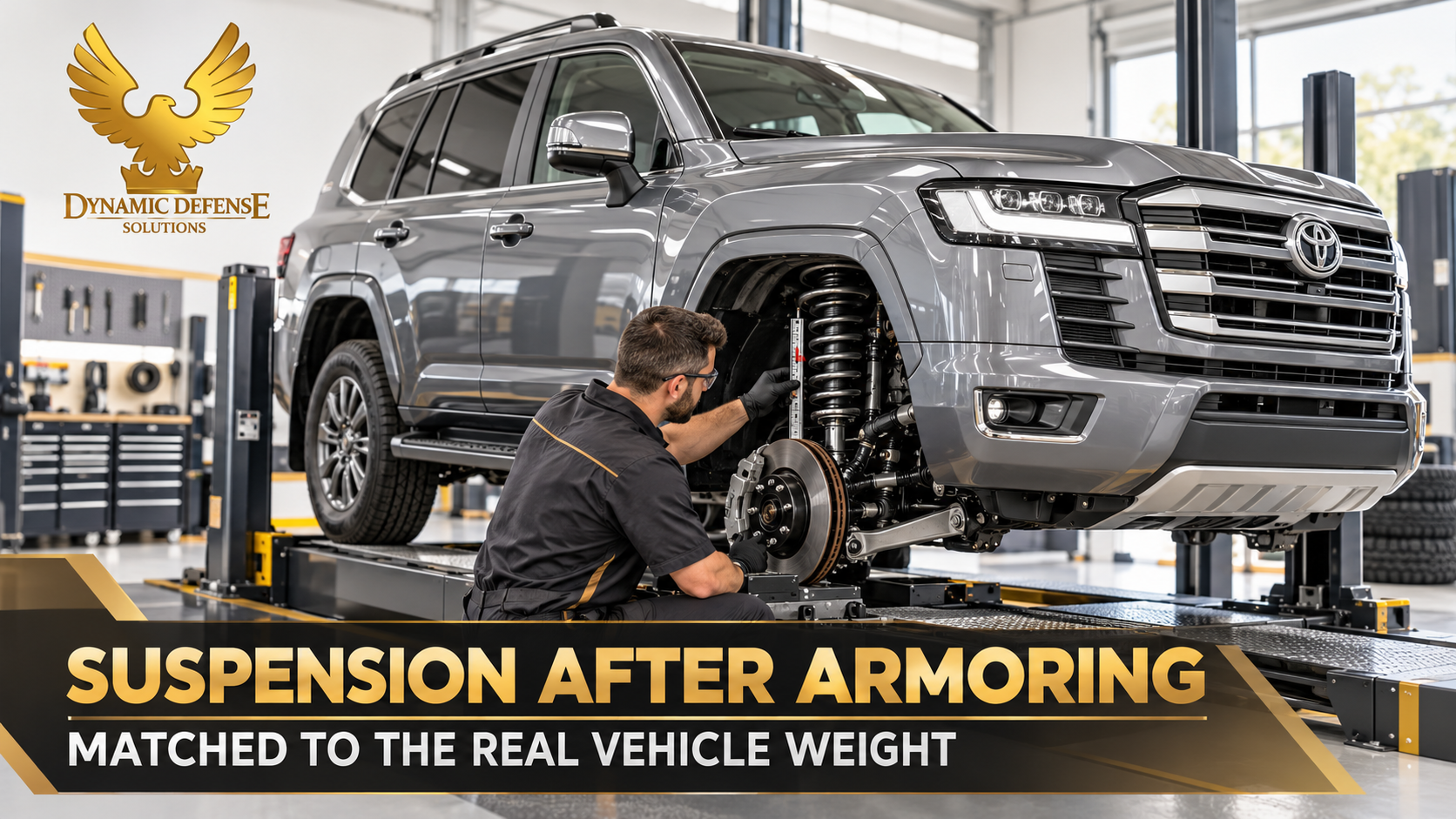
Heavy-Duty Suspension for Armored Vehicles: Matching Suspension to Added Weight

heavy-duty suspension for armored vehicles

Heavy-Duty Suspension for Armored Vehicles: Why Finished Weight Matters

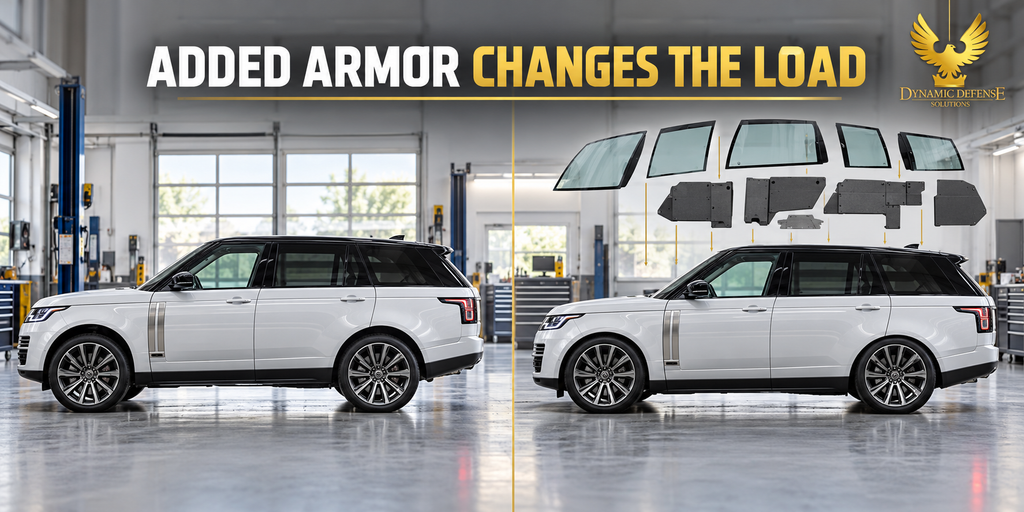
Adding ballistic steel, multi-layer ballistic glass, reinforced doors, run-flat systems and other protection components changes much more than a vehicleโ€™s kerb weight. It changes how the vehicle sits, accelerates, brakes, corners and responds to uneven surfaces.

That is why selecting heavy-duty suspension for armored vehicles should not begin with a generic lift-kit catalogue or a spring described simply as โ€œextra heavy-duty.โ€ The selection must be based on the finished vehicle, its actual axle loads and its intended operating conditions.

A suspension package that works on an unloaded SUV may be completely unsuitable once several hundred kilograms of permanent protection weight have been installed.

Why Heavy-Duty Suspension for Armored Vehicles Must Account for Added Load

A production vehicleโ€™s original suspension is designed around a defined operating-weight range. Once armor is installed, the springs are required to support a greater permanent load.

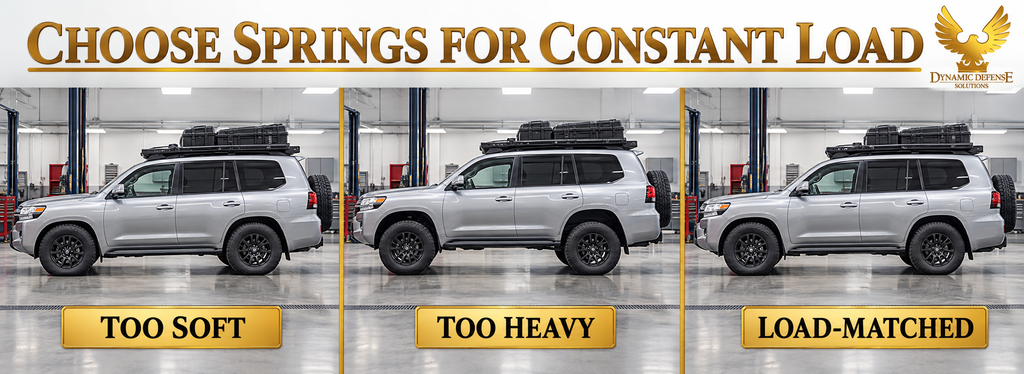
If the original springs are retained, the vehicle may sit lower than intended. Available compression travel can be reduced, leaving the suspension closer to its bump stops. The vehicle may then bottom out more frequently on potholes, speed humps or rough surfaces.

Added mass also increases the energy the dampers must control. During braking, more weight transfers toward the front axle. In corners, the additional mass can increase body roll. During quick direction changes, an incorrectly matched system can allow the body to continue moving after the steering input has changed.

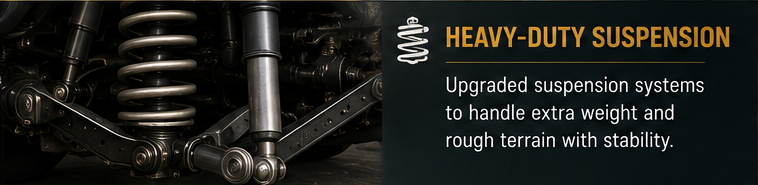
Properly specified heavy-duty suspension for armored vehicles is therefore intended to restore usable ride height, maintain suspension travel and control the movement of the heavier body. It should not be treated merely as a cosmetic lift.

SUV Suspension Changes With Added Armor 2

Start With Finished Vehicle Weight and Axle Loads

The most useful suspension data comes from the completed vehicleโ€”not from the standard vehicle brochure.

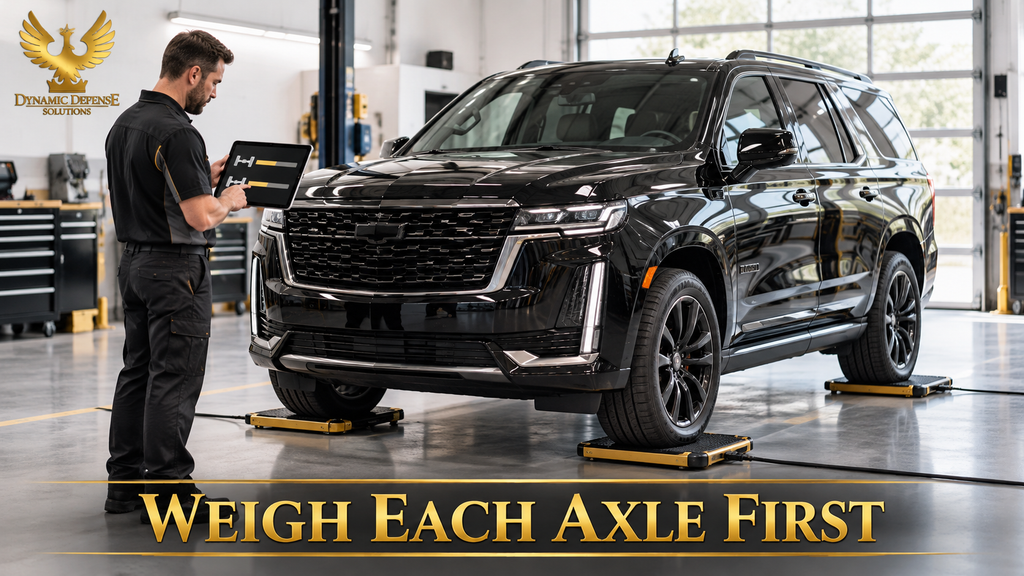
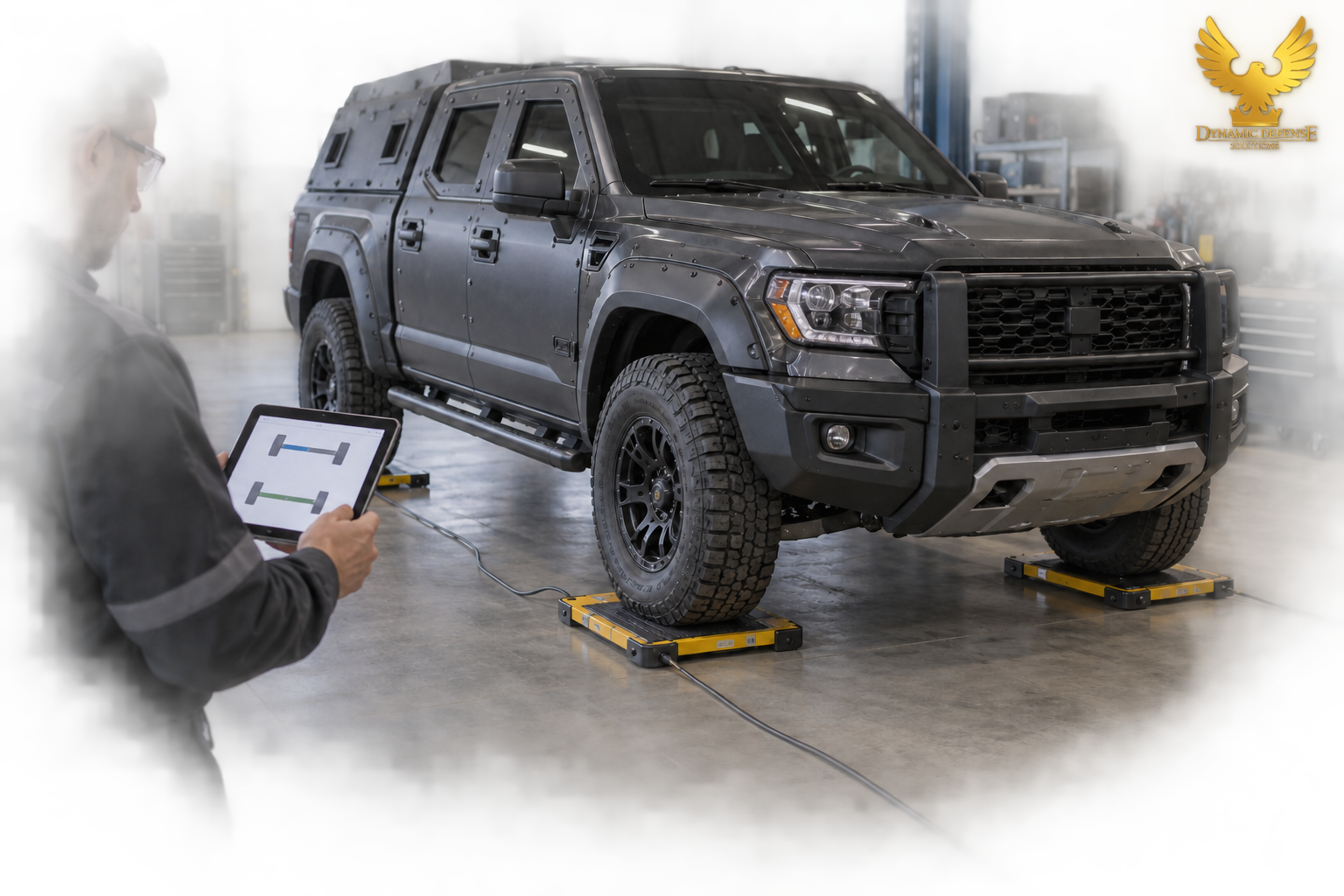
Ideally, the protected vehicle should be weighed after the ballistic glass, steel, reinforced doors, interior panels, communications equipment, run-flat systems and other permanent components have been fitted. It should also carry representative fluids, tools and operating equipment.

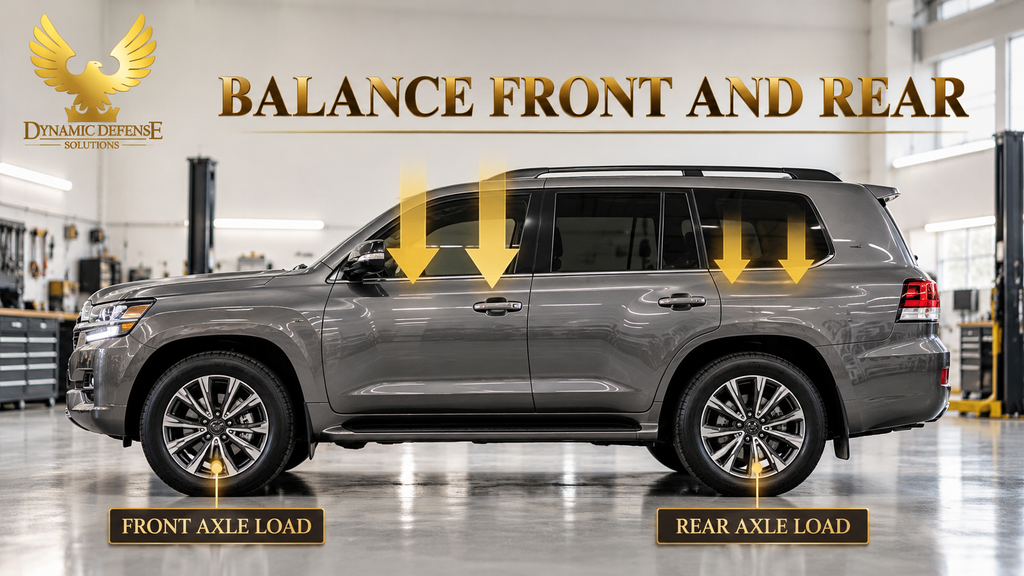
Total weight alone is not enough. Front- and rear-axle loads should be recorded separately because the added mass is rarely distributed evenly.

For example, a large ballistic windshield and reinforced front doors may add substantial weight toward the front. Rear cargo-area protection, equipment cabinets or a protected rear bulkhead may shift more of the load toward the rear axle.

When heavy-duty suspension for armored vehicles is selected using only an estimated total weight, one axle may receive the wrong spring rate even if the vehicleโ€™s overall weight estimate appears reasonable.

The following project data is particularly useful:

  • Vehicle make, model, year and drivetrain
  • Finished operating weight
  • Measured front-axle load
  • Measured rear-axle load
  • Current front and rear ride heights
  • Additional equipment still to be installed
  • Wheel, tyre and run-flat configuration
  • Intended road, climate and duty conditions
  • Desired operating height and handling characteristics
Protected SUV on Four Corner Scales 3

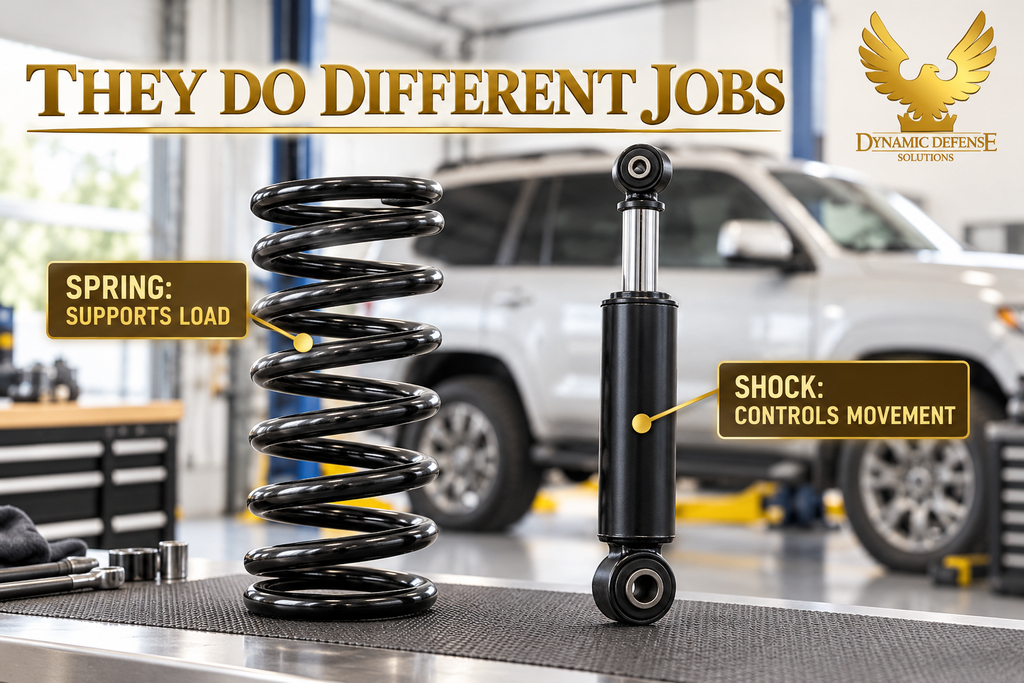
Springs and Shock Absorbers Perform Different Jobs

Springs and shock absorbers are related, but they should not be confused.

The springs support the vehicleโ€™s static weight and establish its ride height. Their rate must be appropriate for the permanent load carried by each axle. Shock absorbers control the speed of suspension movement and reduce continued oscillation after the vehicle encounters a bump, brakes or changes direction.

Installing stronger shock absorbers without correcting overloaded springs will not normally restore the correct static ride height. Similarly, installing higher-rate springs while retaining dampers intended for the original vehicle mass may produce insufficient control.

An effective heavy-duty suspension for armored vehicles normally requires the spring rate and damping characteristics to work together.

The spring should support the permanent added mass without excessive sag. The damper must then control that spring and the heavier vehicle body through compression and rebound.

Selecting the highest available spring rate is not automatically the right answer. A spring intended for a much heavier constant load may produce a harsh ride, poor compliance and reduced wheel control when the vehicle is lightly occupied. Load-matched springs are preferable to choosing a specification based only on an โ€œHDโ€ or โ€œextra-heavyโ€ product label.

Spring and shock different jobs 4

Front and Rear Suspension Must Be Matched Separately

Protected vehicles often have different loading requirements at the front and rear.

The front suspension may need to support ballistic windshield weight, front-door protection and additional under-bonnet equipment. The rear suspension may carry rear-door armor, cargo-area protection, auxiliary batteries or operational equipment.

Using the same percentage increase in spring rate at both ends can create an unbalanced result. A front-heavy vehicle may still nose-dive under braking, while an excessively stiff rear spring may cause the rear tyres to lose compliance over uneven surfaces.

A well-matched heavy-duty suspension for armored vehicles should consider:

  • The permanent load added to each axle
  • The original front-to-rear weight distribution
  • The suspension design and available wheel travel
  • Expected passenger and payload variation
  • On-road versus rough-road operation
  • Vehicle height and stability requirements

Spring selection may also need to account for side-to-side weight variation. Fuel tanks, battery systems or installed equipment can create a persistent difference between the left and right sides of the vehicle. The completed vehicle should therefore be measured on a level surface before and after installation.

Balanced SUV load distribution 5 1

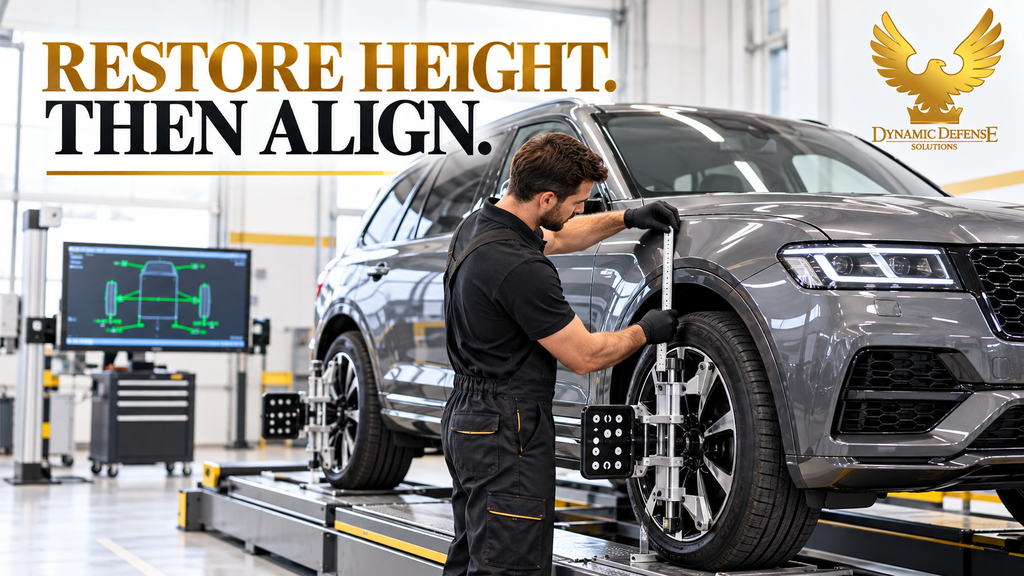
Restore Ride Height, Then Check Geometry and Alignment

Restoring ride height is important, but the work does not finish when the vehicle appears level.

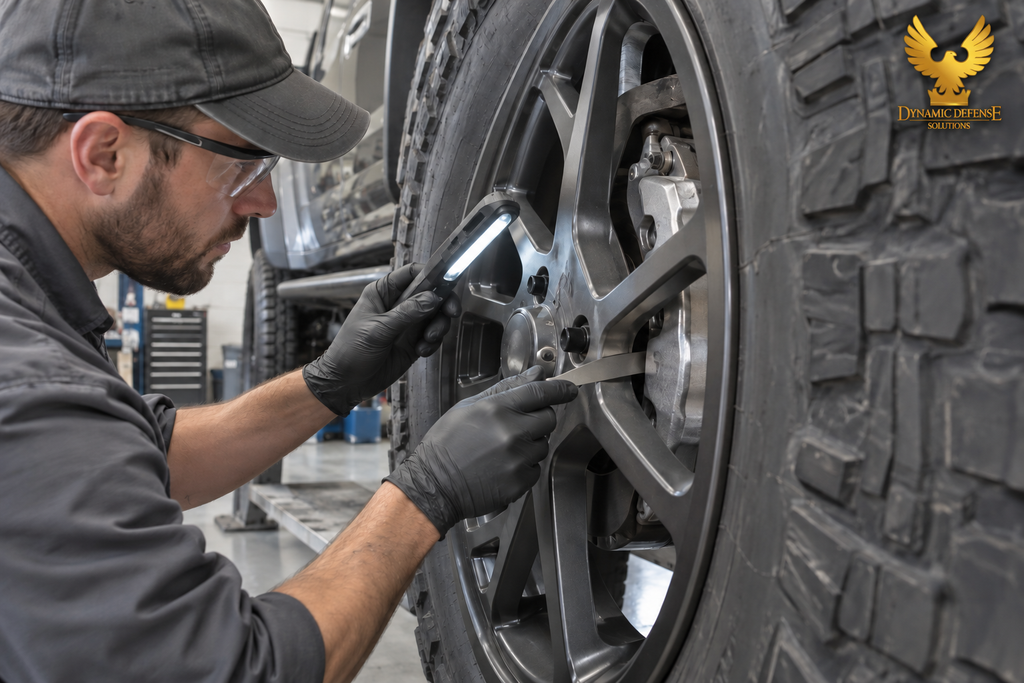
Suspension height affects wheel alignment, steering geometry, driveline angles and component clearances. Incorrect ride height or alignment can contribute to irregular tyre wear and poor handling. Alignment should be checked after suspension installation and again if the springs settle during initial use.

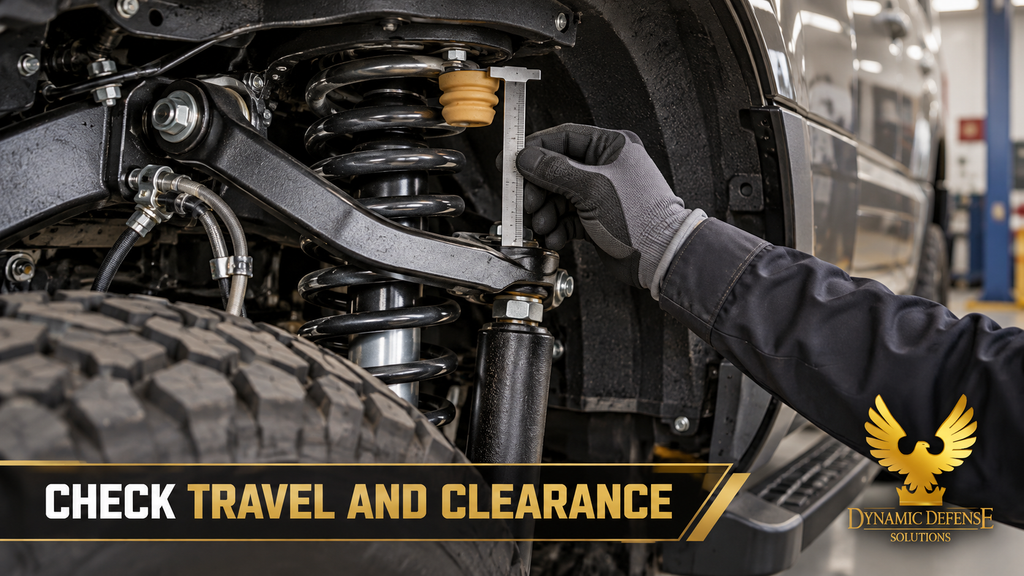
After fitting heavy-duty suspension for armored vehicles, the workshop should inspect:

  • Compression travel before contact with the bump stops
  • Rebound or droop travel
  • Tyre clearance at full steering lock
  • Clearance between tyres, bodywork and armor panels
  • Brake-hose and ABS-wire routing
  • Driveshaft and CV-joint angles
  • Anti-roll-bar and link clearances
  • Headlamp aim where ride height has changed
  • Front and rear wheel alignment
Suspension Travel and Clearance Check 11

A vehicle that has regained its original arch-to-wheel appearance can still have inadequate suspension travel or incorrect geometry. Measurements and physical clearance checks are more reliable than visual assessment alone.

SUV ride height check before wheel alignment 6

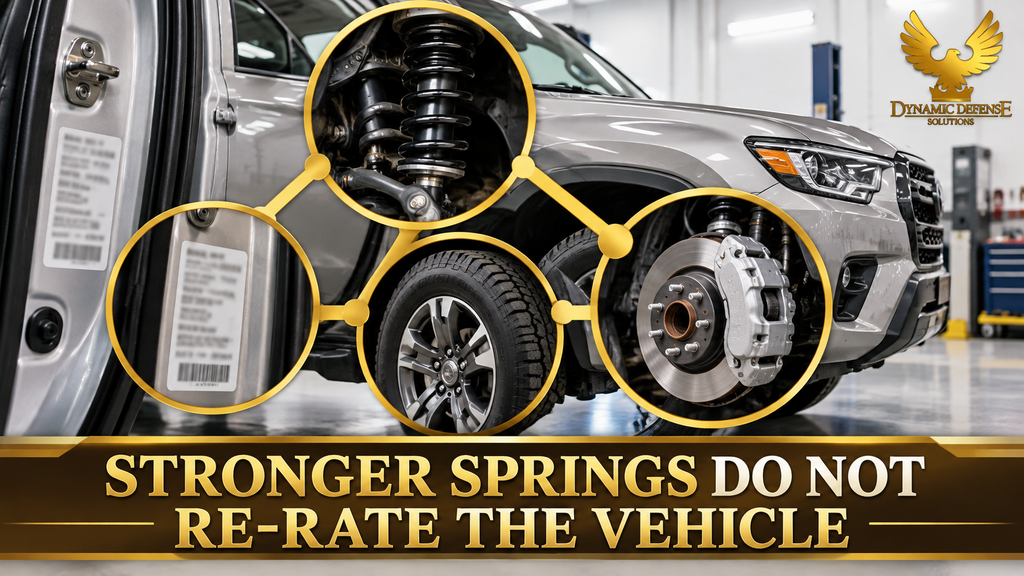
Stronger Springs Do Not Automatically Increase the Vehicle Rating

A suspension upgrade does not, by itself, increase the manufacturerโ€™s Gross Vehicle Weight Rating or Gross Axle Weight Ratings.

Vehicle weight limits depend on several connected systems, including the axles, tyres, wheels, brakes, steering, frame, drivetrain and suspension. Official guidance also treats the lowest-rated relevant component as a limiting factor when axle or vehicle capacity is assessed.

This distinction is important when specifying heavy-duty suspension for armored vehicles. Higher-rate springs may restore ride height and improve control at the vehicleโ€™s completed weight, but they do not automatically provide legal or engineering approval for a higher maximum vehicle mass.

Three way SUV spring load comparison 10

Tyre load ratings and wheel capacity must also be verified, particularly when run-flat inserts are installed. The combined wheel, tyre and run-flat assembly adds unsprung and rotational mass, which can influence steering response, braking behaviour and damper requirements.

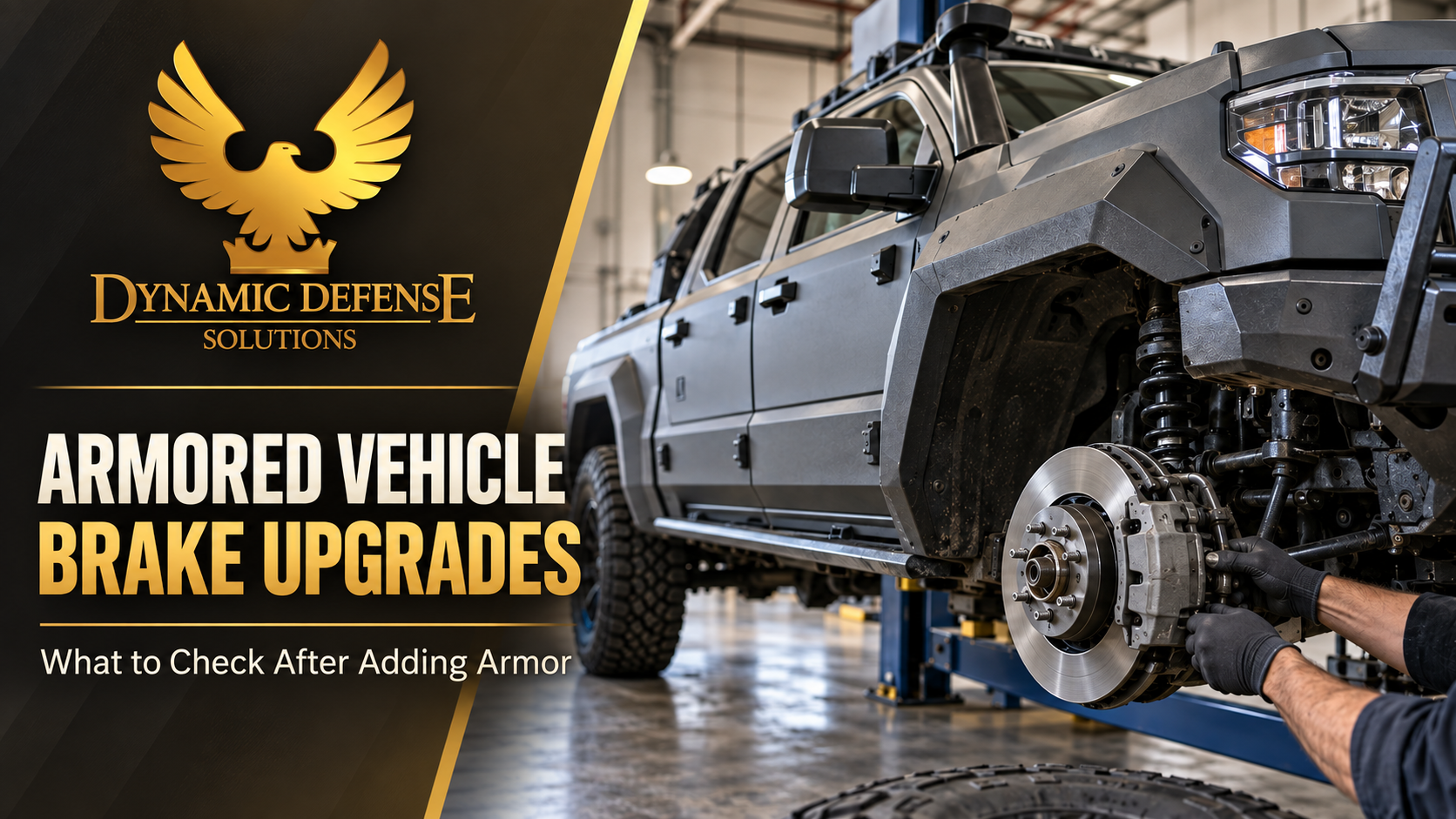
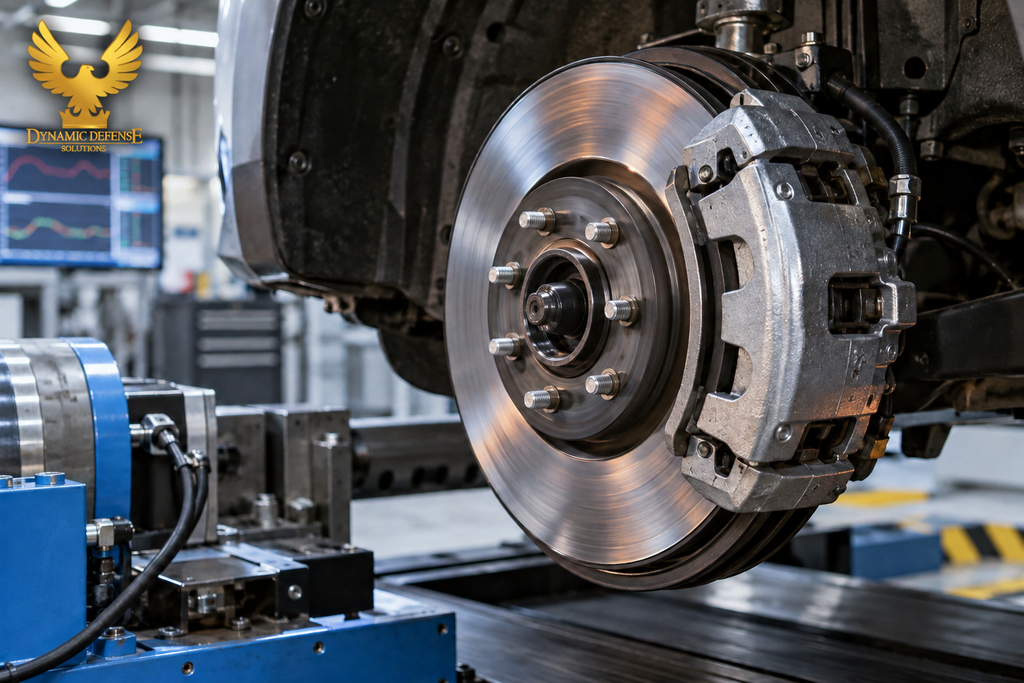
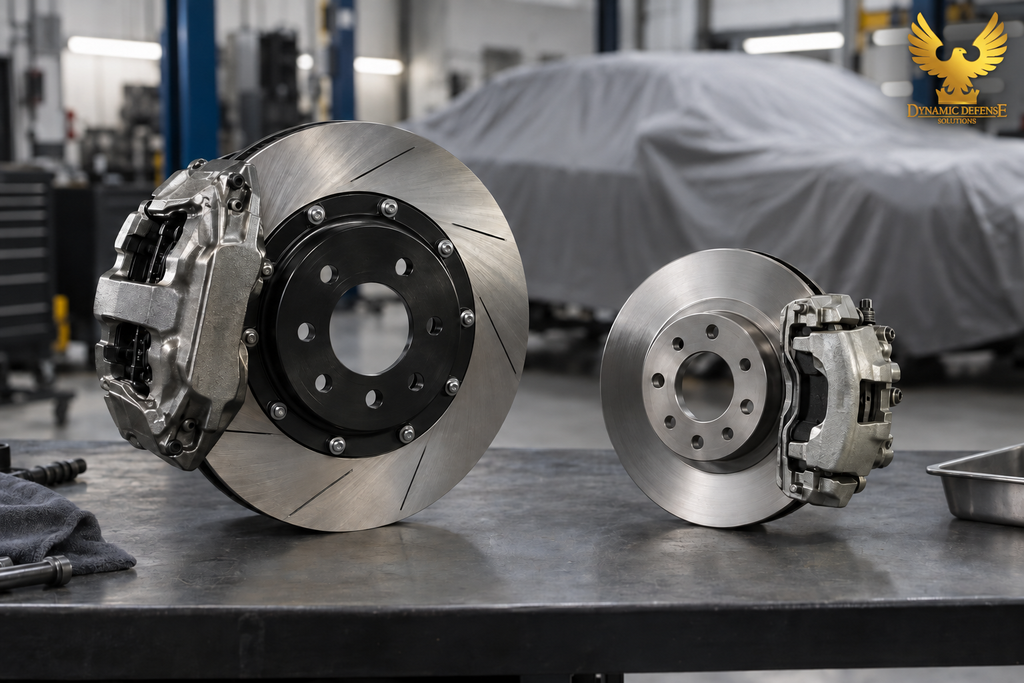
Braking performance should be reviewed as part of the same vehicle-level assessment. A heavier vehicle requires more energy to be managed during repeated stops, so a suspension improvement should not be used to conceal an unresolved brake-capacity issue.

SUV inspection weight rating involves multiple systems 7

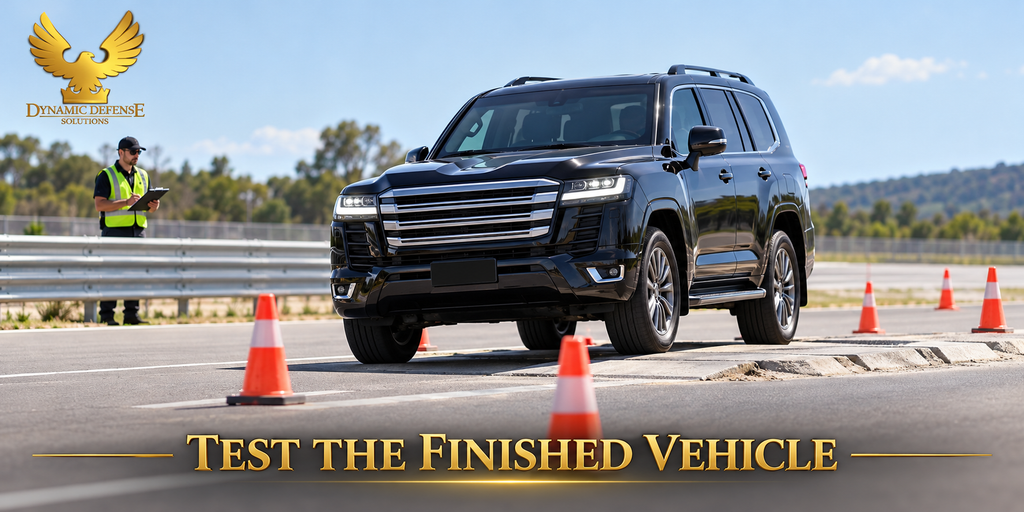
Test the Completed Vehicle, Not Only the Components

Individual suspension parts can be correctly manufactured and still produce an unsatisfactory result if they are not matched to the finished conversion.

Validation of heavy-duty suspension for armored vehicles should be conducted with the vehicle at a representative operating weight. Where appropriate, testing should include:

  • Static ride-height measurement
  • Controlled braking
  • Low-speed steering and full-lock clearance checks
  • Lane changes and directional transitions
  • Speed humps and uneven surfaces
  • Rough-road or corrugated-surface operation
  • Full passenger or operational payload
  • Inspection for bottoming, topping-out or tyre contact
  • Temperature and leakage inspection after testing

Fasteners should be rechecked after the initial settling period according to the component supplierโ€™s installation instructions. Ride height and alignment should also be recorded so that any later change can be identified.

Drivers and fleet operators can provide valuable feedback, but comments such as โ€œtoo softโ€ or โ€œtoo hardโ€ should be investigated using measurements. The actual cause may be spring rate, damper tuning, tyre pressure, reduced suspension travel or a front-to-rear imbalance.

Protected SUV road validation 8

How DDS Supports Protected-Vehicle Suspension Projects

Dynamic Defense Solutions supplies specialized armored-vehicle components for international projects. DDS works as a component supply and project-support partner for armored-vehicle manufacturers, converters, integrators, security-vehicle companies and qualified workshops.

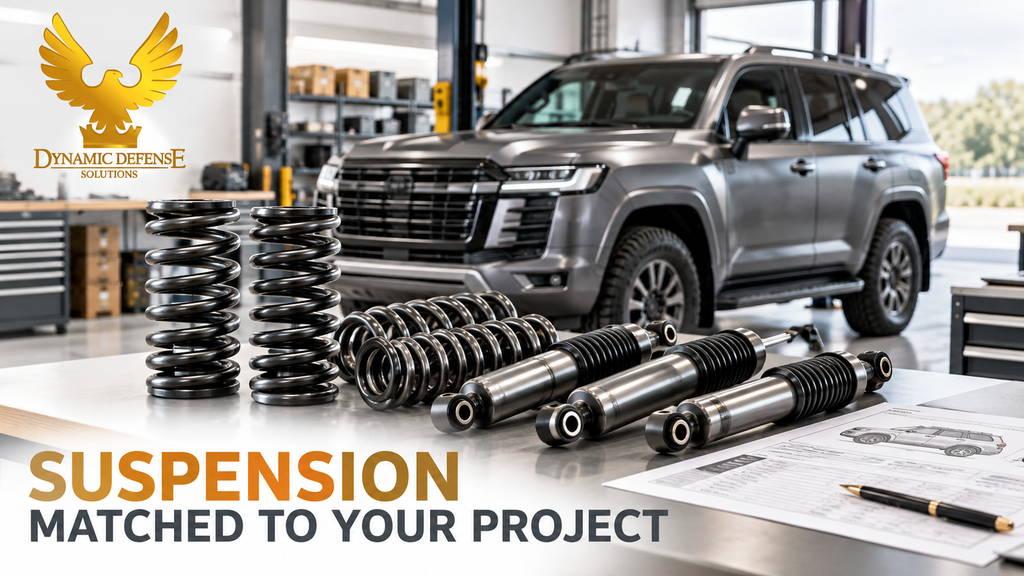
For heavy-duty suspension for armored vehicles, DDS can review project information such as the base vehicle, finished weight, axle loads, intended duty cycle and wheel-and-tyre configuration before proposing relevant suspension components.

Where the project requires a broader weight-management package, DDS can also support compatible braking solutions, run-flat systems and other related armored-vehicle components. Final suitability remains dependent on correct installation, vehicle-level engineering and validation of the completed conversion.

The most useful enquiry is not simply, โ€œDo you have heavy-duty springs for this model?โ€ A technically useful request should include the real vehicle configuration and the permanent load that the suspension must carry.

Correctly selected heavy-duty suspension for armored vehicles helps restore ride height, preserve usable wheel travel and provide better control of the added protection mass. It should form part of a coordinated vehicle system rather than being selected as an isolated accessory.

Manufacturers, armoring companies, integrators and workshops can contact Dynamic Defense Solutions to discuss suspension requirements for an upcoming protected-vehicle project.

DDS suspension matched to your project 9

Conclusion

Selecting heavy-duty suspension for armored vehicles is not simply a matter of fitting the stiffest available springs. The correct setup should be based on the completed vehicleโ€™s weight, individual axle loads, suspension travel, wheel-and-tyre configuration and operating conditions. Springs, dampers, alignment, braking and load-rated components must work together to keep the protected vehicle stable and predictable. Dynamic Defense Solutions supports armored-vehicle manufacturers, converters, integrators and workshops with suitable suspension components and related technical project support

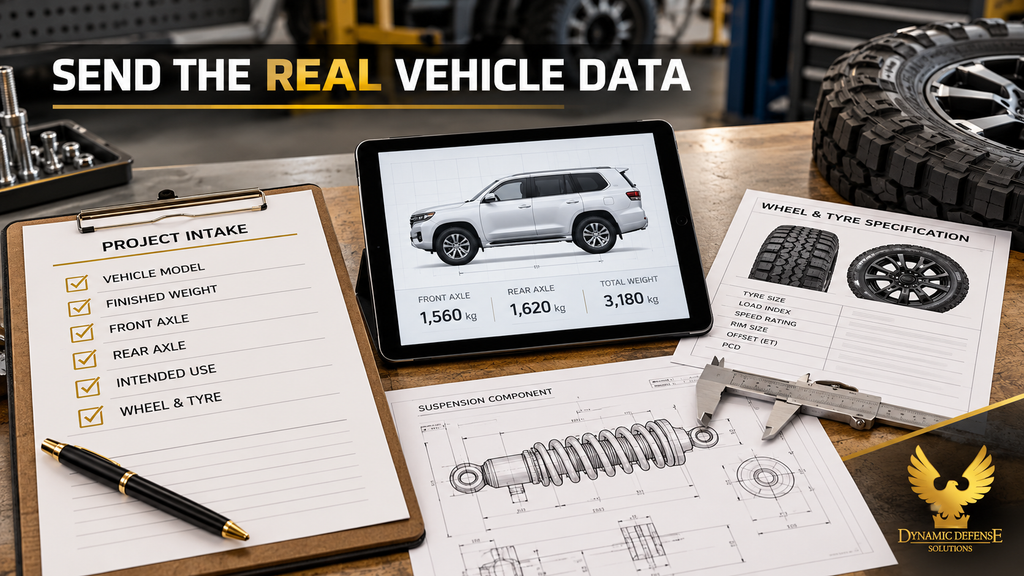
Precision Vehicle Data Intake 12

Send Us Your Inquiries Today


SIMILAR PRODUCTS

Armored Car Parts

SUCCESSFULL STORIES

LOGISTICS SERVICES

Supply Chain is core of our operational efficiency providing logistics services anywhere in the world for Armored cars and Armored cars parts. To date we have successfully shipped our products to many countries around the Globe. Our supply chain is supported by a dedicated team of highly capable and experienced logistic professionals. Offering freight by air, land or sea within efficient time frame

HAVE SUCCESSFULLY SHIPPED OUR ARMORED CARS PARTS TO MANY COUNTRIES AROUND THE GLOBE
Armored Vehicle Parts Ukraine: Complete Guide for TLC 76, 78, 79, Hilux & L200
Armored Vehicle Suspension Systems: Why They Matter More Than You Think
Prado 250 Armored Car Parts & Protection Kit

2027 Kia Telluride Bulletproof Glass | Ballistic Glass Solutions

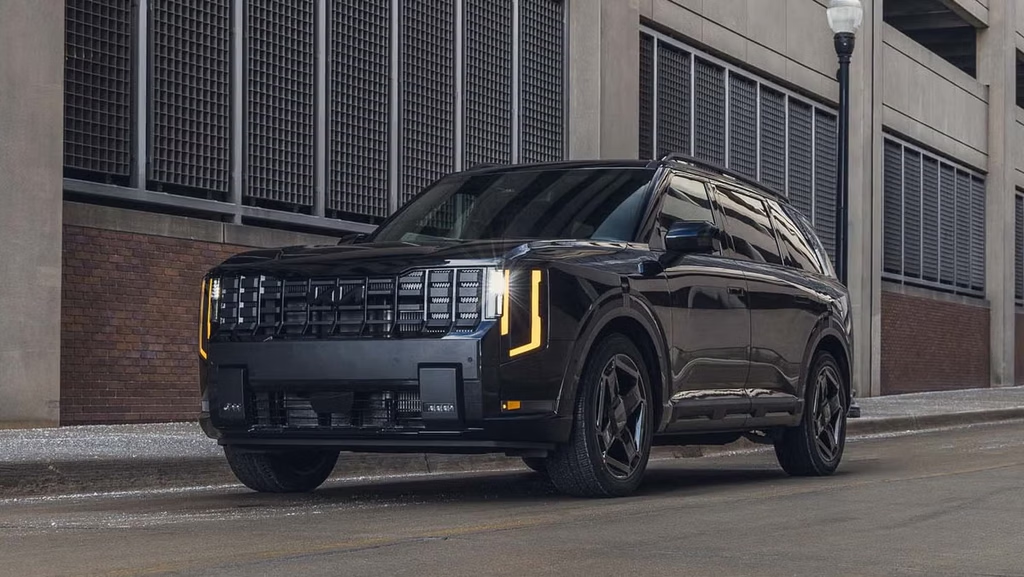
2027 kia telluride sx x line 158 69a6faa2be33b

2027 Kia Telluride Bulletproof Glass: Protection Designed Around the New Generation

The 2027 Kia Telluride represents a major step forward for Kia’s three-row SUV. The second-generation model is larger than the outgoing Telluride, offers increased passenger and cargo space, and introduces a completely revised powertrain lineup. Kia offers a standard 2.5-liter turbocharged four-cylinder producing 274 hp and 311 lb-ft of torque, while the Telluride’s first-ever hybrid combines a 2.5-liter turbo engine with electric assistance for a combined 329 hp and 339 lb-ft. Kia Media

For security and specialty vehicle projects, this new platform also creates an important requirement: correctly engineered 2027 Kia Telluride Bulletproof Glass.

At Dynamic Defense Solutions, our focus is not simply producing thicker automotive glass. Ballistic glazing must be developed around the required protection level, actual vehicle dimensions, curvature, edge construction, installation space and functional requirements of the vehicle.

A Completely New Telluride Platform

The 2027 Telluride is not simply a facelift of the previous model. Kia describes it as an all-new second-generation SUV, with increased overall dimensions, greater interior room, improved third-row access and additional cargo capacity behind the third row. Seating remains available for up to eight occupants. Kia Media

Higher trims also extend the platform’s capability. The X-Pro version features an electronic limited-slip differential, terrain-focused AWD functions and approximately 9.1 inches of ground clearance. Kia Media

These changes matter when developing 2027 Kia Telluride Bulletproof Glass because glass from an earlier Telluride generation should never be assumed to fit a completely redesigned body.

Windshield curvature, side-window geometry, mounting locations, ceramic borders and other details may change from one generation to another.

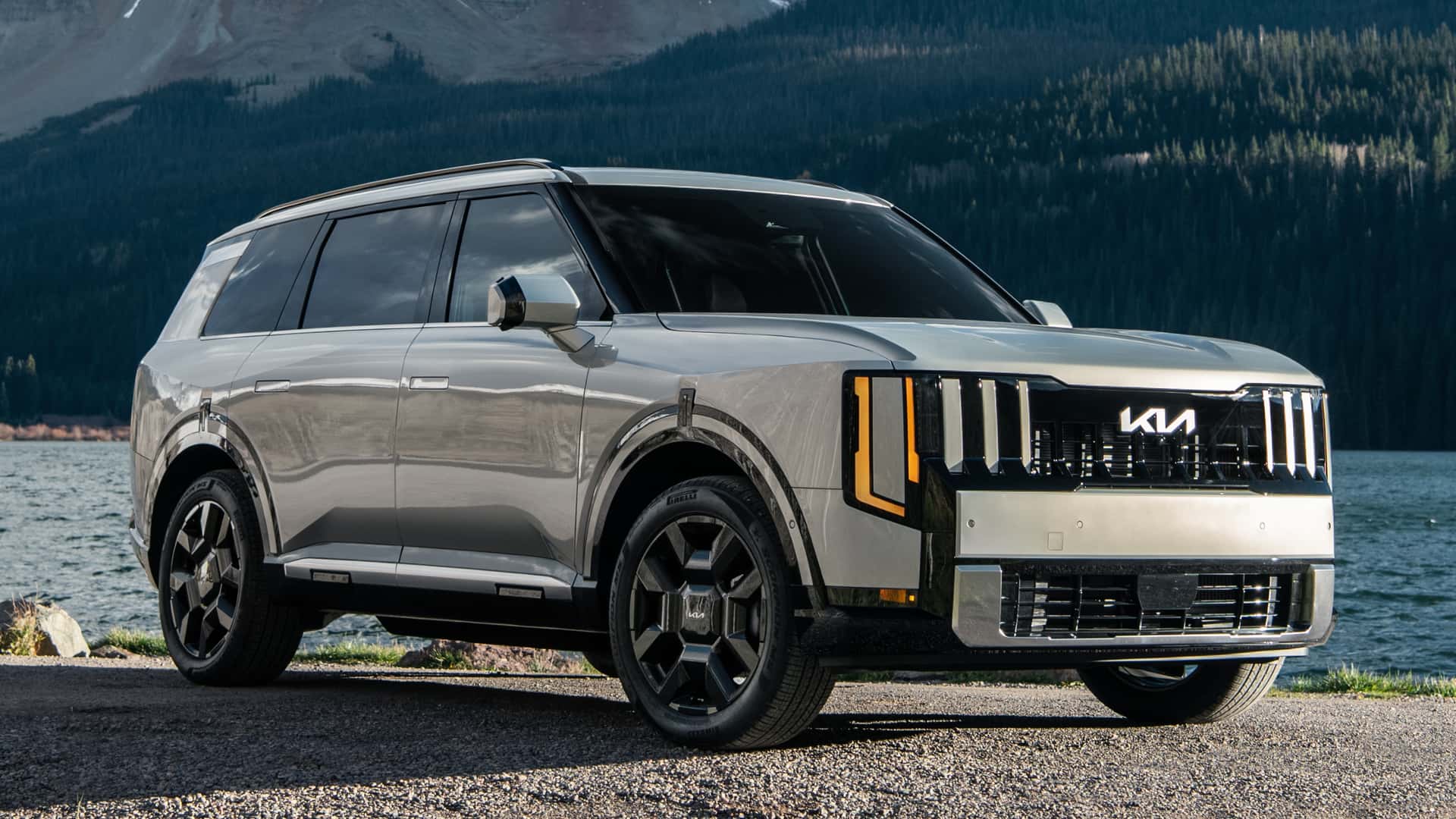
2027 kia telluride hybrid

Why Bulletproof Glass Requires More Than an OEM Number

For standard automotive replacement glass, an OEM reference can often identify the required windshield or side window.

Ballistic glass is different.

A reliable 2027 Kia Telluride Bulletproof Glass project requires several additional parameters to be confirmed before production begins.

These can include:

  • Overall glass dimensions
  • Exact curvature
  • Ballistic glass thickness
  • Edge step or offset
  • Ceramic band configuration
  • Black border dimensions
  • Mirror bracket position
  • Camera and sensor areas
  • Heating or electrical connections where applicable
  • Required ballistic protection level

For a completely new vehicle platform, physical verification becomes even more important.

Bulletproof Glass

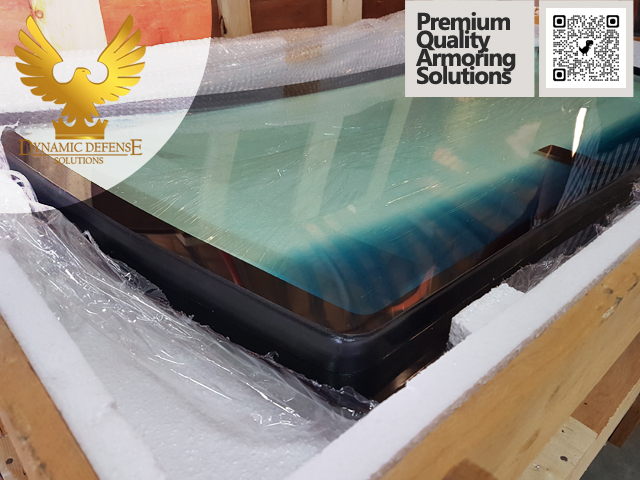
Ballistic Windshield for the 2027 Kia Telluride

The windshield is normally one of the largest transparent protection components in an armored SUV.

Producing 2027 Kia Telluride Bulletproof Glass for the windshield means balancing ballistic performance with optical quality, correct curvature and vehicle-specific installation requirements.

Modern vehicles increasingly integrate cameras and driver-assistance technology around the windshield area. Kia states that the 2027 Telluride comes with an extensive suite of driver-assistance features, with 19 ADAS technologies listed as standard on the gasoline model. Kia Media

For an armored conversion, this means the windshield specification should be reviewed carefully rather than treating the glazing as a simple flat protective panel.

The objective is to achieve the required ballistic protection while preserving the geometry necessary for installation and visibility.

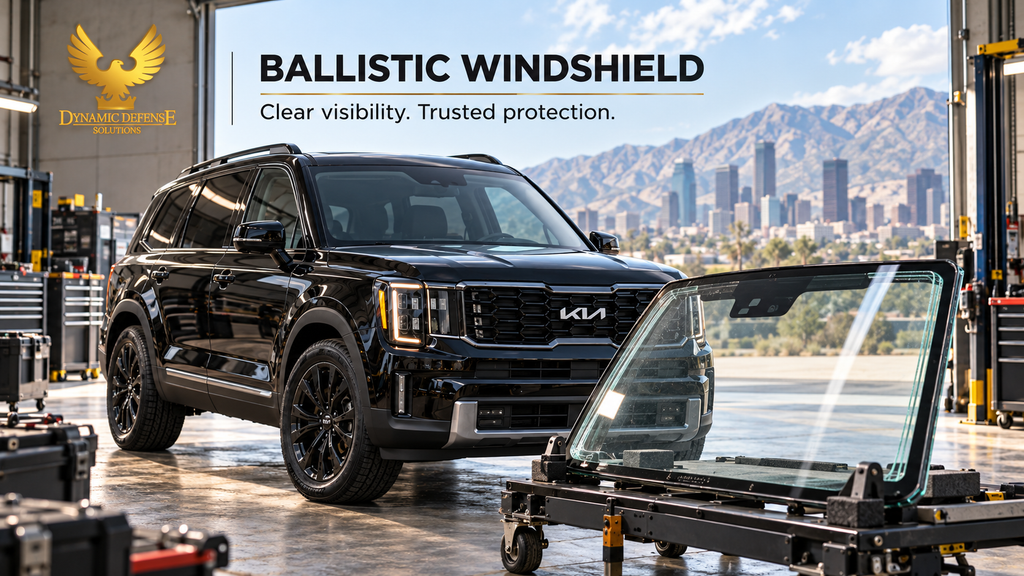
ChatGPT Image Oct 5 2026 01 59 56 PM 2

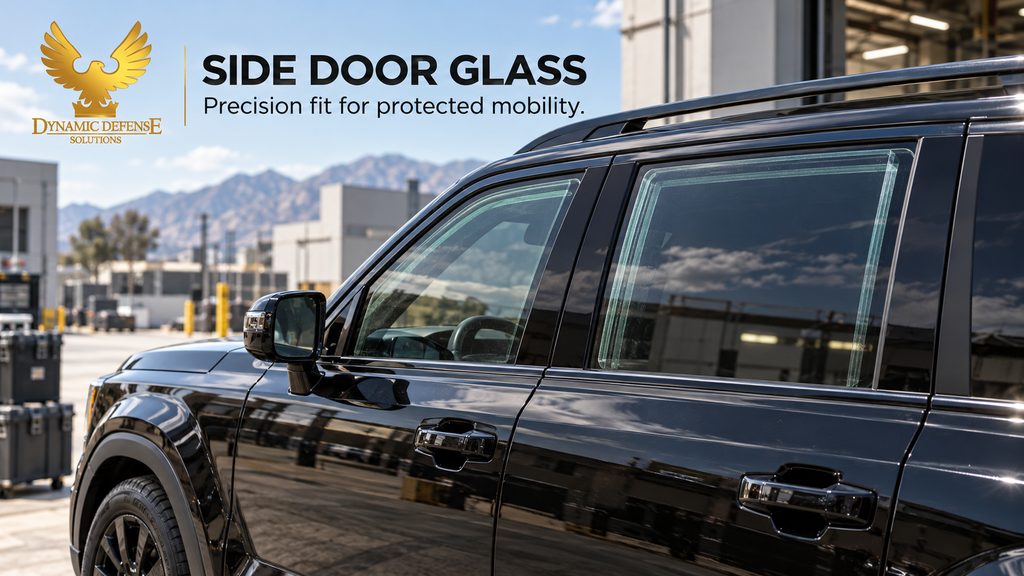
Side Door Bulletproof Glass

The front and rear door windows create a different engineering challenge.

Unlike the windshield, door glazing interacts directly with the door frame, seals, internal structure andโ€”depending on the armoring designโ€”window operating mechanism.

A 2027 Kia Telluride Bulletproof Glass package may therefore include fixed ballistic door glass manufactured according to the customer’s armoring design and specified protection level.

The thickness of ballistic glass can dramatically exceed standard automotive glazing, so correct dimensions and edge configuration are critical.

Even a small dimensional error can create problems with:

  • Door closing
  • Glass seating
  • Rubber seals
  • Interior trim
  • Steel overlap
  • Overall ballistic coverage

This is why DDS strongly prefers verified specifications before manufacturing vehicle-specific ballistic glass.

ChatGPT Image Oct 5 2026 02 00 00 PM 3

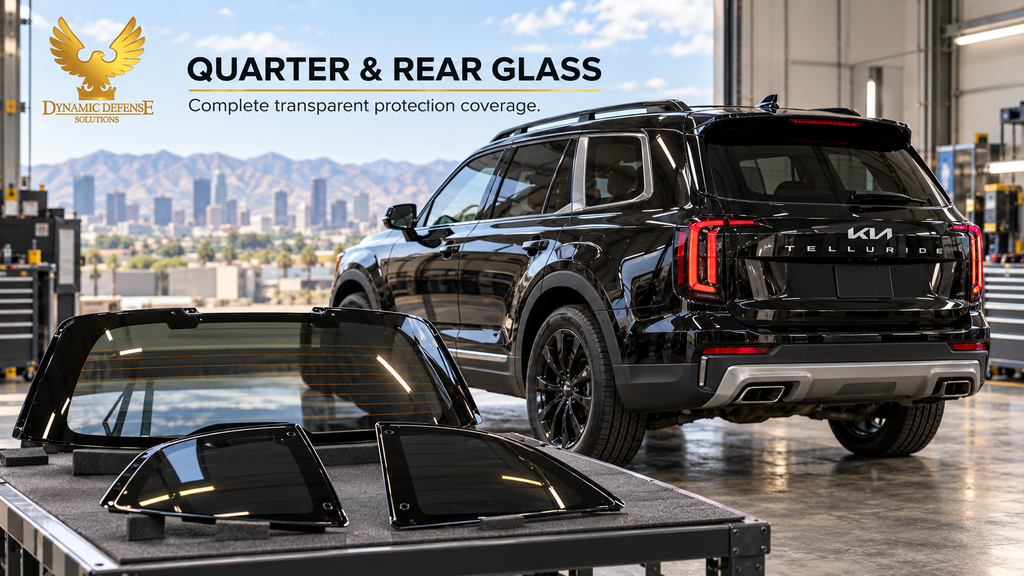
Quarter Glass and Rear Glazing

A complete transparent armor package is not limited to the windshield and front doors.

Depending on the vehicle configuration and armoring design, 2027 Kia Telluride Bulletproof Glass can also be required for rear doors, quarter windows and rear hatch glazing.

Each piece needs to correspond with the surrounding opaque armor.

This is particularly important around the edges of transparent armor, where the glass and ballistic steel system must be engineered as parts of the same protective envelope.

The objective is not simply to manufacture individual glass piecesโ€”it is to ensure the glazing is suitable for integration into the complete vehicle protection design.

ChatGPT Image Oct 5 2026 02 00 02 PM 4

Choosing the Correct Ballistic Protection Level

The glass specification should always follow the threat requirement of the project.

Dynamic Defense Solutions supplies ballistic glazing across different protection levels, including solutions for applications commonly specified around BR4, BR5, BR6 and BR7 requirements, depending on the project and required test standard.

A higher protection level normally means greater glass thickness and weight.

Therefore, specifying 2027 Kia Telluride Bulletproof Glass should begin with one basic question:

What threat does the vehicle need to protect against?

The correct solution for discreet handgun protection is very different from the glazing required for protection against rifle threats.

DDS works from the required protection specification rather than automatically recommending the thickest available glass.

Dynamic Armored Glass for Civilian Armored Vehicles

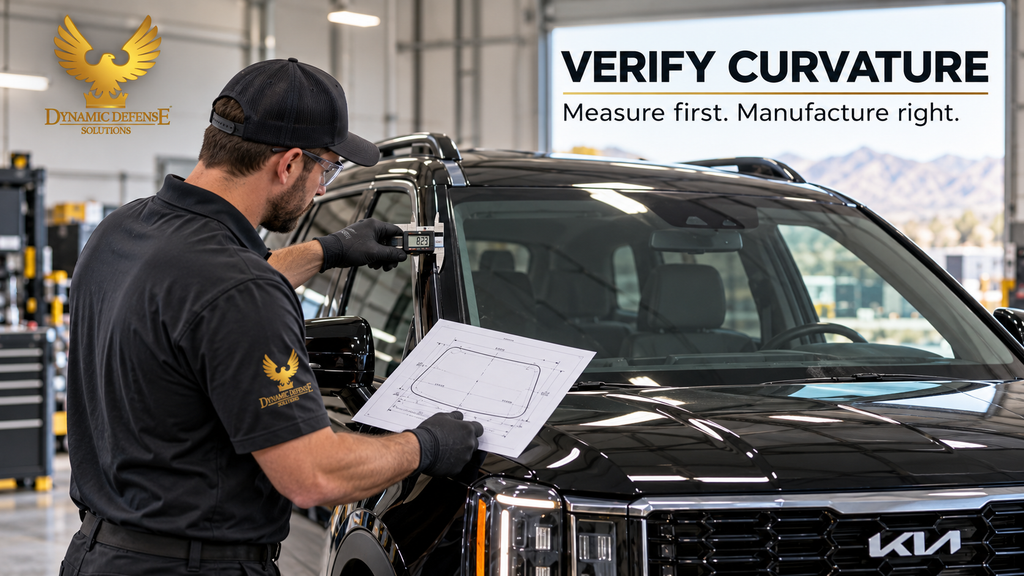
Why Verification Is Especially Important for the 2027 Model

This point is particularly important.

Because the 2027 Telluride is a new-generation vehicle, DDS would not recommend producing a complete glass set based only on assumptions from the previous generation.

For the first 2027 Kia Telluride Bulletproof Glass projects, the safest production process is based on verified information such as:

  • Original OEM glass
  • Accurate physical template
  • Detailed technical drawing
  • Confirmed dimensions
  • Curvature verification
  • Edge-step specification
  • Photos of brackets, sensors and functional areas

Once the specification is confirmed, production can proceed against a defined reference instead of assumptions.

For professional armoring companies, this dramatically reduces the risk of receiving glass that has the correct general shape but does not match the actual installation requirements.

ChatGPT Image Oct 5 2026 02 00 05 PM 5

Dynamic Defense Solutions as Your Ballistic Glass Partner

Choosing a ballistic glass supplier involves more than comparing price per piece.

The supplier needs to understand the interaction between glass thickness, dimensions, curvature, ballistic level and vehicle installation.

Dynamic Defense Solutions supports armoring companies and vehicle converters with custom ballistic glazing for a wide range of international vehicle platforms.

For 2027 Kia Telluride Bulletproof Glass, DDS can work from verified customer specifications to develop a glass package suitable for the required protection project.

Depending on the vehicle and requirement, we can support:

  • Ballistic windshields
  • Front door glass
  • Rear door glass
  • Quarter glass
  • Rear glass
  • Complete vehicle glass sets

Our standard ballistic glass solutions are manufactured around the customer’s confirmed technical requirement rather than relying solely on vehicle names or OEM references.

Supporting International Armoring Projects

The Telluride is designed primarily for the North American market, but specialty and security vehicle projects increasingly move across international supply chains.

DDS supports customers in markets including the UAE, Ukraine, Nigeria, Kenya, the Middle East, Africa and other international regions.

For new vehicle platforms, our approach remains the same:

Verify first. Manufacture second.

That process is especially valuable when producing 2027 Kia Telluride Bulletproof Glass, where the vehicle’s new body design means previous-generation dimensions should not be assumed.

Conclusion

The 2027 Kia Telluride brings a larger body, revised styling, new turbocharged powertrains and the model’s first hybrid option. For an armored vehicle project, however, those developments also mean the glass specification must be treated as a new engineering requirement rather than copied from an earlier Telluride. Kia Media

High-quality 2027 Kia Telluride Bulletproof Glass should combine the required ballistic protection with accurate dimensions, suitable curvature, correct edge construction and proper integration with the vehicle.

At Dynamic Defense Solutions, we work with professional armoring companies and vehicle converters to manufacture ballistic glass according to verified project specifications.

For a new Telluride project, send us the required protection level, vehicle details and available OEM glass or technical measurements, and our team can review the requirement.

Send Us Your Inquiries Today


SIMILAR PRODUCTS

Armored Car Parts

SUCCESSFULL STORIES

LOGISTICS SERVICES

Supply Chain is core of our operational efficiency providing logistics services anywhere in the world for Armored cars and Armored cars parts. To date we have successfully shipped our products to many countries around the Globe. Our supply chain is supported by a dedicated team of highly capable and experienced logistic professionals. Offering freight by air, land or sea within efficient time frame

HAVE SUCCESSFULLY SHIPPED OUR ARMORED CARS PARTS TO MANY COUNTRIES AROUND THE GLOBE
Armored Vehicle Parts Ukraine: Complete Guide for TLC 76, 78, 79, Hilux & L200
Armored Vehicle Suspension Systems: Why They Matter More Than You Think
Prado 250 Armored Car Parts & Protection Kit

Toyota Fortuner Armored Spare Parts | Complete Armoring Solutions

ChatGPT Image Oct 1 2026 02 02 50 PM 1
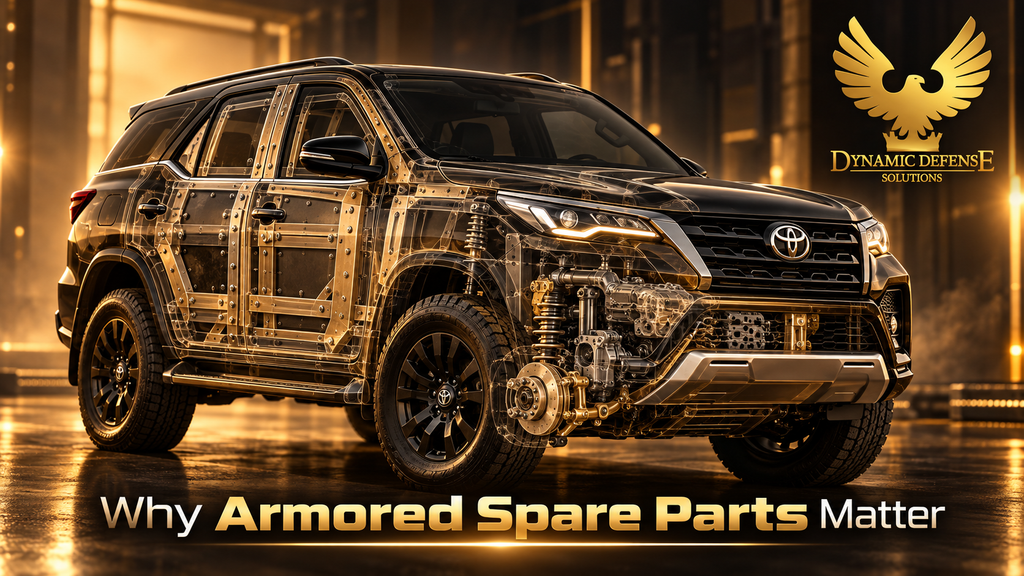
Toyota Fortuner Armored Spare Parts

Toyota Fortuner Armored Spare Parts for Reliable Protection and Performance

The Toyota Fortuner is widely used across Asia, Africa, the Middle East, and other demanding markets because of its durability, strong road presence, and suitability for both urban and rough-road environments. Once the vehicle is armored, however, the demands placed on its mechanical and structural systems change significantly.

This is why the right Toyota Fortuner Armored Spare Parts are just as important as the ballistic protection itself.

At Dynamic Defense Solutions, we supply specialized armored vehicle components for professional armoring companies, converters, security organizations, and fleet operators looking for dependable solutions for protected vehicles.

Armored Spare Parts

Why Toyota Fortuner Armored Spare Parts Matter

Adding ballistic glass and steel increases vehicle weight and changes how the Fortuner behaves under braking, cornering, acceleration, and rough-road conditions.

The additional load also affects the doors, hinges, suspension, wheels, tires, and braking system. Properly selected Toyota Fortuner Armored Spare Parts help support these changes and contribute to a more reliable finished vehicle.

Key considerations include:

  • Additional vehicle weight
  • Increased armored-door load
  • Ride height and stability
  • Tire mobility after damage
  • Braking performance
  • Long-term mechanical durability

For a professional armoring project, these components should be planned alongside the protection package rather than added later.

ChatGPT Image Oct 1 2026 02 02 52 PM 2

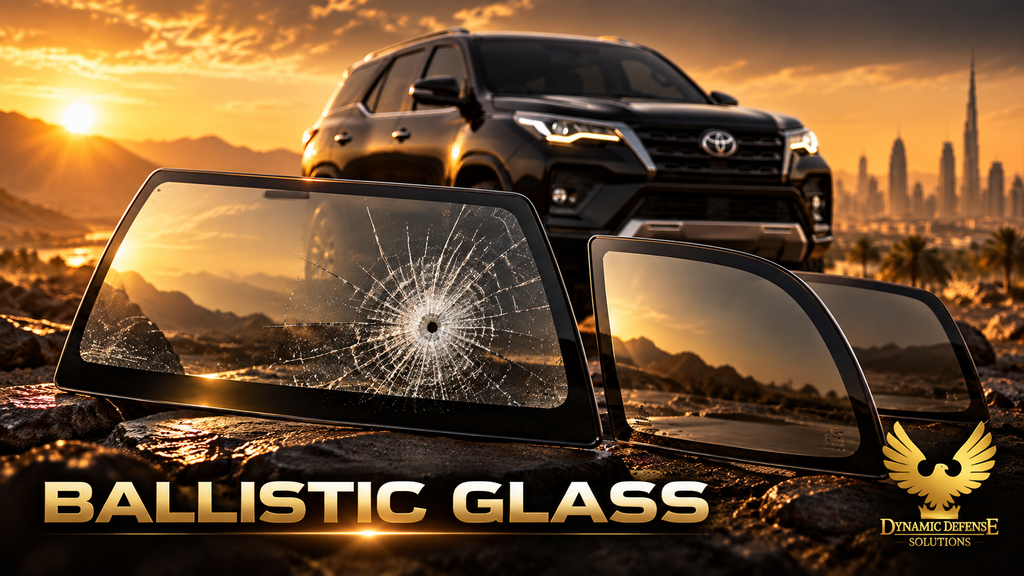
Ballistic Glass for Toyota Fortuner

Ballistic glass is one of the most critical components in an armored vehicle because it must combine transparent protection with clear visibility.

A complete Fortuner glass package can include the windshield, front and rear door glass, quarter glass, and rear glass depending on the configuration.

The right Toyota Fortuner Armored Spare Parts package should include ballistic glazing manufactured according to the required protection level, vehicle dimensions, curvature, edge step, and installation requirements.

Proper fitment is especially important because even a small dimensional mismatch can create installation problems during the armoring process.

ChatGPT Image Oct 1 2026 02 02 53 PM 3

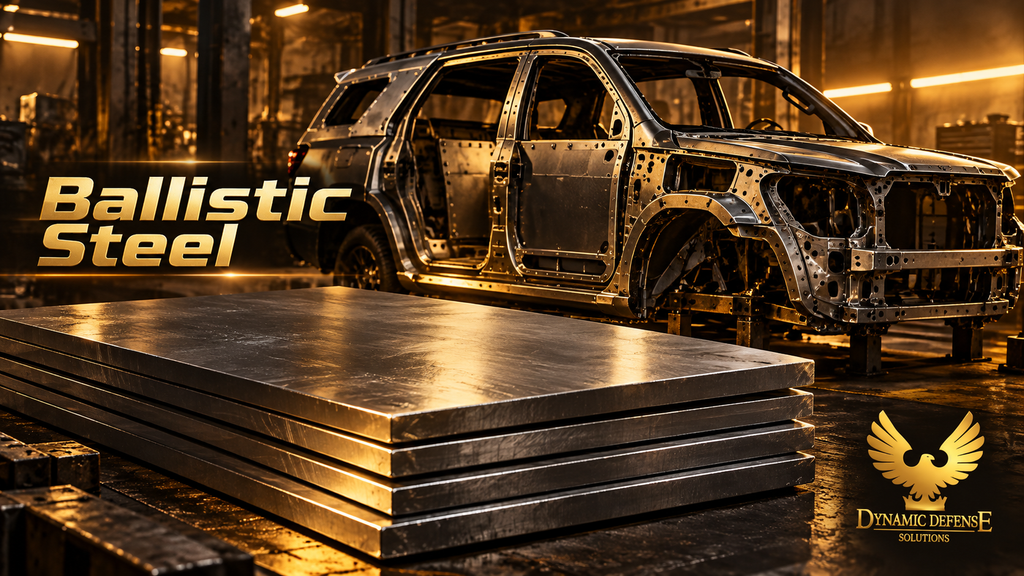
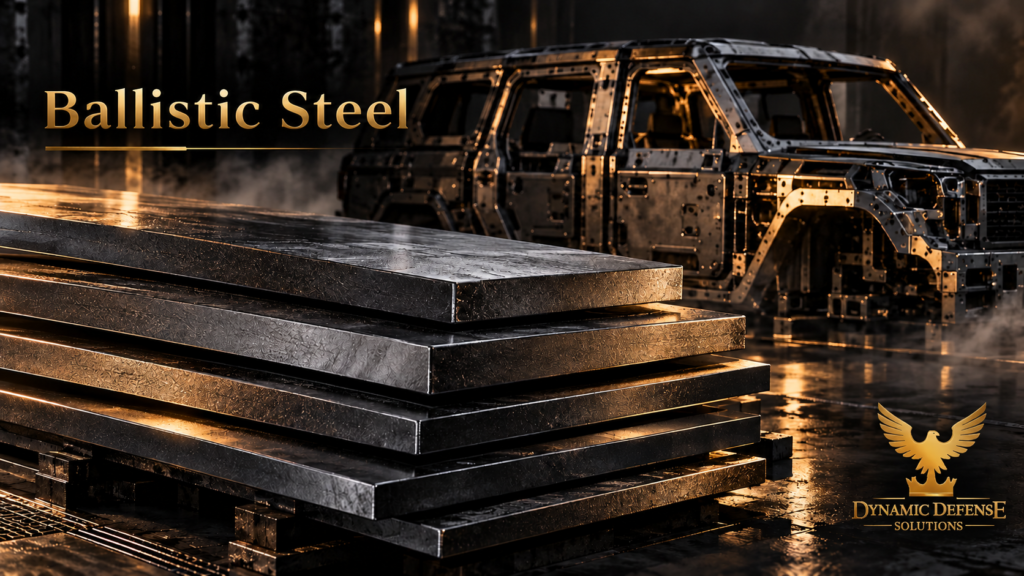
Ballistic Steel and Structural Protection

Ballistic steel provides the opaque protection around the passenger compartment and other vulnerable areas.

Depending on the protection level, steel can be installed in areas such as:

  • Doors
  • Pillars
  • Roof
  • Firewall
  • Rear section
  • Floor and other vulnerable zones

High-quality Toyota Fortuner Armored Spare Parts should use suitable ballistic-grade steel selected according to the required threat level while keeping unnecessary weight under control.

The goal is not simply to add more steel. A good armoring package balances protection, weight, structure, and vehicle performance.

ChatGPT Image Oct 1 2026 02 02 55 PM 4

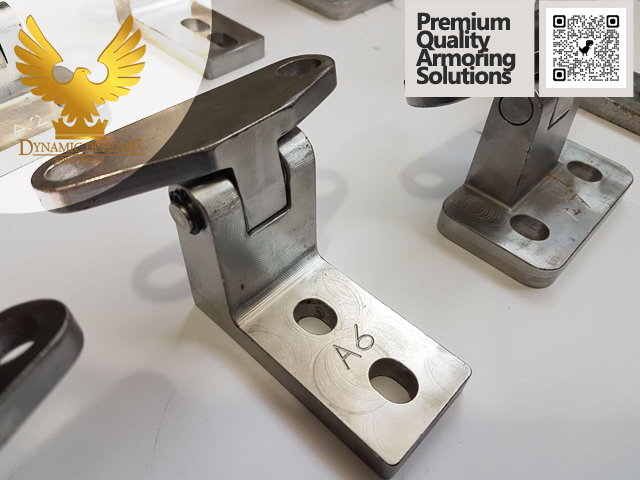
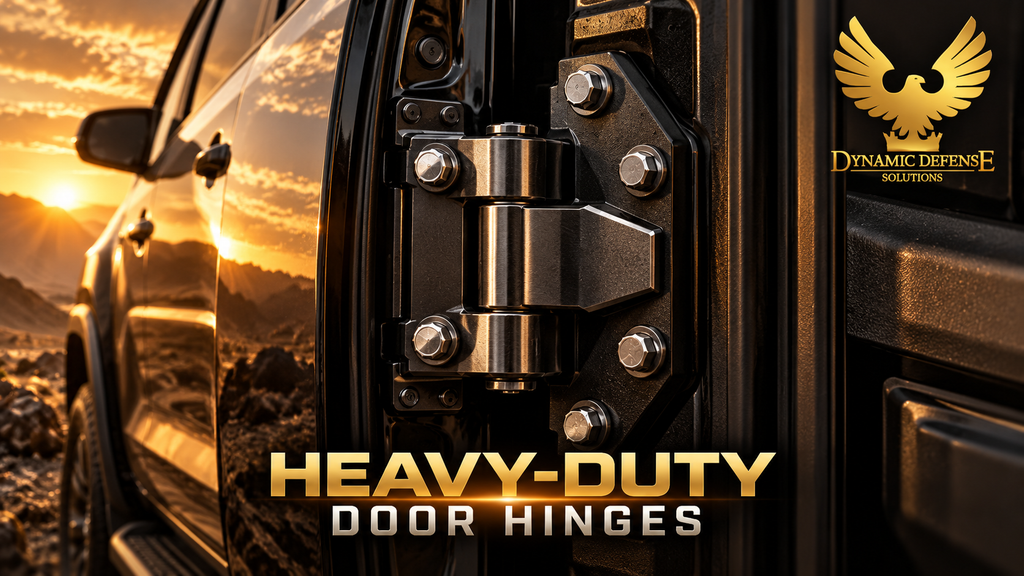
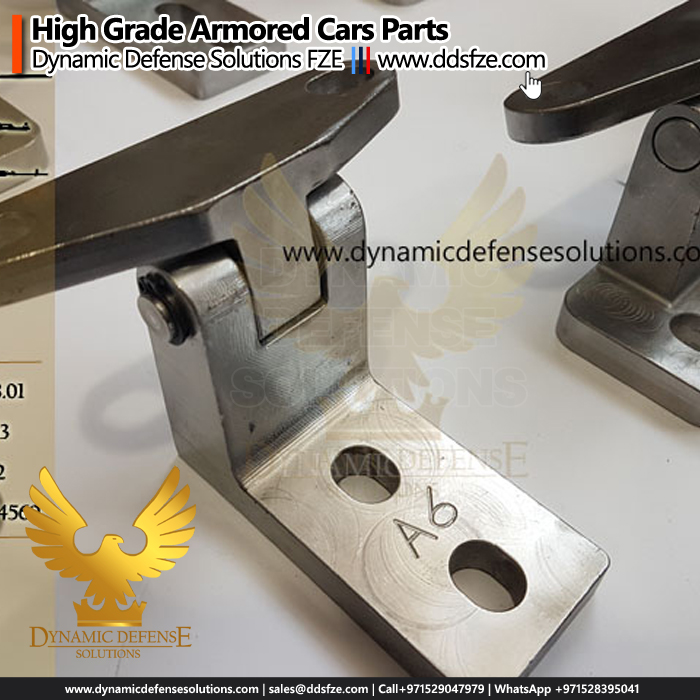
Heavy-Duty Door Hinges

Armored doors are substantially heavier than standard doors because of the additional ballistic glass and steel.

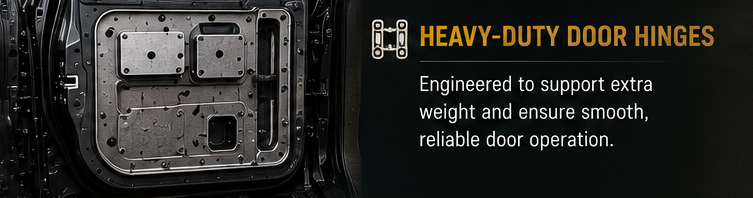
Standard OEM hinges may not be designed to support this additional weight over long-term use. This can lead to door sagging, alignment problems, difficult closing, and premature wear.

Heavy-duty machined hinges are therefore an important part of Toyota Fortuner Armored Spare Parts, helping the armored doors operate more reliably under the increased load.

For professional projects, hinge design and door weight should be considered early during the armoring process.

ChatGPT Image Oct 1 2026 02 02 56 PM 5

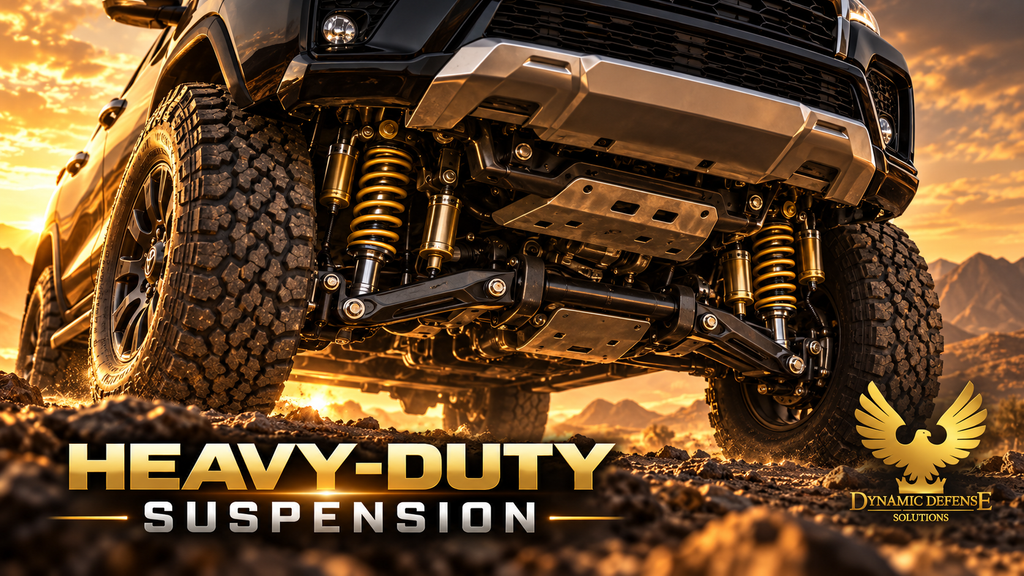
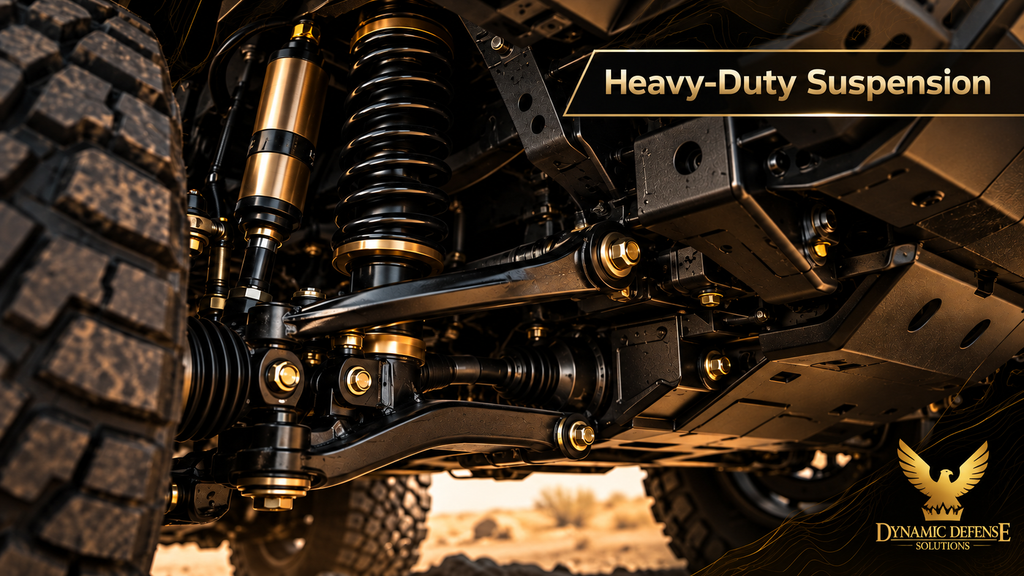
Heavy-Duty Suspension

One of the most important changes after armoring is the increase in total vehicle weight.

The suspension must therefore be selected according to the final armored weight and intended operating conditions.

Heavy-duty suspension systems can help maintain:

  • Proper ride height
  • Vehicle stability
  • Load support
  • Steering response
  • More controlled handling

A suitable suspension setup is one of the most important Toyota Fortuner Armored Spare Parts for maintaining dependable vehicle performance after the armoring process is complete.

ChatGPT Image Oct 1 2026 02 02 58 PM 6

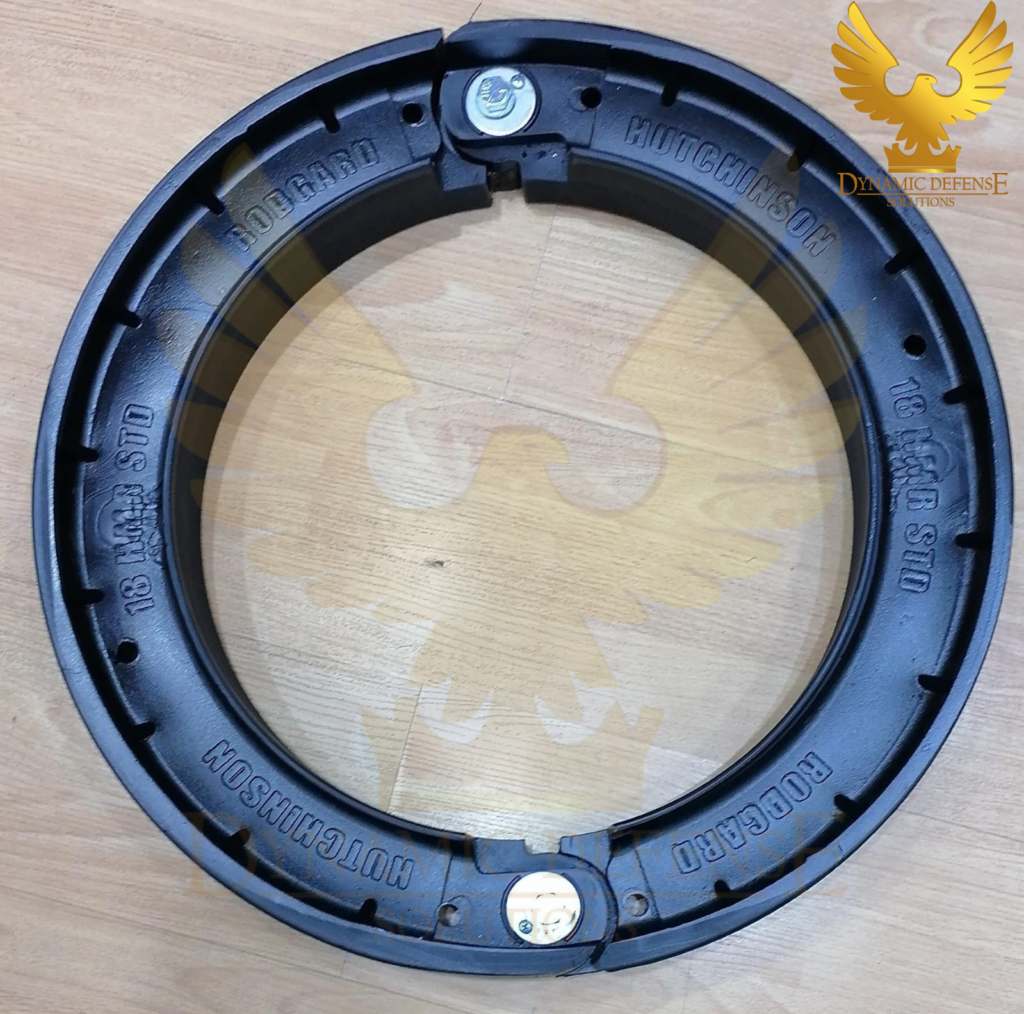
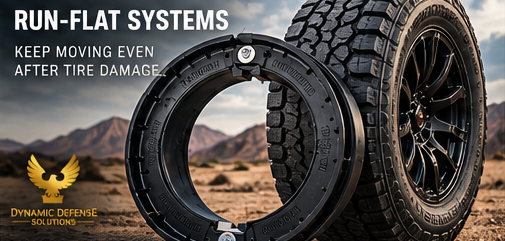
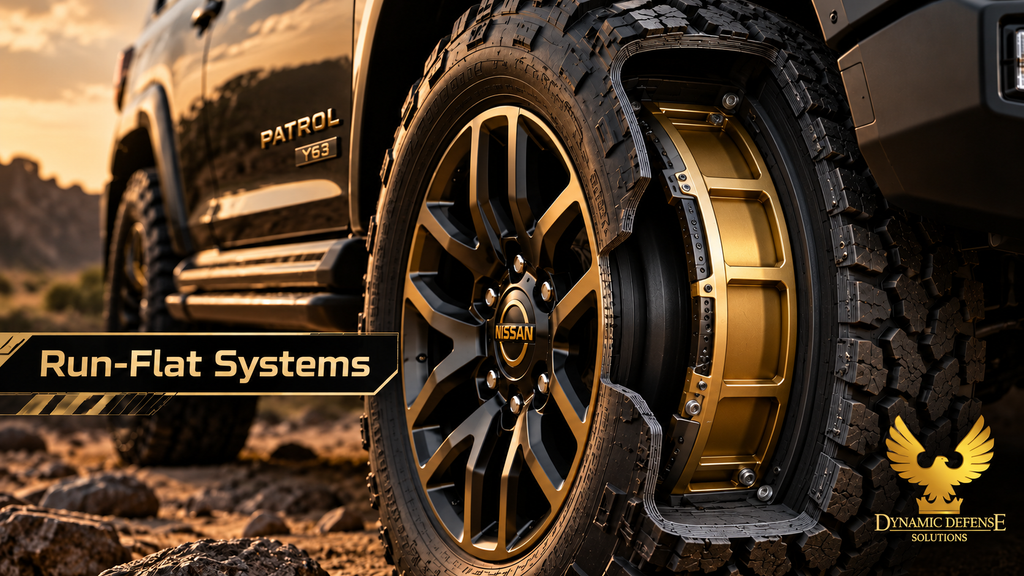
Run-Flat Systems

An armored vehicle must remain mobile even when a tire is damaged.

Run-flat systems are designed to support the tire after loss of pressure, allowing the vehicle to continue moving for a limited distance depending on load, speed, tire condition, and system design.

For Toyota Fortuner Armored Spare Parts, run-flat selection should be based on the actual wheel and tire specification.

Important factors include:

  • Rim diameter
  • Rim width
  • Tire internal dimensions
  • Run-flat outer diameter
  • Vehicle weight
  • Required operating conditions

Correct sizing is critical because the run-flat must work as part of the complete wheel and tire assembly.

y63 rf

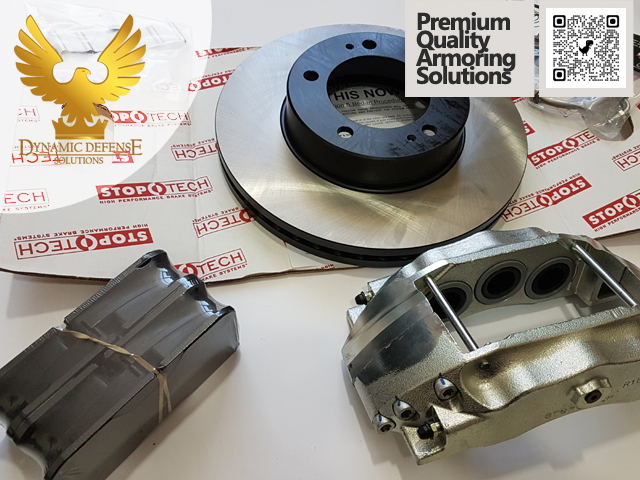
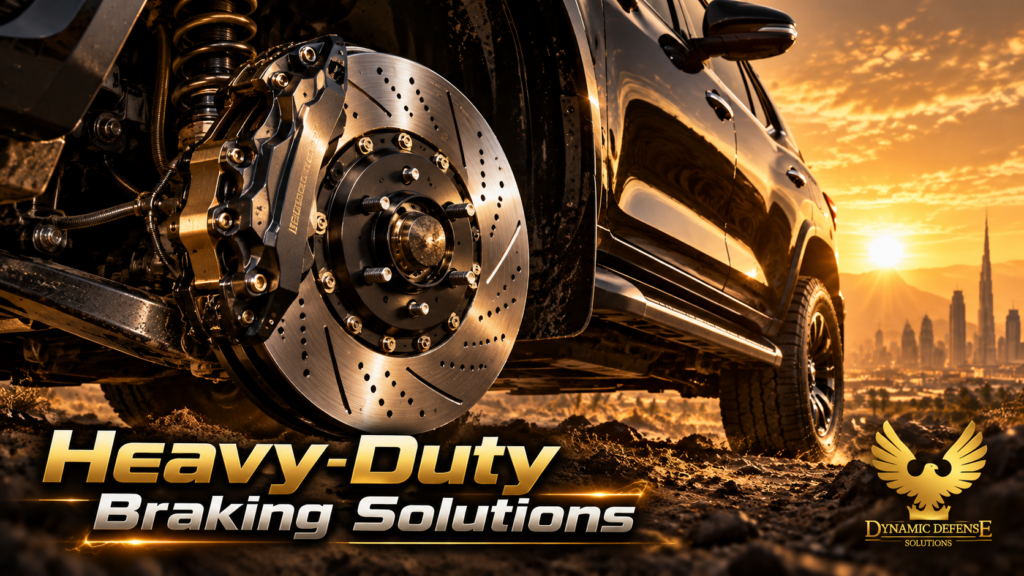
Heavy-Duty Braking Solutions

Additional armored weight increases the demand placed on the braking system.

A vehicle that is significantly heavier than standard may require upgraded braking components to maintain dependable stopping performance.

Depending on the project, Toyota Fortuner Armored Spare Parts can include upgraded brake discs, calipers, pads, and other heavy-duty braking components.

The final braking solution should always be selected according to the finished vehicle weight and intended application.

ChatGPT Image Oct 1 2026 02 03 00 PM 8

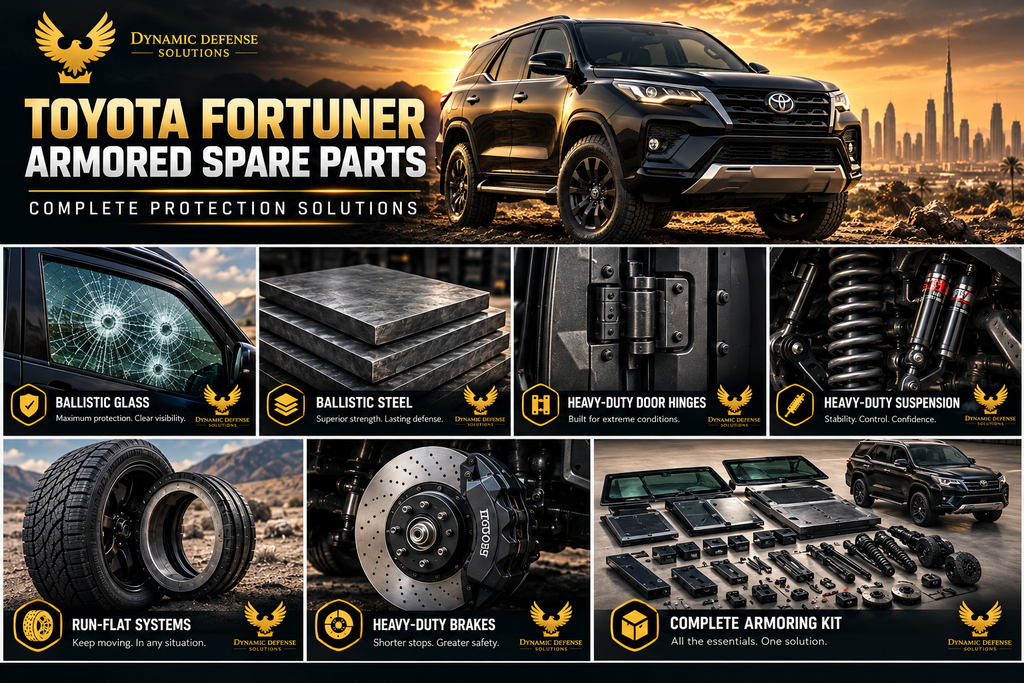
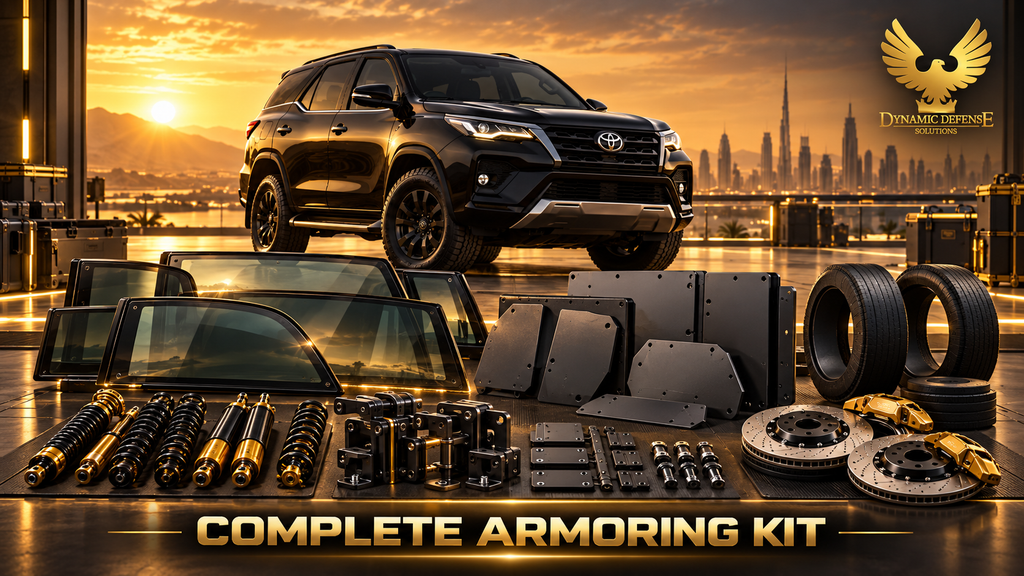
Complete Armoring Kit for Toyota Fortuner

For customers who prefer sourcing everything through one supplier, Dynamic Defense Solutions can also provide complete armoring kit solutions.

A complete package of Toyota Fortuner Armored Spare Parts may include:

  • Ballistic glass set
  • Ballistic steel package
  • Heavy-duty door hinges
  • Heavy-duty suspension
  • Run-flat systems
  • Heavy-duty braking solutions
  • Additional reinforcement components

This approach can simplify procurement for armoring companies by reducing the need to coordinate multiple individual suppliers.

The exact package can be customized according to protection level, vehicle configuration, quantity, and project requirements.

ChatGPT Image Oct 1 2026 02 03 01 PM 9

Supporting Global Armoring Markets

Toyota Fortuner platforms are widely used across international markets, including:

Nigeria โ€ข Kenya โ€ข UAE โ€ข Saudi Arabia โ€ข Iraq โ€ข Pakistan โ€ข wider Africa โ€ข Middle East โ€ข Asia

These regions often require vehicles that combine protection, mobility, durability, and serviceability.

For armoring companies operating in these markets, sourcing dependable Toyota Fortuner Armored Spare Parts from an experienced supplier can help simplify project coordination and reduce procurement challenges.

Choosing the Right Armored Spare Parts Supplier

Not all armored vehicle components are manufactured to the same specifications.

The supplier should understand how different systems interact with each other. Glass affects door weight, steel affects total vehicle weight, additional mass affects suspension and braking, and wheel configuration affects run-flat selection.

This is where Dynamic Defense Solutions (DDS) provides value as a specialized armored vehicle parts supplier.

DDS can support customers with individual components or complete packages depending on the project. Our focus is to provide suitable Toyota Fortuner Armored Spare Parts according to the vehicle, protection requirements, and operating conditions.

Why Dynamic Defense Solutions?

At Dynamic Defense Solutions, we focus on supplying the components that armoring companies need to complete reliable vehicle protection projects.

Instead of acting as the bodyshop, DDS works as a specialized supply partner for armored vehicle components and complete armoring packages.

Whether the requirement is ballistic glass, steel, hinges, run-flats, suspension, brakes, or a full kit, our goal is simple:

One experienced supplier. Multiple critical armored vehicle components.

Conclusion

Armoring a Toyota Fortuner requires more than adding ballistic glass and steel.

The additional weight changes the demands placed on the doors, suspension, tires, wheels, and braking system. Selecting the right Toyota Fortuner Armored Spare Parts helps create a more complete and reliable armored vehicle solution.

With individual components and complete armoring kits available, Dynamic Defense Solutions supports armoring companies, vehicle converters, security organizations, and fleet operators across international markets.

Get in Touch


SIMILAR PRODUCTS

Armored Spare Parts

SUCCESSFULL STORIES

LOGISTICS SERVICES

Supply Chain is core of our operational efficiency providing logistics services anywhere in the world forย Armored carsย andย Armored spare parts. To date we have successfully shipped our products to many countries around the Globe. Our supply chain is supported by a dedicated team of highly capable and experienced logistic professionals. Offering freight by air, land or sea within efficient time frame

HAVE SUCCESSFULLY SHIPPED OUR ARMORED CARS PARTS TO MANY COUNTRIES AROUND THE GLOBE

Armored Vehicle Parts Ukraine: Complete Guide for TLC 76, 78, 79, Hilux & L200
Armored Vehicle Suspension Systems: Why They Matter More Than You Think
Prado 250 Armored Car Parts & Protection Kit
Replacement Ballistic Glass for Armored Vehicles: Why an OEM Part Number Is Not Enough

ChatGPT Image Sep 28 2026 02 38 41 PM 1
ChatGPT Image Sep 28 2026 02 38 54 PM 7

Replacement Ballistic Glass for Armored Vehicles: The Measurements That Prevent Fitment Problems

A customer needs a replacement windshield for an armored Toyota Land Cruiser. They provide the vehicle model, production year and OEM glass number. That information is usefulโ€”but it may not be enough to manufacture the correct ballistic replacement.

The original OEM number normally identifies the standard automotive glass and its base vehicle application. It does not necessarily describe the ballistic-glass construction installed during a previous armoring project.

Glass thickness, curvature, edge geometry, black ceramic band, ballistic overlap and the way the original armoring company modified the frame can all vary. This makes replacement ballistic glass for armored vehicles a measurement-led product, especially when the supplier did not manufacture the original protected glass.

Why Replacement Ballistic Glass for Armored Vehicles Is Not a Standard Spare Part

Standard automotive glass is normally produced around a controlled vehicle specification. Ballistic glass is integrated into a conversion that may have been designed by a different armoring company using its own glass construction, frame modifications and overlap system.

Two visually similar armored vehicles may therefore use different ballistic windshields even when they share the same base model and year.

One vehicle may have a relatively narrow internal overlap. Another may use a deeper step around the perimeter. One armorer may retain more of the OEM aperture, while another may modify the frame to accommodate thicker glass.

The protection requirement can change the total laminate thickness as well. However, thickness should never be assumed from a protection-level label alone. Different transparent-armor constructions may achieve their tested performance using different combinations of glass, polymer layers and internal anti-spall materials.

A correct replacement must suit both the required ballistic construction and the existing vehicle aperture.

ChatGPT Image Sep 28 2026 02 38 42 PM 2

The Edge Step or Offset Must Be Measured Separately

The perimeter stepโ€”sometimes described as an offset, rebate or reduced-thickness edgeโ€”is one of the most important details in a ballistic-glass replacement.

The central viewing area may have the full ballistic laminate thickness, while the edge is configured differently to fit the frame and interact with the surrounding armor. The required step can vary in:

  • Width
  • Depth
  • Position around the perimeter
  • Shape at corners
  • Distance from the visible ceramic band
  • Relationship to the vehicleโ€™s ballistic overlap

A glass panel may have the correct outer dimensions and still fail to install correctly if its edge step is wrong.

The technical drawing should show where the step begins, how far it extends and the remaining thickness at that area. If the step changes along different sides of the glass, each section should be identified separately.

A scale or ruler placed on top of the glass is usually not sufficient for confirming complex edge geometry. Cross-sectional measurements or a clear profile drawing are more reliable.

ChatGPT Image Sep 28 2026 02 38 43 PM 3

Curvature Must Match the Existing Aperture

Ballistic windshields are thick laminated structures. They cannot be forced into position in the same way that a flexible trim component might be adjusted.

If the curvature does not match the frame, the installer may face uneven gaps, excessive adhesive thickness or concentrated stress around part of the perimeter. Attempting to pull an incorrect glass shape into the opening can create installation risk and may compromise long-term serviceability.

For replacement ballistic glass for armored vehicles, the safest reference is often one of the following:

  1. The original supplierโ€™s approved production drawing
  2. An undamaged glass sample removed from an identical vehicle
  3. A verified physical template or scan of the existing opening
  4. A sufficiently detailed measurement package approved by both supplier and installer

Photographs remain valuable, but they should support dimensional information rather than replace it.

ChatGPT Image Sep 28 2026 02 38 45 PM 4

Ceramic Band and Visible Area

The black ceramic band around automotive glass is not just a decorative border. Its dimensions and position influence the finished appearance, the concealed bonding area and the driverโ€™s visible field.

If a replacement windshield is supplied with a ceramic band that is too wide, the visible area may be unnecessarily reduced. If it is too narrow or incorrectly positioned, adhesive or internal frame details may remain visible.

The drawing should specify:

  • External glass dimensions
  • Ceramic-band outer and inner boundaries
  • Clear viewing area
  • Mirror or camera cut-outs
  • Any required logo, marking or identification position

The ceramic design should be checked against the actual converted vehicleโ€”not copied automatically from standard OEM glass when the armored frame has been modified.

ChatGPT Image Sep 28 2026 02 38 52 PM 5

Heating, Cameras, Antennas and Sensors

Modern automotive glass may contain far more than transparent material. Heating elements, antennas, rain sensors, cameras, head-up-display areas and other functions can be incorporated into the windshield.

Automotive-glass manufacturers currently offer windshields with heating, antennas and sensor integration, showing why these features must be identified during the specification stage.

Before manufacturing replacement ballistic glass for armored vehicles, the buyer should confirm:

  • Whether heating is required
  • The location and type of electrical connectors
  • Connector orientation and cable length
  • Camera or sensor opening dimensions
  • Bracket type and position
  • Mirror mounting arrangement
  • Antenna requirements
  • Any areas that must remain optically clear

A photograph of the full windshield and detailed photographs of each connection can prevent misunderstandings. Electrical functions should also be verified during installation rather than assumed operational based only on physical fitment.

Protection Level and Certification Must Be Described Correctly

The required ballistic standard and protection class must be stated clearly when requesting a replacement. Ammunition type, projectile construction, velocity and test conditions vary between standards and protection classes.

EN 1063, for example, addresses the testing and classification of security glazing against bullet attack. Other projects may specify different standards depending on the vehicle, customer and market.

A supplier should not conclude that a complete vehicle achieves a particular protection level merely because the glass construction has been tested to that level. A glass test report concerns the tested transparent-armor sample and its defined configuration.

The complete vehicleโ€™s protection also depends on installation, frame reinforcement, overlap design, joints and the surrounding opaque armor. Component certification and complete-vehicle protection are relatedโ€”but they are not the same claim.

When purchasing replacement ballistic glass for armored vehicles, request the applicable test documentation and ensure that the supplied construction corresponds to the documented configuration.

replacement ballistic glass for armored vehicles

What to Send the Supplier Before Requesting a Final Quotation

A serious quotation should be based on a controlled information package. Ideally, the buyer should provide:

  • Vehicle make, model, year and body style
  • VIN or chassis details where relevant
  • OEM glass number
  • Windshield, door or rear-glass position
  • Left-hand or right-hand side
  • Required protection standard and class
  • Existing glassโ€™s total thickness
  • Maximum length and width
  • Detailed perimeter dimensions
  • Curvature data or physical sample
  • Edge-step width and depth
  • Ceramic-band dimensions
  • Heating, antenna and sensor requirements
  • Photographs of the installed and removed glass
  • Quantity required
  • Delivery destination

If the existing glass is damaged but remains dimensionally stable, it may still be useful as a production reference. The supplier should confirm whether the sample is suitable before shipment.

For repeat orders, both parties should approve and retain a controlled drawing with a revision number. This reduces reliance on chat messages, photographs and informal measurements during future production.

ChatGPT Image Sep 28 2026 02 38 55 PM 8

Installation Should Be Planned Before Production

The replacement process does not begin when the glass arrives. The installer should review the aperture, frame condition, bonding area and removal method before the order is finalized.

Removing thick ballistic glass may reveal corrosion, damaged reinforcement, excessive previous adhesive or deformation around the opening. Those conditions should be corrected rather than hidden behind the new panel.

The handling plan also matters. Ballistic glass is heavy and should be moved using suitable lifting equipment and trained personnel. Dry-fitting, edge-clearance checks and controlled adhesive application can help identify issues before final bonding.

Correctly specified replacement ballistic glass for armored vehicles reduces site modification, but proper installation remains essential to the performance of the completed transparent-armor system.

How Dynamic Defense Solutions Supports Replacement Projects

Dynamic Defense Solutions supplies specialized armored-vehicle components for international projects, including custom ballistic glass for manufacturers, armoring companies, security-vehicle operators and specialist workshops.

For replacement ballistic glass for armored vehicles, DDS can review the base-vehicle information, existing glass measurements, protection requirement and functional options before production. Where the original drawing is unavailable, the project may require a physical sample, verified template or additional measurement work.

DDS is a component supply and project-support partner rather than primarily a vehicle-armoring bodyshop. Depending on the requirement, DDS can also support projects with ballistic steel, heavy-duty hinges, run-flat systems, suspension, braking solutions and related armored-vehicle components.

Conclusion

The correct ballistic-glass replacement cannot always be identified from the vehicle name and OEM number alone.

Thickness, curvature, overall dimensions, edge step, ceramic band, sensor areas and the existing armored frame must work together. Confirming these details before manufacturing is usually faster and less costly than modifying an incorrect panel during installation.

If you require replacement ballistic glass for armored vehicles, contact Dynamic Defense Solutions with your vehicle information, protection requirement, photographs and available measurements. Our team can review the project and advise what additional information is needed before quotation and production.

Send Us Your Inquiries Today


SIMILAR PRODUCTS

Armored Car Parts

SUCCESSFULL STORIES

LOGISTICS SERVICES

Supply Chain is core of our operational efficiency providing logistics services anywhere in the world forย Armored carsย andย Armored cars parts. To date we have successfully shipped our products to many countries around the Globe. Our supply chain is supported by a dedicated team of highly capable and experienced logistic professionals. Offering freight by air, land or sea within efficient time frame

HAVE SUCCESSFULLY SHIPPED OUR ARMORED CARS PARTS TO MANY COUNTRIES AROUND THE GLOBE

Armored Vehicle Parts Ukraine: Complete Guide for TLC 76, 78, 79, Hilux & L200
Armored Vehicle Suspension Systems: Why They Matter More Than You Think
Prado 250 Armored Car Parts & Protection Kit
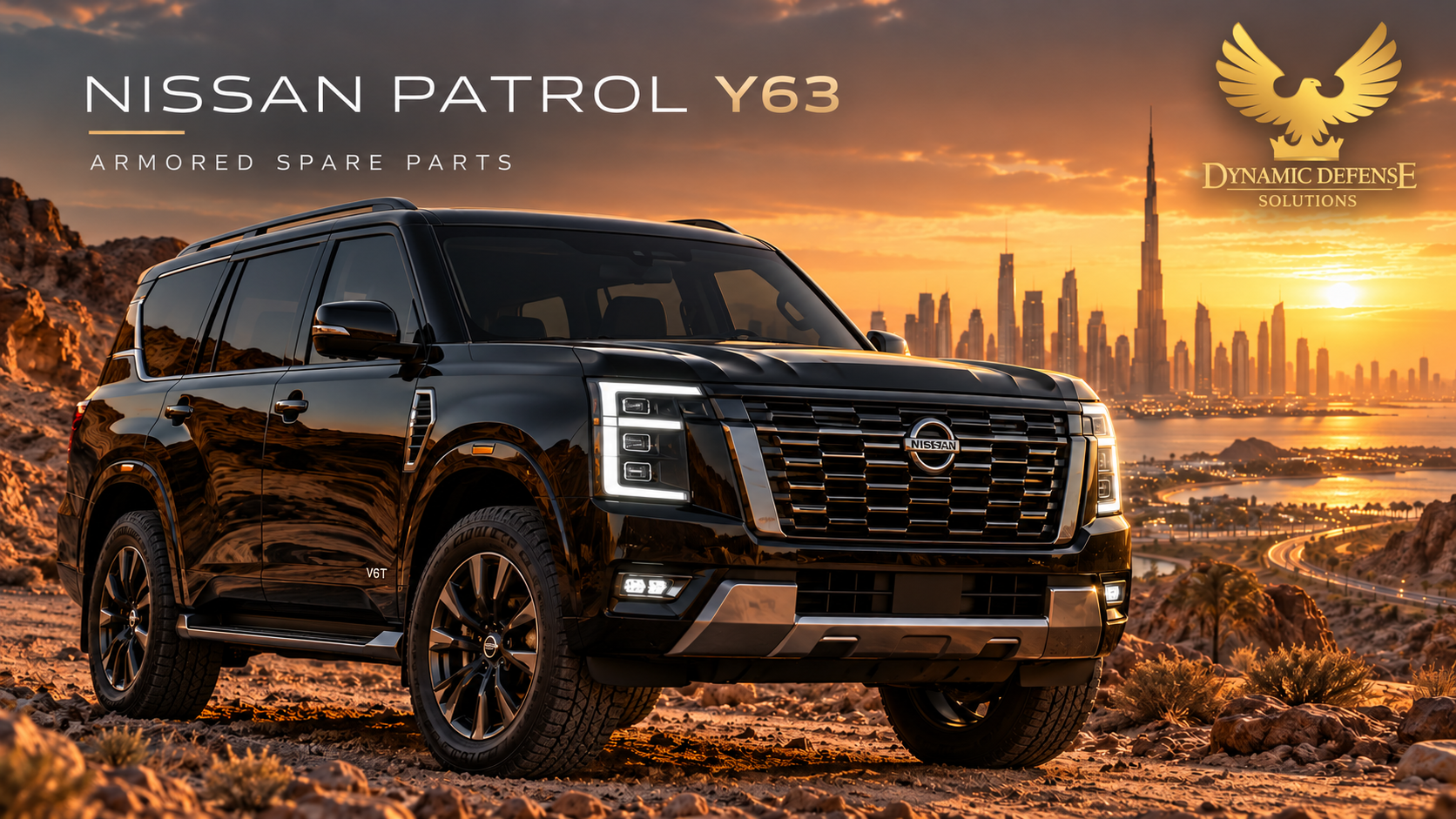
Nissan Patrol Armored Spare Parts | Y63 Protection Components

ChatGPT Image Sep 24 2026 02 03 04 PM 1
Nissan Patrol Armored Spare Parts

Nissan Patrol Armored Spare Parts for Y63: Complete Protection Solutions

The latest-generation Nissan Patrol Y63 combines a large SUV platform with powerful drivetrain options and modern technology. Nissan introduced the all-new Patrol in the Middle East with both a 3.8-liter naturally aspirated V6 and a 3.5-liter twin-turbo V6, while retaining four-wheel drive and moving to a 9-speed automatic transmission.

For an armored vehicle project, however, the base vehicle is only the starting point. Ballistic protection adds considerable weight and changes the loads placed on doors, suspension, tires, wheels, and braking systems. Choosing the correct Nissan Patrol Armored Spare Parts therefore becomes an important part of building a reliable protected vehicle.

At Dynamic Defense Solutions (DDS), our focus is not simply on the vehicle itself. We supply specialized components that armoring companies, converters, security-vehicle builders, and other B2B customers can integrate into their projects.

Armored Spare Parts

Why Nissan Patrol Armored Spare Parts Matter After Armoring

Adding ballistic glass and protective steel changes far more than the protection level of an SUV.

The additional mass can influence ride height, braking distance, handling, door operation, tire loading, and suspension performance. Components that perform perfectly on a standard vehicle may be operating under very different conditions once the vehicle has been armored.

A properly planned component package can help address:

  • Additional vehicle weight
  • Increased armored-door weight
  • Suspension load and vehicle stability
  • Mobility following tire damage
  • Increased braking demand
  • Long-term mechanical reliability

For this reason, the mechanical package and protection package should be considered together rather than independently.

ChatGPT Image Sep 24 2026 02 14 31 PM

Key Components for an Armored Nissan Patrol Y63

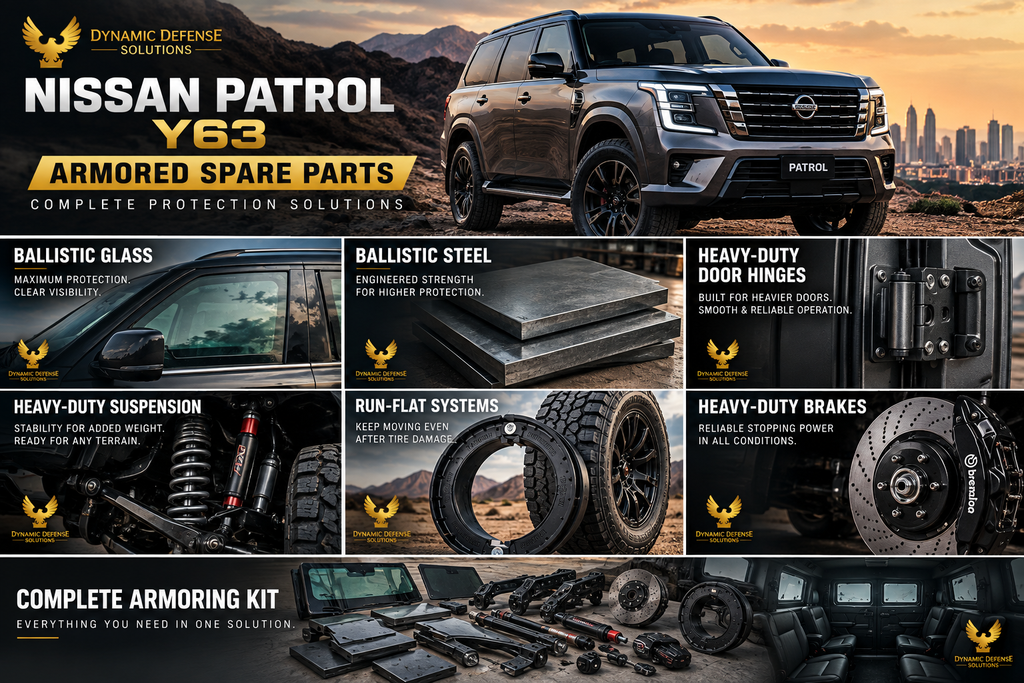
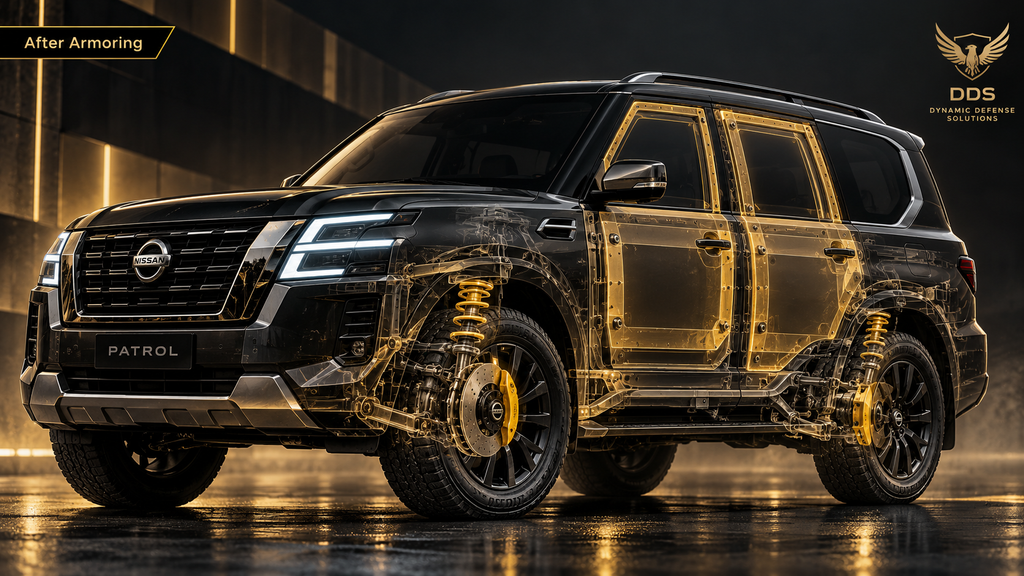
A complete set of Nissan Patrol Armored Spare Parts can cover both ballistic protection and the mechanical systems required to support the added weight.

The exact specification should always depend on the desired protection level, final vehicle weight, wheel and tire configuration, operating environment, and customer requirements.

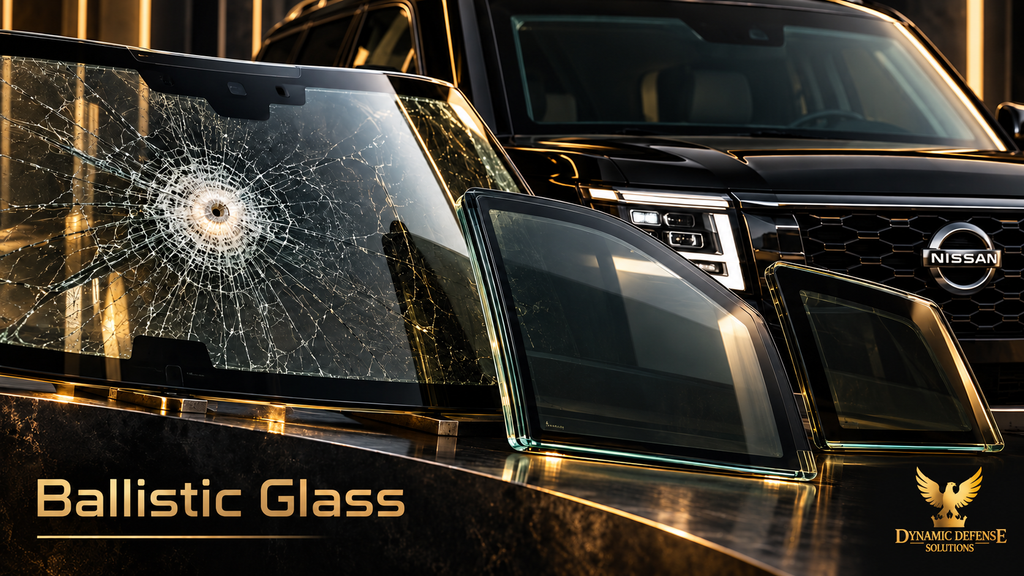
1. Ballistic Glass

Ballistic glass is one of the most visibleโ€”and technically importantโ€”components of an armored SUV.

A complete glass package can cover the windshield, front doors, rear doors, quarter glass, and rear glazing depending on the vehicle configuration.

The glass needs to provide the required ballistic resistance while maintaining acceptable optical clarity and correct fitment. Different protection levels may also result in significantly different glass thicknesses and weights.

For this reason, ballistic glazing should be engineered as part of the overall Nissan Patrol Armored Spare Parts package rather than treated as a standard replacement window.

ChatGPT Image Sep 24 2026 02 03 05 PM 2

2. Ballistic Steel

The opaque armor package forms the protective structure around the passenger compartment.

High-hardness ballistic steel can be used for areas such as doors, pillars, roof sections, firewall, rear structure, and other vulnerable zones depending on the armoring design.

Steel grade, thickness, overlap design, cutting, welding, and installation all matter. Simply adding more material is not necessarily the best solution because unnecessary weight creates additional load on the vehicle.

A properly engineered package aims to achieve the required protection while controlling weight wherever practical.

ChatGPT Image Sep 24 2026 02 03 05 PM 3

3. Heavy-Duty Door Hinges

One of the most underestimated consequences of armoring is increased door weight.

Ballistic glass and steel can turn an ordinary door into a substantially heavier assembly. Standard hinges were originally designed around the OEM door weight, not the finished armored configuration.

Heavy-duty machined hinges can therefore become an important part of Nissan Patrol Armored Spare Parts, helping support heavier doors and reduce problems such as sagging, alignment changes, difficult closing, or premature hinge wear.

For professional armoring projects, door hardware should be considered early rather than after the vehicle has already been completed.

a41

4. Heavy-Duty Suspension

An armored SUV needs a suspension system selected around its new operating weight.

Springs and dampers may need to support significantly more mass while still maintaining ride height, stability, steering response, and acceptable road behaviour.

The Patrol Y63’s standard specification naturally varies by grade, so an armored conversion should be assessed according to the particular vehicle and its final weight rather than relying on a generic upgrade.

Heavy-duty suspension is therefore one of the most important supporting systems within a complete armored vehicle build.

ChatGPT Image Sep 24 2026 02 03 09 PM 5

5. Run-Flat Systems

Protection has limited value if the vehicle immediately loses mobility after tire damage.

Run-flat systems are designed to provide internal support to the tire after pressure loss, helping the vehicle continue moving for a limited distance subject to system design, load, speed, tire condition, and operating conditions.

Correct sizing is critical.

Rim dimensions, tire size, run-flat outer diameter, internal tire geometry, and installation tolerances must all be considered. For Nissan Patrol Armored Spare Parts, the run-flat should be selected around the actual wheel and tire configuration rather than simply by nominal rim diameter.

ChatGPT Image Sep 24 2026 02 03 11 PM 6

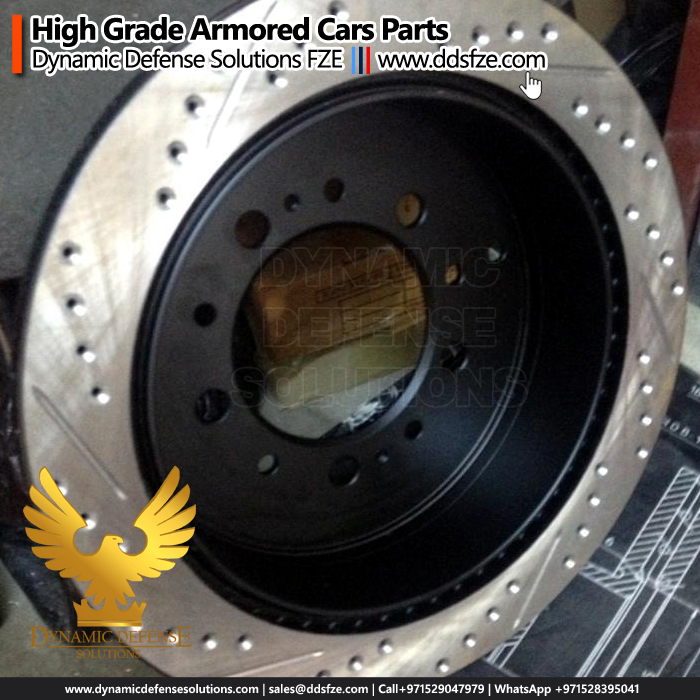
6. Heavy-Duty Braking Solutions

More mass requires more energy to be controlled during braking.

Depending on the finished vehicle weight and application, an armored Patrol may benefit from upgraded brake components designed to manage the additional demand.

Potential solutions can include upgraded discs, calipers, pads, and related braking components depending on the configuration.

The objective is not simply to install a visually larger brake packageโ€”it is to select a system appropriate for the final armored vehicle.

ChatGPT Image Sep 24 2026 02 03 12 PM 7

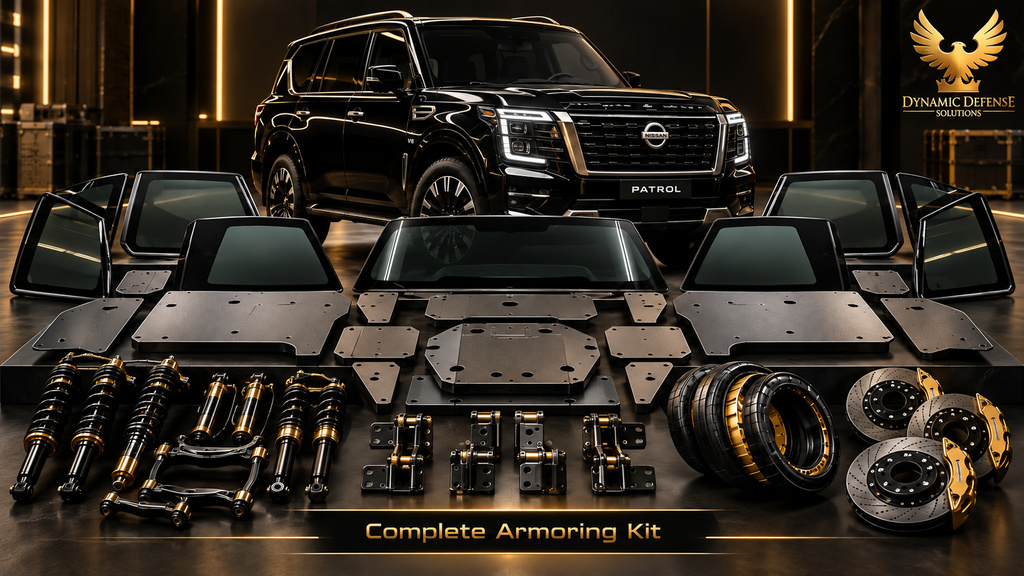
Complete Armoring Kit for Nissan Patrol Y63

For customers who prefer to avoid coordinating multiple suppliers, Dynamic Defense Solutions can provide a complete package of Nissan Patrol Armored Spare Parts based on project requirements.

A complete armoring kit may include:

  • Complete ballistic glass set
  • Ballistic steel package
  • Heavy-duty machined hinges
  • Heavy-duty suspension
  • Run-flat systems
  • Heavy-duty braking components
  • Additional protection and reinforcement components

This approach can be especially useful for armoring companies and vehicle converters that want to consolidate procurement through one supplier.

Instead of independently sourcing glass, steel, hinges, runflats, suspension, and braking components, the major systems can be coordinated as part of one project.

ChatGPT Image Sep 24 2026 02 03 13 PM 8

Built for International Armoring Markets

The Patrol has particularly strong relevance in the Middle East. Nissan describes the model as having a long-established regional presence, and the current generation was launched with specifications and positioning specifically focused on Middle Eastern customers.

For DDS, the commercial opportunity extends further.

We can support customers and armored-vehicle projects across markets including:

UAE โ€ข Saudi Arabia โ€ข Nigeria โ€ข Kenya โ€ข Iraq โ€ข Ukraine โ€ข wider Africa โ€ข Middle East and other international markets
Different markets may have different protection requirements, environmental conditions, vehicle specifications, and operating profiles. Component selection should therefore be project-specific.

Choosing the Right Supplier

When sourcing Nissan Patrol Armored Spare Parts, price should not be the only consideration.

Compatibility between components becomes particularly important once multiple systems are modified simultaneously. Glass affects door weight; steel adds overall mass; additional mass affects suspension and braking; wheel configuration affects run-flat selection.

This is where Dynamic Defense Solutions can support armoring companies as a specialized component supplier.

DDS supplies:

Ballistic Glass | Ballistic Steel | Heavy-Duty Hinges | Run-Flat Systems | Heavy-Duty Suspension | Heavy-Duty Brakes | Complete Armoring Kits

Our objective is to help customers source the components required for an armored build without positioning DDS as the vehicle bodyshop itself.

Whether the requirement is one replacement windshield, a set of machined hinges, runflats for a fleet, or a complete protection package, we can work around the vehicle specification and project requirements.

One Supplier, Multiple Critical Components

Sourcing several categories of Nissan Patrol Armored Spare Parts through the same supplier can also simplify communication and procurement.

Instead of separately coordinating glass manufacturers, steel suppliers, suspension brands, hinge manufacturers, and run-flat providers, customers can consolidate more of the project through DDS.

For armoring businesses working on multiple vehicles or fleet projects, this can become particularly useful when quotations, technical specifications, shipping, and repeat orders need to be coordinated efficiently.

Conclusion

A protected Nissan Patrol Y63 is much more than an SUV fitted with ballistic glass and steel.

The additional armor creates new demands on the doors, suspension, tires, wheels, and braking system. Addressing those systems with suitable Nissan Patrol Armored Spare Parts helps create a more complete approach to an armored vehicle project.

From individual ballistic components to complete armoring kits, Dynamic Defense Solutions supplies solutions for professional armoring companies, converters, security vehicle businesses, fleet operators, and other international B2B customers.

For your next Nissan Patrol Y63 project, contact DDS with the required protection level, quantity, vehicle specification, and components needed.

Get in Touch


SIMILAR PRODUCTS

Armored Spare Parts

SUCCESSFULL STORIES

LOGISTICS SERVICES

Supply Chain is core of our operational efficiency providing logistics services anywhere in the world forย Armored carsย andย Armored spare parts. To date we have successfully shipped our products to many countries around the Globe. Our supply chain is supported by a dedicated team of highly capable and experienced logistic professionals. Offering freight by air, land or sea within efficient time frame

HAVE SUCCESSFULLY SHIPPED OUR ARMORED CARS PARTS TO MANY COUNTRIES AROUND THE GLOBE

Armored Vehicle Parts Ukraine: Complete Guide for TLC 76, 78, 79, Hilux & L200
Armored Vehicle Suspension Systems: Why They Matter More Than You Think
Prado 250 Armored Car Parts & Protection Kit
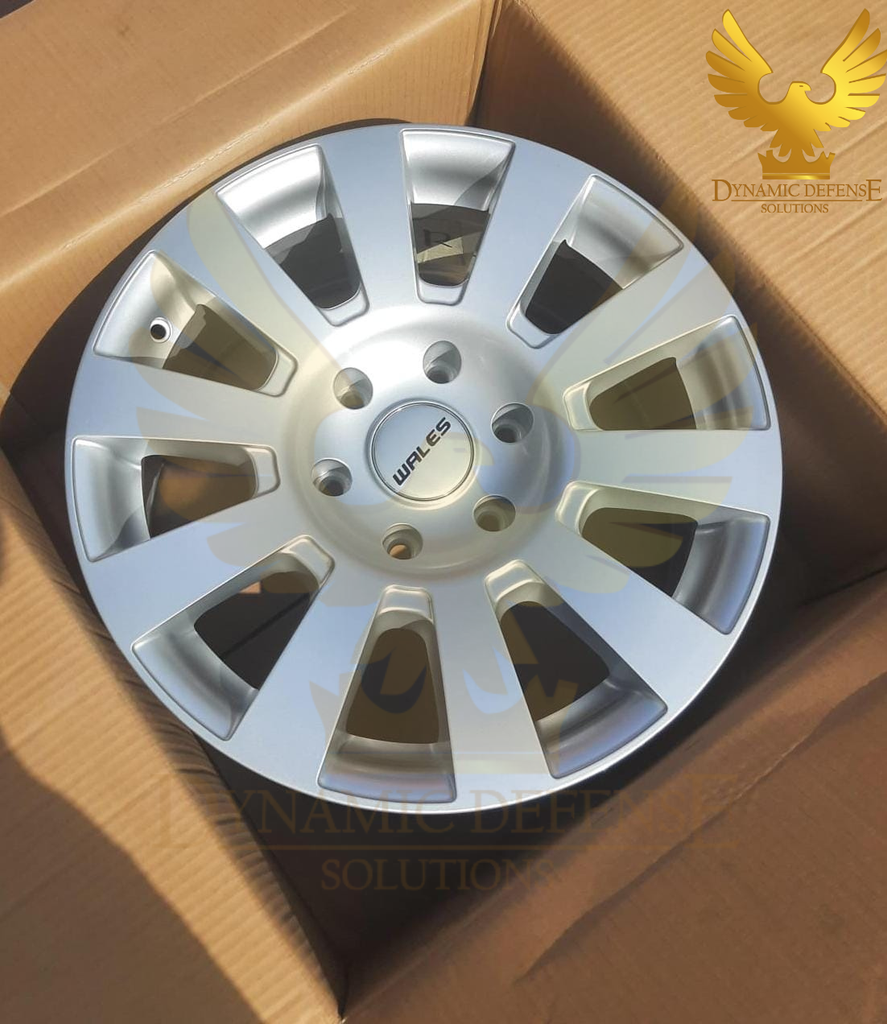
Armored Vehicle Brake Upgrades: What to Check After Adding Armor

ChatGPT Image Sep 21 2026 03 21 04 PM
High Performance Brakes Engineered and tested braking system on one of three Link brake dynamometers, on street and track vehicles, and in the laboratory.

Armored Vehicle Brake Upgrades: Why a Larger Disc Is Only Part of the Answer

A protected vehicle can leave the workshop looking complete while one of its most consequential systems still needs attention: the brakes.

Ballistic glass, steel, reinforced doors, interior protection and other equipment all add mass. Some of that weight sits high in the body; some changes the load carried by each axle. Either way, the finished vehicle asks more of its braking system than the unmodified vehicle did.

That makes armored vehicle brake upgrades a vehicle-level engineering decision. The right question is not simply, โ€œWhat is the biggest brake kit that fits?โ€ It is, โ€œHow will this particular vehicle brake repeatedly, at its finished operating weight, on the roads where it will work?โ€

a21

Why Added Armor Changes the Braking Job

At the same speed, a heavier vehicle carries more kinetic energy. During braking, much of that energy becomes heat in the discs and pads. If vehicle mass rises by 20% while speed stays the same, the energy that must be managed in a stop rises by roughly 20% as well. That is an illustration of the physics, not a prediction that stopping distance will rise by 20%.

Speed makes the demand grow even faster. Kinetic energy rises with the square of speed: a stop from twice the speed involves four times the energy, assuming the same vehicle mass. For a heavy protected SUV or pickup, repeated higher-speed stops can therefore expose a weakness that a gentle workshop test drive will never reveal.

The final weight also needs to be considered by axle. A conversion may add glass and door reinforcement near the front and middle of the vehicle, while equipment, passengers or cargo add load elsewhere. Two vehicles with the same total mass may place different demands on their front and rear brakes.

For armored vehicle brake upgrades, the starting point is an actual weight assessment: finished vehicle mass, front and rear axle loads, expected passengers and equipment, and the intended duty cycle.

ChatGPT Image Sep 21 2026 03 07 40 PM 2 1

The Real Concern: Repeated Stops and Heat

A brake system may deliver one convincing stop and still struggle during the next several. As discs, pads, calipers and fluid heat up, pedal feel and braking response can change. The exact behaviour depends on the materials, temperatures and system design.

This is why a buyer should ask about thermal capacity and heat dissipation, as well as braking torque. A disc needs enough usable mass and an appropriate design to absorb and release heat under the intended operating conditions. Pads must work within the temperatures the vehicle is likely to reach. Brake fluid, calipers and surrounding components also have to tolerate the resulting heat.

A larger disc can help provide more effective radius and thermal capacity, but diameter alone does not describe the result. Disc thickness, ventilation, material, pad selection and airflow all matter. Brake manufacturers offer discs, calipers, pads and fluid as distinct parts of a system rather than treating disc size as the complete specification. AP Racingโ€™s performance range and Bremboโ€™s car product range illustrate that broader component approach.

In short, armored vehicle brake upgrades should be assessed for the fifth demanding stop, not only the first.

ChatGPT Image Sep 21 2026 03 07 45 PM 3

What to Specify Before Choosing Hardware

Finished mass and axle loads

Obtain measured figures for the completed vehicle wherever possible. A projected armor weight is useful early in a project, but the finished vehicle may also carry communications equipment, upgraded wheels, occupants and mission-specific cargo.

Record the expected maximum operating load and compare it with the base vehicleโ€™s axle and vehicle ratings. A brake kit cannot resolve an axle or gross-weight rating issue on its own; that requires a wider vehicle assessment.

Duty cycle and operating environment

A vehicle used for short, low-speed journeys has a different braking pattern from one that frequently travels at highway speed, carries a full load, descends long grades or operates in hot conditions. State those conditions when requesting a brake solution.

โ€œSuitable for an armored vehicleโ€ is too broad to be a meaningful specification. An armored pickup working on rough roads and a protected executive SUV may need different priorities, even if both gain a similar amount of weight.

Wheel and tyre package

A brake kit must fit inside the actual wheel assembly, with appropriate clearance to the spokes and barrel. That check should use the wheel intended for the converted vehicle, including any changes made for load requirements or a run-flat system.

Tyres matter too. The braking system creates torque at the wheel, but tyre grip determines how much braking force can be transmitted to the road. Increasing brake hardware capability does not remove the limits imposed by tyres and road conditions.

These details can narrow the choices for armored vehicle brake upgrades before a supplier recommends a disc or caliper.

ChatGPT Image Sep 21 2026 03 07 46 PM 4

A Bigger Caliper Is Not Automatically a Complete Solution

Caliper piston count is easy to advertise. It does not, by itself, tell a converter whether the finished vehicle has the right brake balance, pedal response or thermal performance.

Changing caliper piston area or disc effective radius can alter braking torque and hydraulic behaviour. Pad characteristics affect response as well. If the front and rear systems are changed without considering them together, brake balance may shift. The vehicleโ€™s ABS and stability-control behaviour must also be considered in the completed configuration.

Mounting deserves equal attention. Caliper brackets, fasteners, hub interfaces, brake hoses and routing all need to suit the vehicle and withstand service conditions. A kit that physically bolts on still needs engineering review and validation for its intended use.

Good armored vehicle brake upgrades therefore start with a matched system and a clear fitment plan. A caliper photo or piston count is not enough information for a purchase decision.

ChatGPT Image Sep 21 2026 03 07 47 PM 5

The Questions a Serious Brake Supplier Should Answer

Before ordering, a manufacturer or conversion workshop should be able to discuss the following with its supplier:

  • What are the completed vehicleโ€™s mass and front/rear axle loads?
  • Which exact vehicle variant, model year, hubs and wheel specifications are involved?
  • What disc dimensions, pad options and caliper configuration are proposed?
  • Has clearance been checked against the intended wheels?
  • Are mounting parts, hoses and service items included?
  • What operating conditions and loads informed the recommendation?
  • Which installation and validation work remains the converterโ€™s responsibility?

The answers help distinguish a documented proposal from a generic โ€œheavy-dutyโ€ label. They also make future maintenance easier: the operator needs to identify replacement pads, discs and other service parts without reconstructing the original project years later.

For international buyers, clear drawings, part references and scope of supply are particularly valuable. They reduce the chance of discovering a wheel-clearance or mounting problem after components have arrived at the workshop.

ChatGPT Image Sep 21 2026 03 07 39 PM 1

Installation Is Followed by Validation

The installed system should be checked on the finished vehicle, at representative loads. That means confirming mechanical clearances, hose movement through steering and suspension travel, pedal operation, leaks and correct installation before controlled braking evaluation.

Testing should then address the vehicleโ€™s real use. Cold braking, repeated stops and loaded operation can reveal different issues. Where applicable, the converter also needs to assess brake balance and the behaviour of ABS and stability systems. The test plan and any formal compliance requirements depend on the vehicle and the market in which it will operate.

A componentโ€™s published specification is evidence about that component. It is not proof that the complete converted vehicle meets a particular braking requirement. This distinction matters whenever armored vehicle brake upgrades are described in a quotation, technical submission or customer handover.

ChatGPT Image Sep 21 2026 03 07 48 PM 6 1

How Dynamic Defense Solutions Supports Protected Vehicle Projects

Dynamic Defense Solutions supplies specialized armored vehicle components for international projects. For braking requirements, DDS can work with manufacturers, converters and workshops to identify the vehicle configuration and source a relevant braking solution alongside other components where a project calls for them.

The most useful inquiry includes the base vehicle details, expected finished weight, axle loads if available, wheel specifications, protection build and intended operating conditions. With that information, the discussion can move beyond a generic kit request toward fitment and project requirements that can actually be checked.

DDS can also support related component requirements, including suspension and run-flat systems, when those parts form part of the same protected-vehicle build. Each selection should be assessed for the particular vehicle rather than assumed compatible because it is marketed for armored use.

Conclusion

The most effective armored vehicle brake upgrades begin with the finished vehicle, not a catalogue image. Added mass changes the energy brakes must manage; load distribution, repeated stops, wheels, tyres and electronic systems shape the final solution.

If you manufacture or convert protected vehicles, contact Dynamic Defense Solutions with your vehicle details and project requirements. We can discuss suitable braking components and related supply needs for your build.

Send Us Your Inquiries Today


SIMILAR PRODUCTS

Armored Car Parts

SUCCESSFULL STORIES

LOGISTICS SERVICES

Supply Chain is core of our operational efficiency providing logistics services anywhere in the world for Armored cars and Armored cars parts. To date we have successfully shipped our products to many countries around the Globe. Our supply chain is supported by a dedicated team of highly capable and experienced logistic professionals. Offering freight by air, land or sea within efficient time frame

HAVE SUCCESSFULLY SHIPPED OUR ARMORED CARS PARTS TO MANY COUNTRIES AROUND THE GLOBE

Armored Vehicle Parts Ukraine: Complete Guide for TLC 76, 78, 79, Hilux & L200
Armored Vehicle Suspension Systems: Why They Matter More Than You Think
Prado 250 Armored Car Parts & Protection Kit
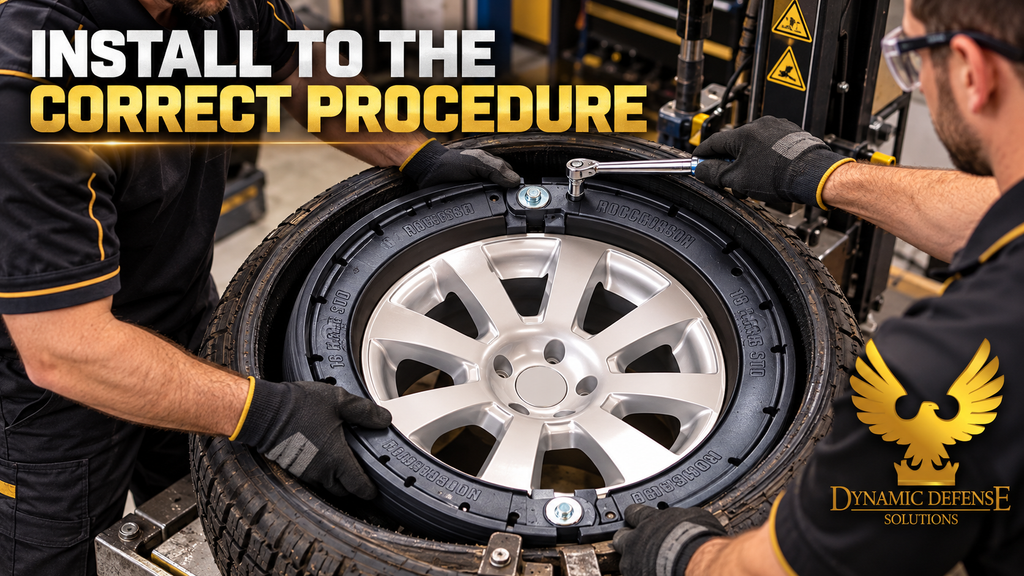
Bulletproof Glass for Armored Vehicles: Protection Without Losing Visibility

Bulletproof Glass
Bulletproof Glass for armored vehicles

Bulletproof Glass for Armored Vehicles: Protection Without Losing Visibility

An armored vehicle needs to protect its occupants without turning the driver’s view into an afterthought.

That sounds obvious, but ballistic protection and visibility can become a challenging combination once glass becomes thicker, heavier, and more complex.

This is why Bulletproof Glass for Armored Vehicles is not simply about making a window thicker. The glass needs to be engineered around the required protection level, vehicle design, visibility requirements, weight, and installation conditions.

For an armored vehicle, the glass is both a protective barrier and a critical part of the driver’s operating environment.

Protection Is Only One Part of the Equation

The primary purpose of ballistic glass is to provide protection against the specified ballistic threat.

But an armored vehicle still needs to function like a vehicle.

The driver needs to see the road. Doors need to open and close correctly. Window openings need to accommodate the glass. The vehicle needs to carry the additional weight.

This means Bulletproof Glass for Armored Vehicles has to be considered as part of the complete vehicle configuration rather than as an isolated product.

The right solution balances protection with practical vehicle requirements.

Bulletproof Glass for Armored Vehicles

Thickness Changes More Than Appearance

Ballistic glass is considerably different from standard automotive glass.

As the required protection level increases, glass construction can become thicker and heavier. That additional weight affects the doors, hinges, window mechanisms, and overall vehicle weight.

For this reason, Bulletproof Glass for Armored Vehicles should be selected according to the specific application and required protection level.

Simply choosing the thickest available glass is not necessarily the best engineering decision.

The objective is to achieve the required protection while keeping the vehicle practical and functional.

a64 1

Optical Quality Matters

A driver spends a significant amount of time looking through the windshield and side windows.

Distortion, reflections, poor transparency, or inconsistent optical quality can make driving uncomfortable and potentially affect visibility.

Good Bulletproof Glass for Armored Vehicles should therefore consider optical performance alongside ballistic resistance.

This becomes particularly important with large windshields and curved automotive glass, where manufacturing and forming requirements can become more demanding.

For armored vehicles used every day, visibility is not a luxury.

It is part of vehicle usability.

Curved Glass Requires Precision

Modern vehicles rarely have completely flat windows.

Windshields and many side windows are curved to follow the vehicle’s original body design. Replacing these with ballistic glass requires accurate dimensions and appropriate forming.

For Bulletproof Glass for Armored Vehicles, correct curvature and fitment are essential.

A glass set can have the required ballistic specification but still create installation problems if the dimensions or curvature are not properly matched to the vehicle.

This is particularly relevant for platforms such as the Toyota Land Cruiser 76, 78, 79, Toyota Hilux, Mitsubishi L200, and other protected vehicles.

Armoredcars bulletproof glass b9

Weight Needs to Be Considered

Every additional kilogram matters in an armored vehicle.

Ballistic glass can add significant weight compared with the original automotive glazing. That weight doesn’t disappear โ€” it becomes part of the vehicle’s final operating configuration.

Additional glass weight can influence doors, hinges, suspension, and overall vehicle dynamics.

Therefore, Bulletproof Glass for Armored Vehicles should be selected with the complete armoring package in mind.

Glass specification, armor level, door reinforcement, suspension, and other components need to work together.

Windshields Are Especially Critical

The windshield has a unique role.

It provides ballistic protection directly in front of the occupants while also serving as one of the driver’s most important viewing areas.

It may also require additional features depending on the vehicle and application, including specific shaping, mounting arrangements, or heating requirements.

This makes Bulletproof Glass for Armored Vehicles a highly application-specific product.

A windshield cannot simply be treated as a flat piece of protective material. It needs to function as an automotive component as well as a ballistic barrier.

Untitled design 7 768x1024 1

The Glass Must Match the Vehicle

Every vehicle platform has its own dimensions, body structure, window openings, and installation requirements.

A glass solution designed for one platform cannot automatically be transferred to another.

This is why Bulletproof Glass for Armored Vehicles should be developed and supplied according to the exact vehicle model and configuration.

For armorers, workshops, and fleet operators, correct fitment can save significant time during installation and help avoid costly modifications later.

b237

Dynamic Defense Solutions: Ballistic Glass for Armored Applications

At Dynamic Defense Solutions, we supply Bulletproof Glass for Armored Vehicles for a wide range of armored vehicle applications.

Our ballistic glass solutions are available for platforms including Toyota Land Cruiser 76, 78, 79, Toyota Hilux, Mitsubishi L200, and other vehicle projects, depending on requirements.

Through Dynamic Armored Glass, our dedicated glass manufacturing operation, we focus on ballistic glazing designed around the required protection level, vehicle specifications, dimensions, and application.

Whether the requirement is a complete glass set or specific replacement glazing, Dynamic Defense Solutions works with armorers and vehicle protection specialists to provide the required specifications and supply solutions.

Our focus is not simply on producing thicker glass.

It is on supplying ballistic glass that works as part of the vehicle.

Protection You Can See Through

The best ballistic protection doesn’t force the driver to choose between safety and visibility.

Bulletproof Glass for Armored Vehicles needs to perform two jobs at the same time: provide protection against the specified threat and remain a functional automotive glazing system.

That requires attention to ballistic performance, optical quality, dimensions, curvature, weight, and fitment.

Because an armored vehicle isn’t successful simply because its windows are bullet resistant.

It is successful when the people inside remain protected and the vehicle can still be driven with confidence.

Send Us Your Inquiries Today


SIMILAR PRODUCTS

Armored Car Parts

SUCCESSFULL STORIES

LOGISTICS SERVICES

Supply Chain is core of our operational efficiency providing logistics services anywhere in the world forย Armored carsย andย Armored cars parts. To date we have successfully shipped our products to many countries around the Globe. Our supply chain is supported by a dedicated team of highly capable and experienced logistic professionals. Offering freight by air, land or sea within efficient time frame

HAVE SUCCESSFULLY SHIPPED OUR ARMORED CARS PARTS TO MANY COUNTRIES AROUND THE GLOBE

Armored Vehicle Parts Ukraine: Complete Guide for TLC 76, 78, 79, Hilux & L200
Armored Vehicle Suspension Systems: Why They Matter More Than You Think
Prado 250 Armored Car Parts & Protection Kit
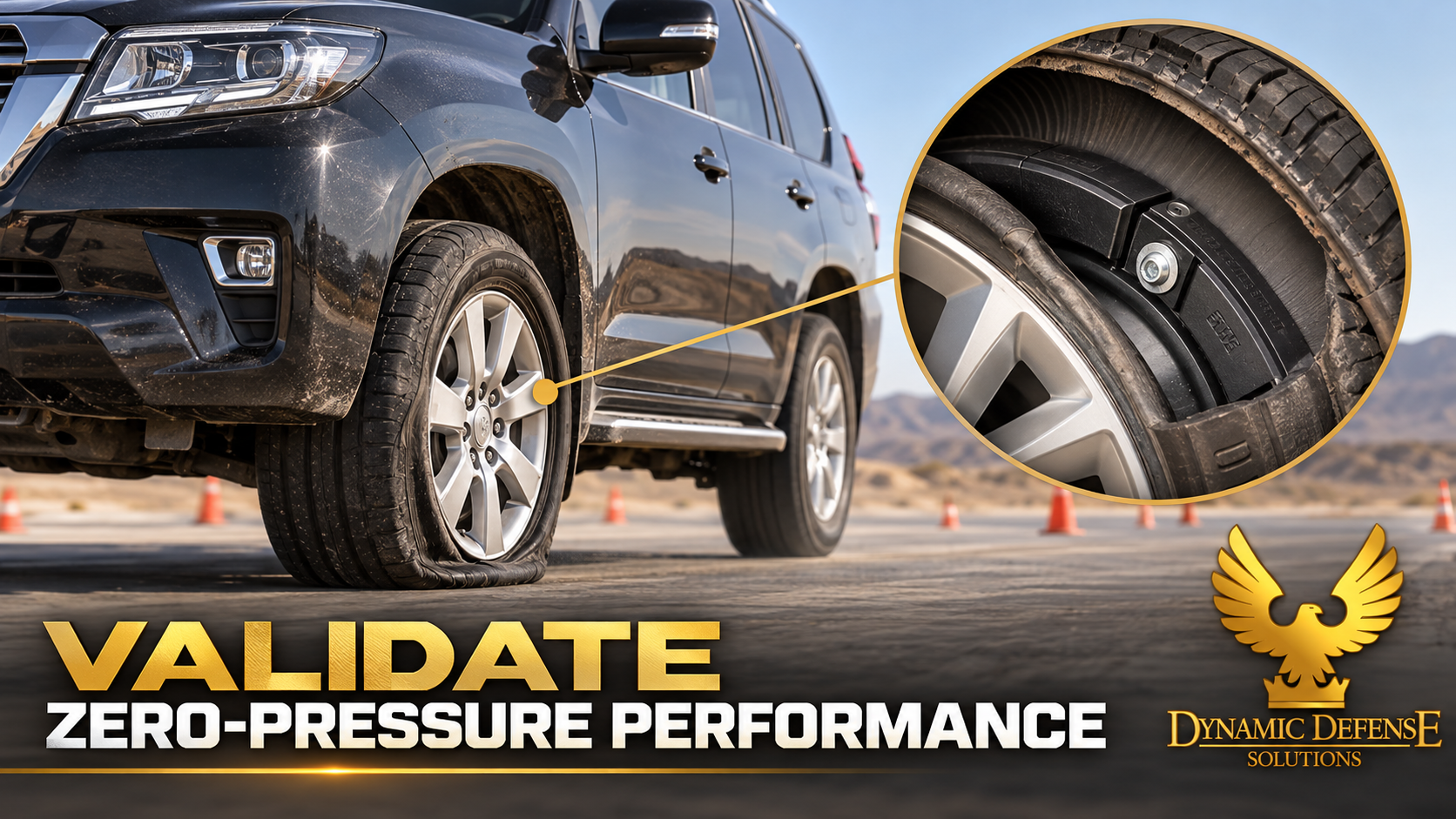
Armored Spare Parts for Ford Ranger Wildtrak | Complete Armoring Solutions

ChatGPT Image Sep 10 2026 01 29 55 PM
FRW

Armored Spare Parts for Ford Ranger Wildtrak: Components That Complete an Armored Build

The Ford Ranger Wildtrak combines practicality, payload capability, and everyday usability, making it a suitable platform for demanding security and protection applications. But once ballistic protection is added, the requirements of the vehicle change significantly.

An armored vehicle is not simply a standard vehicle with protective steel and glass added to it. The additional weight affects several mechanical and structural systems, which means the supporting components must also be selected carefully.

This is where high-quality Armored Spare Parts become important.

At Dynamic Defense Solutions, we supply specialized Armored Spare Parts for armored vehicle projects, from individual components to complete armoring kits designed around the requirements of the vehicle and protection system.

Armored Spare Parts

Why Armored Spare Parts Matter in an Armored Pickup

Adding armor increases the overall weight of a vehicle. This additional load can affect suspension, braking, doors, wheels, tires, and other components.

For this reason, Armored Spare Parts should be considered as part of the complete engineering approach rather than as optional upgrades after the armor has been installed.

The correct components can help support:

  • Additional vehicle weight
  • Reliable door operation
  • Vehicle stability and handling
  • Continued mobility after tire damage
  • Braking performance
  • Long-term durability

For vehicles operating in demanding environments, selecting the right Armored Spare Parts can make a significant difference to the overall reliability of the finished vehicle.

Armored Vehicle Components

Key Armored Spare Parts for Ford Ranger Wildtrak

Different armoring projects require different specifications. The protection level, final vehicle weight, intended use, and operating environment all influence which components should be selected.

Here are some of the key Armored Spare Parts that can be considered for an armored Ranger Wildtrak.

Ballistic Glass

Ballistic glass provides transparent protection for the vehicle while maintaining visibility for the occupants.

The glass specification depends on the required ballistic protection level and the particular vehicle configuration. Properly designed ballistic glazing needs to provide protection while also maintaining suitable optical quality and installation compatibility.

For armored pickup projects, ballistic glass is one of the most critical Armored Spare Parts because it forms an important part of the vehicle’s overall protective envelope.

ChatGPT Image Sep 3 2026 02 17 35 PMg

Run-Flat Systems

Mobility can become critical when a vehicle is operating in a high-risk environment.

Run-flat systems are designed to support vehicle mobility after tire damage or loss of air pressure, allowing the vehicle to move toward a safer location or continue its mission depending on the system and operating conditions.

For an armored Ranger, suitable run-flat systems are therefore an important category of Armored Spare Parts.

ChatGPT Image Sep 3 2026 02 17 35 PMr

Heavy-Duty Suspension

One of the biggest challenges following an armored conversion is the increase in vehicle weight.

A suitable heavy-duty suspension system can be selected according to the final vehicle configuration and intended load. It can help maintain appropriate ride height, handling characteristics, and load support.

This makes suspension upgrades an important part of the Armored Spare Parts package for an armored pickup.

ChatGPT Image Sep 3 2026 02 17 35 PMs

Heavy-Duty Door Hinges

Armored doors can become considerably heavier than their original configuration.

Standard hinges may not be designed for the additional load and repeated operation associated with an armored door. Heavy-duty hinges can provide the additional support required for reliable door operation.

For this reason, heavy-duty hinges should not be overlooked when specifying Armored Spare Parts for an armored vehicle.

ChatGPT Image Sep 3 2026 02 17 35 PMh

Ballistic Steel

Ballistic steel is used to create protective structures within the vehicle. Its specification depends on the required protection level and the engineering design of the armor system.

Material thickness, hardness, forming, cutting, and installation all need to be considered as part of the overall design.

The correct combination of ballistic steel and other Armored Spare Parts helps create a more complete protection solution while keeping the vehicle’s additional weight under consideration.

ChatGPT Image Sep 3 2026 02 17 35 PMss

Heavy-Duty Braking Solutions

More weight also means greater demands on the braking system.

An armored vehicle’s braking components should therefore be considered according to the final weight and operating requirements of the vehicle.

Heavy-duty braking solutions can form another important part of the Armored Spare Parts package, helping the completed vehicle maintain dependable stopping performance.

ChatGPT Image Sep 3 2026 02 17 35 PMb

Complete Armoring Kit for Ford Ranger Wildtrak

For customers who do not want to source every component individually, Dynamic Defense Solutions can also provide complete armoring kit solutions.

A complete kit brings the major Armored Spare Parts required for an armored build together, simplifying procurement and helping ensure that the selected components are suitable for the overall project.

Depending on the required specification, a complete armoring kit may include:

  • Ballistic steel
  • Ballistic glass
  • Heavy-duty door hinges
  • Run-flat systems
  • Heavy-duty suspension
  • Heavy-duty brakes
  • Additional reinforcement components

The exact contents and specifications can be determined according to the vehicle, desired protection level, and intended application.

ChatGPT Image Sep 3 2026 02 17 35 PM k

Supporting Security Markets Worldwide

Ford Ranger platforms are used across a wide range of commercial, security, humanitarian, and government applications.

Markets including Nigeria, Ukraine, Kenya, South Africa, Iraq, Saudi Arabia, the UAE, and other African and Middle Eastern countries have demand for vehicles capable of operating reliably in challenging environments.

For armoring companies, vehicle integrators, security organizations, and fleet operators in these markets, sourcing dependable Armored Spare Parts from an experienced supplier can simplify the procurement process.

Armored Vehicle Parts Ukraine

Choosing the Right Armored Spare Parts Supplier

Not all Armored Spare Parts are manufactured or supplied to the same specifications. Choosing components without considering compatibility, final vehicle weight, protection requirements, and intended use can affect the performance of the completed vehicle.

This is where Dynamic Defense Solutions (DDS) provides value beyond simply supplying individual components.

DDS offers a broad range of armored vehicle products, including ballistic glass, ballistic steel, run-flat systems, heavy-duty hinges, suspension solutions, and braking components.

Instead of treating every project the same, DDS works around the vehicle configuration and requirements to help customers source suitable Armored Spare Parts for their specific application.

Why Choose Dynamic Defense Solutions?

Dynamic Defense Solutions is positioned as a specialized supplier of armored vehicle components, helping armoring companies and other customers source multiple products through one experienced partner.

Our range of Armored Spare Parts includes:

  • Ballistic Glass
  • Ballistic Steel
  • Run-Flat Systems
  • Heavy-Duty Door Hinges
  • Heavy-Duty Suspension
  • Heavy-Duty Braking Solutions
  • Complete Armoring Kits

Whether a project requires one specific component or a complete package, DDS can support customers looking for reliable sourcing solutions for armored vehicle projects across international markets.

Conclusion

An armored Ford Ranger Wildtrak requires more than protective armor alone. The additional weight and demands created by an armored conversion make supporting systems equally important.

From ballistic glass and ballistic steel to run-flat systems, hinges, suspension, and brakes, the right Armored Spare Parts can help maintain the vehicle’s functionality and reliability.

With individual components and complete armoring kits available, Dynamic Defense Solutions supports armoring companies, security organizations, vehicle integrators, and other international customers looking for specialized armored vehicle components.

Get in Touch


SIMILAR PRODUCTS

Armored Spare Parts

SUCCESSFULL STORIES

LOGISTICS SERVICES

Supply Chain is core of our operational efficiency providing logistics services anywhere in the world forย Armored carsย andย Armored spare parts. To date we have successfully shipped our products to many countries around the Globe. Our supply chain is supported by a dedicated team of highly capable and experienced logistic professionals. Offering freight by air, land or sea within efficient time frame

HAVE SUCCESSFULLY SHIPPED OUR ARMORED CARS PARTS TO MANY COUNTRIES AROUND THE GLOBE

Armored Vehicle Parts Ukraine: Complete Guide for TLC 76, 78, 79, Hilux & L200
Armored Vehicle Suspension Systems: Why They Matter More Than You Think
Prado 250 Armored Car Parts & Protection Kit
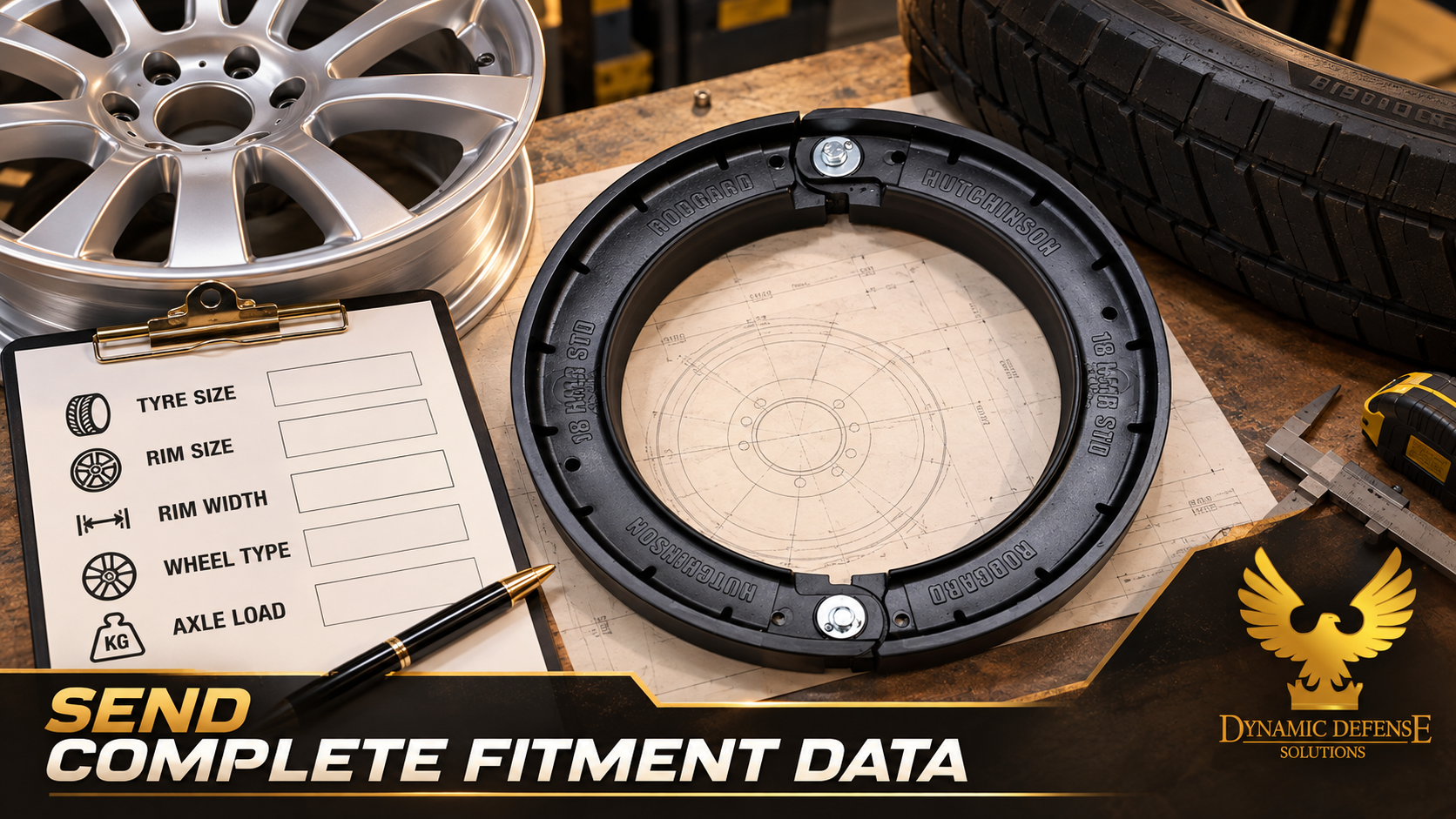
Need Help?