
Armored Vehicle Brake Upgrades: Why a Larger Disc Is Only Part of the Answer
A protected vehicle can leave the workshop looking complete while one of its most consequential systems still needs attention: the brakes.
Ballistic glass, steel, reinforced doors, interior protection and other equipment all add mass. Some of that weight sits high in the body; some changes the load carried by each axle. Either way, the finished vehicle asks more of its braking system than the unmodified vehicle did.
That makes armored vehicle brake upgrades a vehicle-level engineering decision. The right question is not simply, “What is the biggest brake kit that fits?” It is, “How will this particular vehicle brake repeatedly, at its finished operating weight, on the roads where it will work?”
Why Added Armor Changes the Braking Job
At the same speed, a heavier vehicle carries more kinetic energy. During braking, much of that energy becomes heat in the discs and pads. If vehicle mass rises by 20% while speed stays the same, the energy that must be managed in a stop rises by roughly 20% as well. That is an illustration of the physics, not a prediction that stopping distance will rise by 20%.
Speed makes the demand grow even faster. Kinetic energy rises with the square of speed: a stop from twice the speed involves four times the energy, assuming the same vehicle mass. For a heavy protected SUV or pickup, repeated higher-speed stops can therefore expose a weakness that a gentle workshop test drive will never reveal.
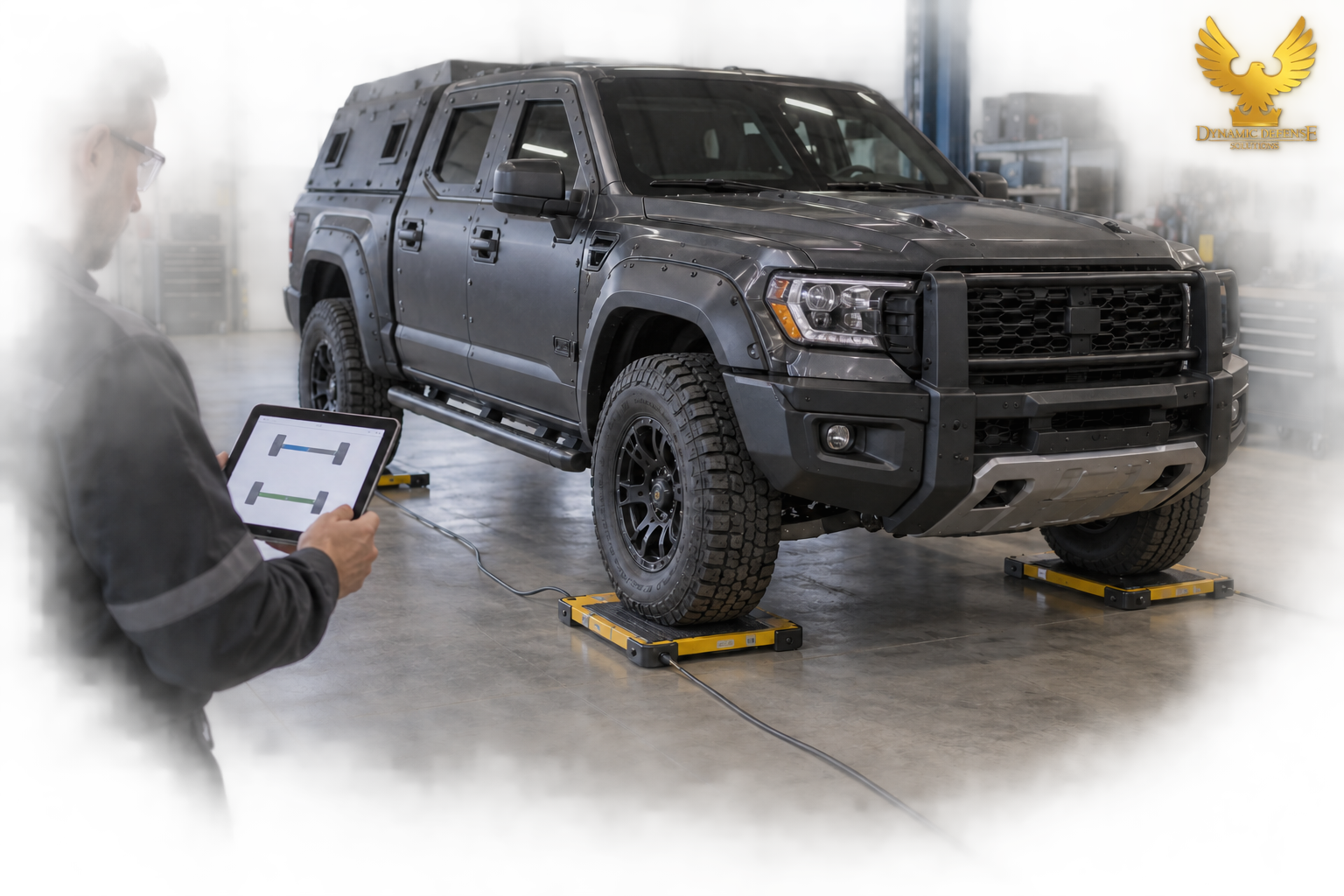
The final weight also needs to be considered by axle. A conversion may add glass and door reinforcement near the front and middle of the vehicle, while equipment, passengers or cargo add load elsewhere. Two vehicles with the same total mass may place different demands on their front and rear brakes.
For armored vehicle brake upgrades, the starting point is an actual weight assessment: finished vehicle mass, front and rear axle loads, expected passengers and equipment, and the intended duty cycle.
The Real Concern: Repeated Stops and Heat
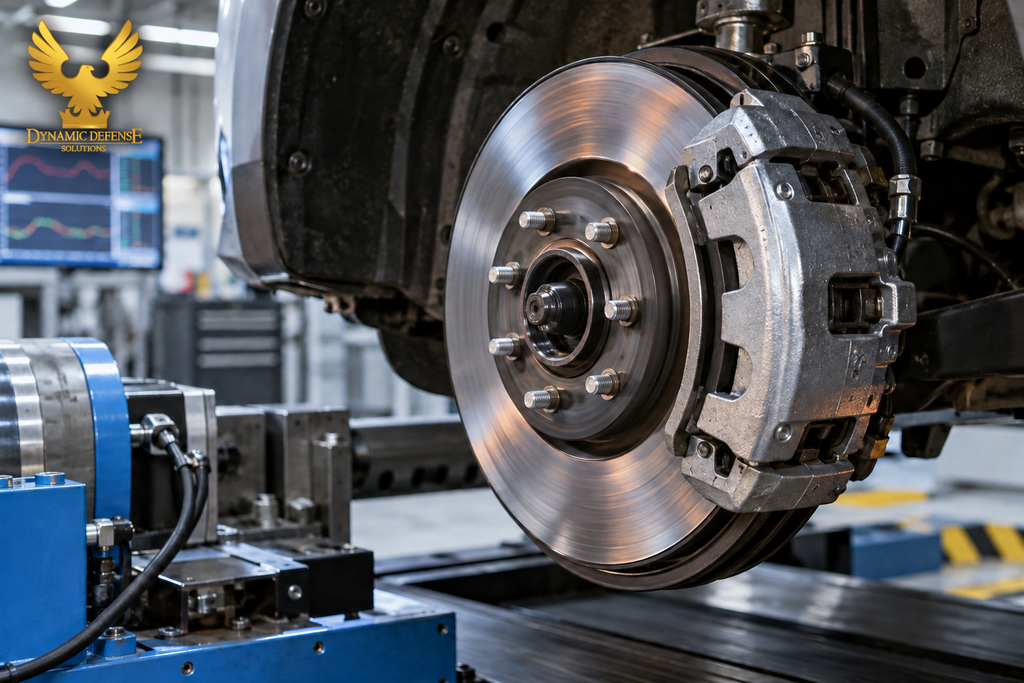
A brake system may deliver one convincing stop and still struggle during the next several. As discs, pads, calipers and fluid heat up, pedal feel and braking response can change. The exact behaviour depends on the materials, temperatures and system design.
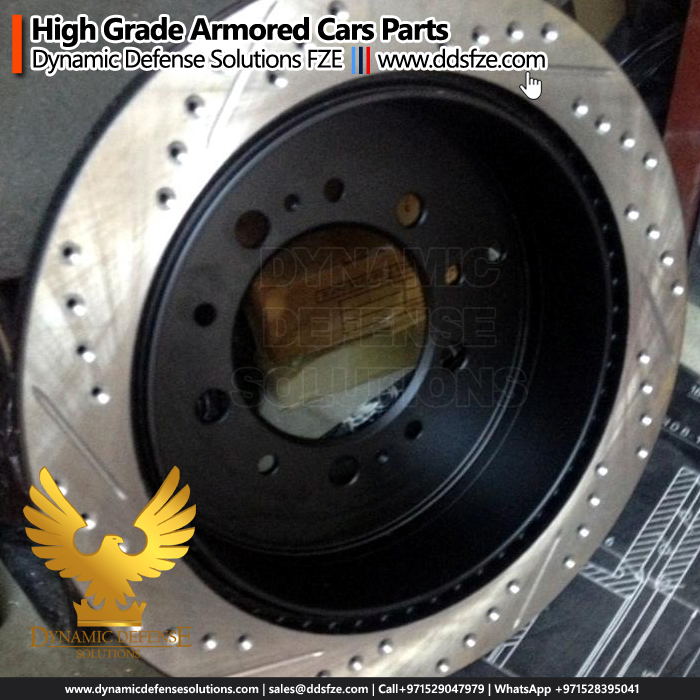
This is why a buyer should ask about thermal capacity and heat dissipation, as well as braking torque. A disc needs enough usable mass and an appropriate design to absorb and release heat under the intended operating conditions. Pads must work within the temperatures the vehicle is likely to reach. Brake fluid, calipers and surrounding components also have to tolerate the resulting heat.
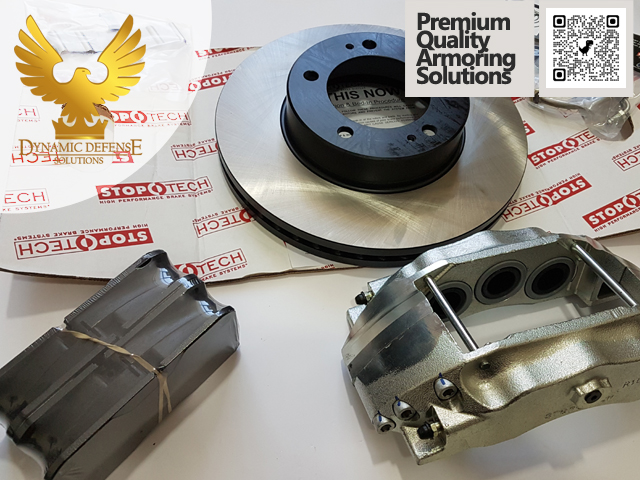
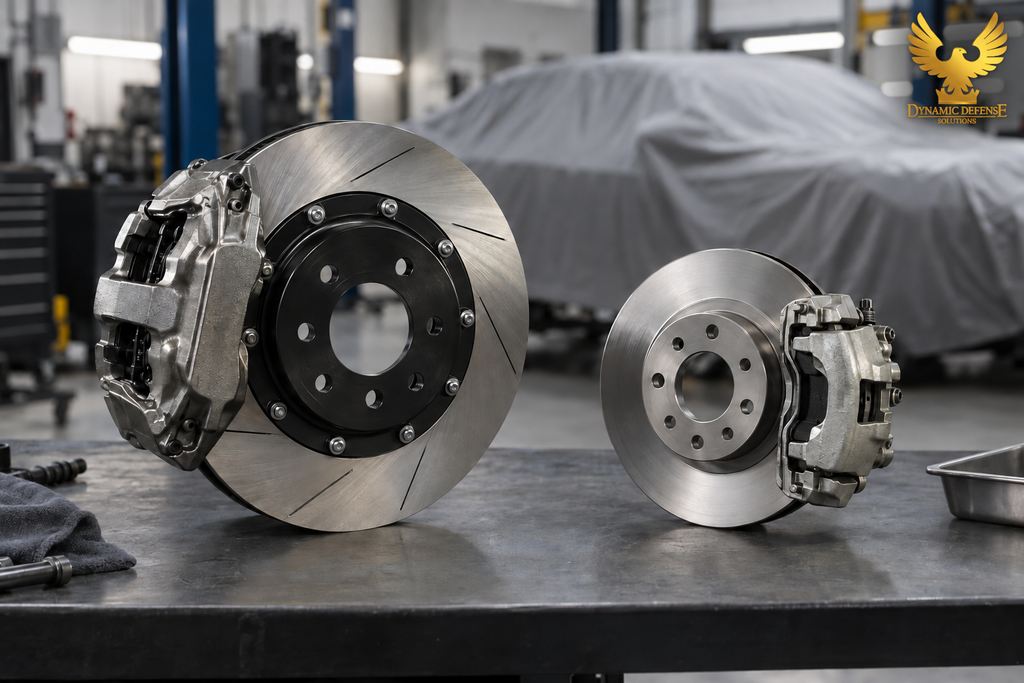
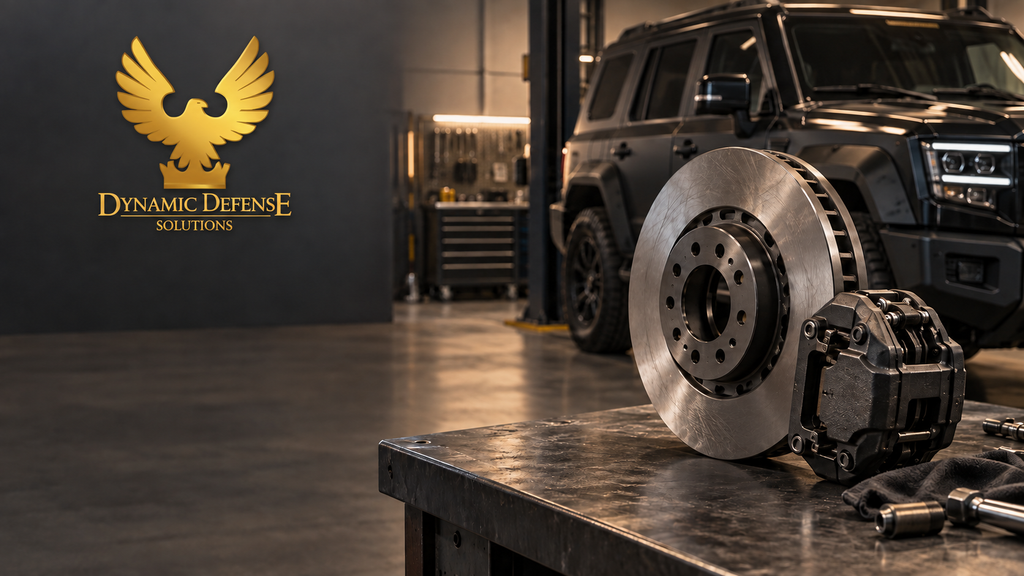
A larger disc can help provide more effective radius and thermal capacity, but diameter alone does not describe the result. Disc thickness, ventilation, material, pad selection and airflow all matter. Brake manufacturers offer discs, calipers, pads and fluid as distinct parts of a system rather than treating disc size as the complete specification. AP Racing’s performance range and Brembo’s car product range illustrate that broader component approach.
In short, armored vehicle brake upgrades should be assessed for the fifth demanding stop, not only the first.
What to Specify Before Choosing Hardware
Finished mass and axle loads
Obtain measured figures for the completed vehicle wherever possible. A projected armor weight is useful early in a project, but the finished vehicle may also carry communications equipment, upgraded wheels, occupants and mission-specific cargo.
Record the expected maximum operating load and compare it with the base vehicle’s axle and vehicle ratings. A brake kit cannot resolve an axle or gross-weight rating issue on its own; that requires a wider vehicle assessment.
Duty cycle and operating environment
A vehicle used for short, low-speed journeys has a different braking pattern from one that frequently travels at highway speed, carries a full load, descends long grades or operates in hot conditions. State those conditions when requesting a brake solution.
“Suitable for an armored vehicle” is too broad to be a meaningful specification. An armored pickup working on rough roads and a protected executive SUV may need different priorities, even if both gain a similar amount of weight.
Wheel and tyre package
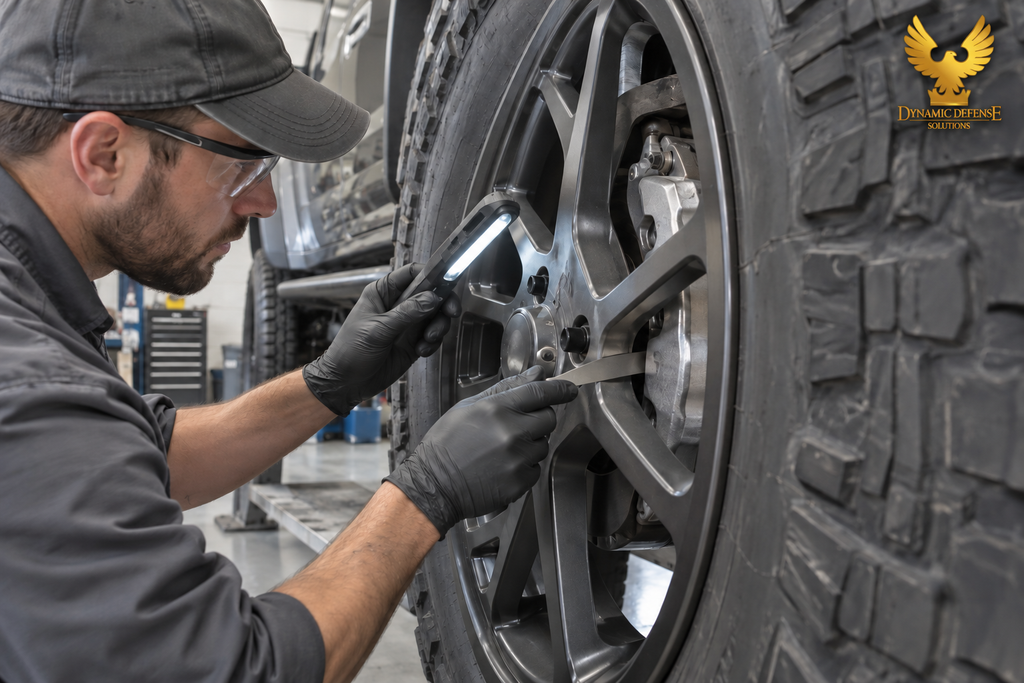
A brake kit must fit inside the actual wheel assembly, with appropriate clearance to the spokes and barrel. That check should use the wheel intended for the converted vehicle, including any changes made for load requirements or a run-flat system.
Tyres matter too. The braking system creates torque at the wheel, but tyre grip determines how much braking force can be transmitted to the road. Increasing brake hardware capability does not remove the limits imposed by tyres and road conditions.
These details can narrow the choices for armored vehicle brake upgrades before a supplier recommends a disc or caliper.
A Bigger Caliper Is Not Automatically a Complete Solution
Caliper piston count is easy to advertise. It does not, by itself, tell a converter whether the finished vehicle has the right brake balance, pedal response or thermal performance.
Changing caliper piston area or disc effective radius can alter braking torque and hydraulic behaviour. Pad characteristics affect response as well. If the front and rear systems are changed without considering them together, brake balance may shift. The vehicle’s ABS and stability-control behaviour must also be considered in the completed configuration.
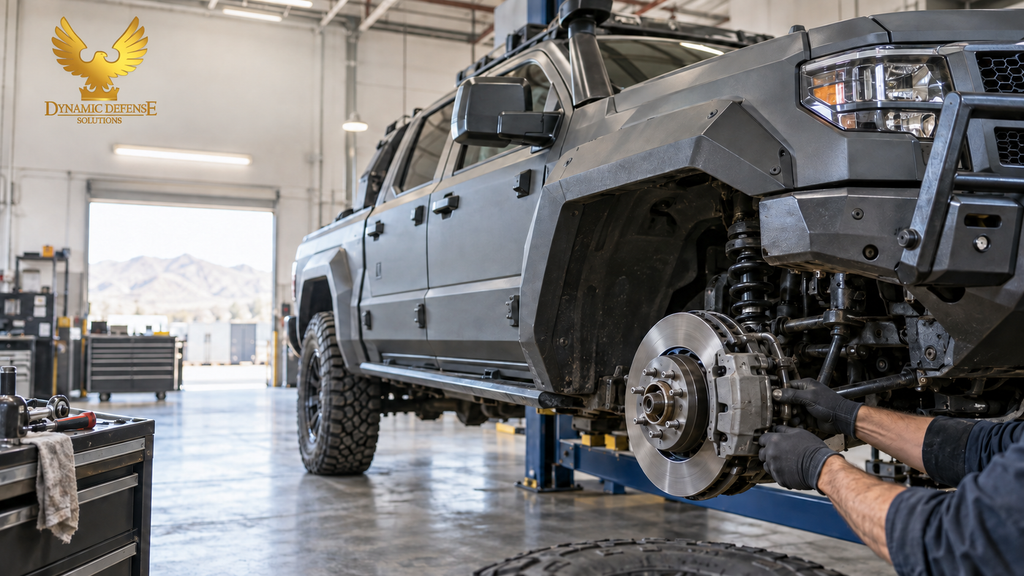
Mounting deserves equal attention. Caliper brackets, fasteners, hub interfaces, brake hoses and routing all need to suit the vehicle and withstand service conditions. A kit that physically bolts on still needs engineering review and validation for its intended use.
Good armored vehicle brake upgrades therefore start with a matched system and a clear fitment plan. A caliper photo or piston count is not enough information for a purchase decision.
The Questions a Serious Brake Supplier Should Answer
Before ordering, a manufacturer or conversion workshop should be able to discuss the following with its supplier:
- What are the completed vehicle’s mass and front/rear axle loads?
- Which exact vehicle variant, model year, hubs and wheel specifications are involved?
- What disc dimensions, pad options and caliper configuration are proposed?
- Has clearance been checked against the intended wheels?
- Are mounting parts, hoses and service items included?
- What operating conditions and loads informed the recommendation?
- Which installation and validation work remains the converter’s responsibility?
The answers help distinguish a documented proposal from a generic “heavy-duty” label. They also make future maintenance easier: the operator needs to identify replacement pads, discs and other service parts without reconstructing the original project years later.
For international buyers, clear drawings, part references and scope of supply are particularly valuable. They reduce the chance of discovering a wheel-clearance or mounting problem after components have arrived at the workshop.
Installation Is Followed by Validation
The installed system should be checked on the finished vehicle, at representative loads. That means confirming mechanical clearances, hose movement through steering and suspension travel, pedal operation, leaks and correct installation before controlled braking evaluation.
Testing should then address the vehicle’s real use. Cold braking, repeated stops and loaded operation can reveal different issues. Where applicable, the converter also needs to assess brake balance and the behaviour of ABS and stability systems. The test plan and any formal compliance requirements depend on the vehicle and the market in which it will operate.
A component’s published specification is evidence about that component. It is not proof that the complete converted vehicle meets a particular braking requirement. This distinction matters whenever armored vehicle brake upgrades are described in a quotation, technical submission or customer handover.
How Dynamic Defense Solutions Supports Protected Vehicle Projects
Dynamic Defense Solutions supplies specialized armored vehicle components for international projects. For braking requirements, DDS can work with manufacturers, converters and workshops to identify the vehicle configuration and source a relevant braking solution alongside other components where a project calls for them.
The most useful inquiry includes the base vehicle details, expected finished weight, axle loads if available, wheel specifications, protection build and intended operating conditions. With that information, the discussion can move beyond a generic kit request toward fitment and project requirements that can actually be checked.
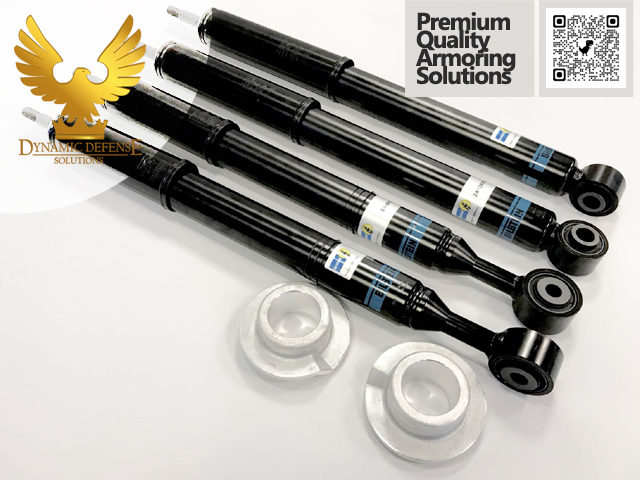
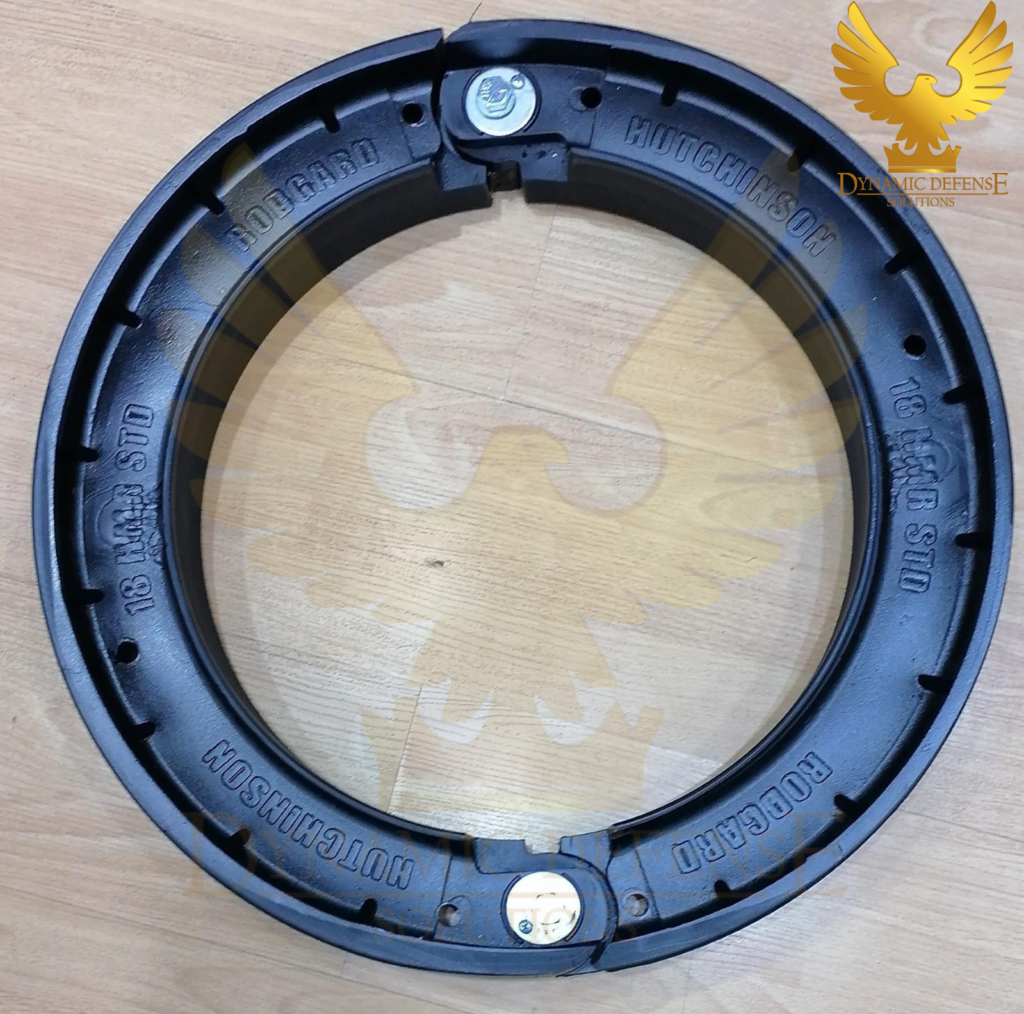
DDS can also support related component requirements, including suspension and run-flat systems, when those parts form part of the same protected-vehicle build. Each selection should be assessed for the particular vehicle rather than assumed compatible because it is marketed for armored use.
Conclusion
The most effective armored vehicle brake upgrades begin with the finished vehicle, not a catalogue image. Added mass changes the energy brakes must manage; load distribution, repeated stops, wheels, tyres and electronic systems shape the final solution.
If you manufacture or convert protected vehicles, contact Dynamic Defense Solutions with your vehicle details and project requirements. We can discuss suitable braking components and related supply needs for your build.
Send Us Your Inquiries Today
SIMILAR PRODUCTS
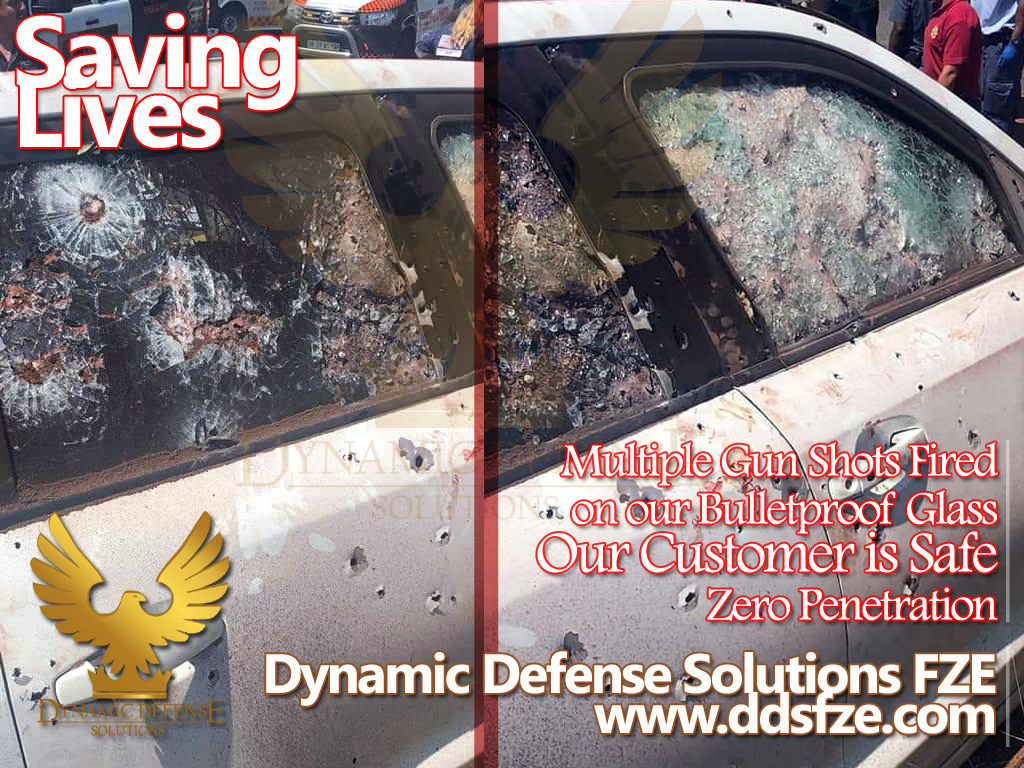
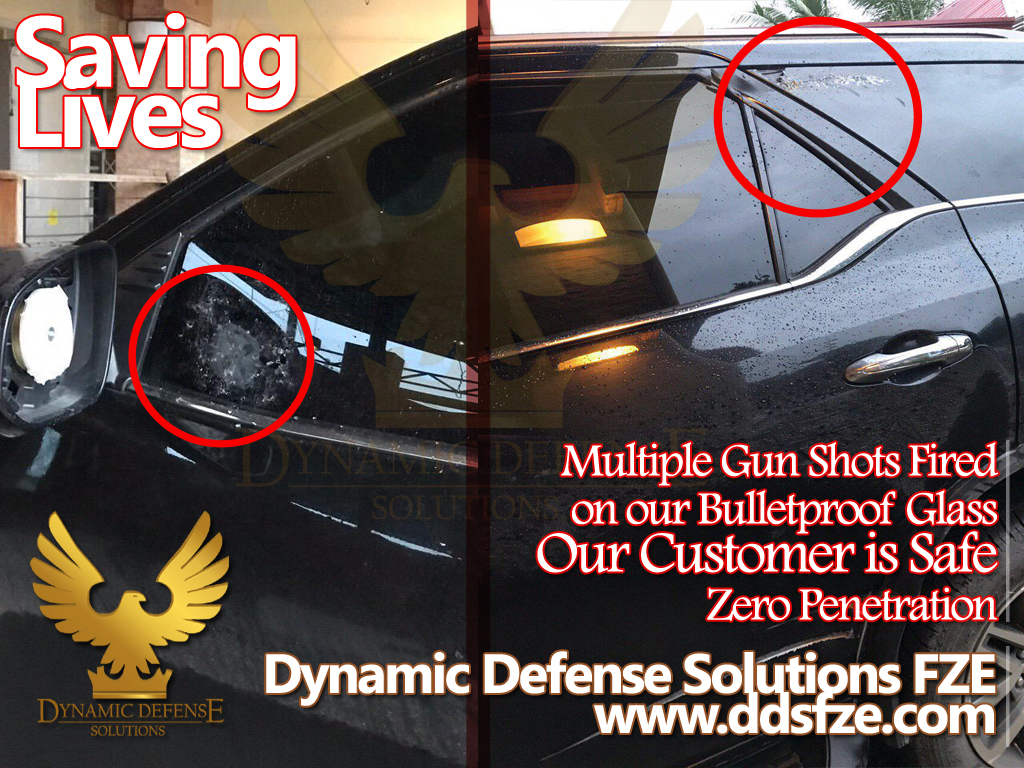
SUCCESSFULL STORIES
LOGISTICS SERVICES
Supply Chain is core of our operational efficiency providing logistics services anywhere in the world for Armored cars and Armored cars parts. To date we have successfully shipped our products to many countries around the Globe. Our supply chain is supported by a dedicated team of highly capable and experienced logistic professionals. Offering freight by air, land or sea within efficient time frame
HAVE SUCCESSFULLY SHIPPED OUR ARMORED CARS PARTS TO MANY COUNTRIES AROUND THE GLOBE

RELATED BLOGS
Armored Vehicle Parts Ukraine: Complete Guide for TLC 76, 78, 79, Hilux & L200
Armored Vehicle Suspension Systems: Why They Matter More Than You Think
Prado 250 Armored Car Parts & Protection Kit