

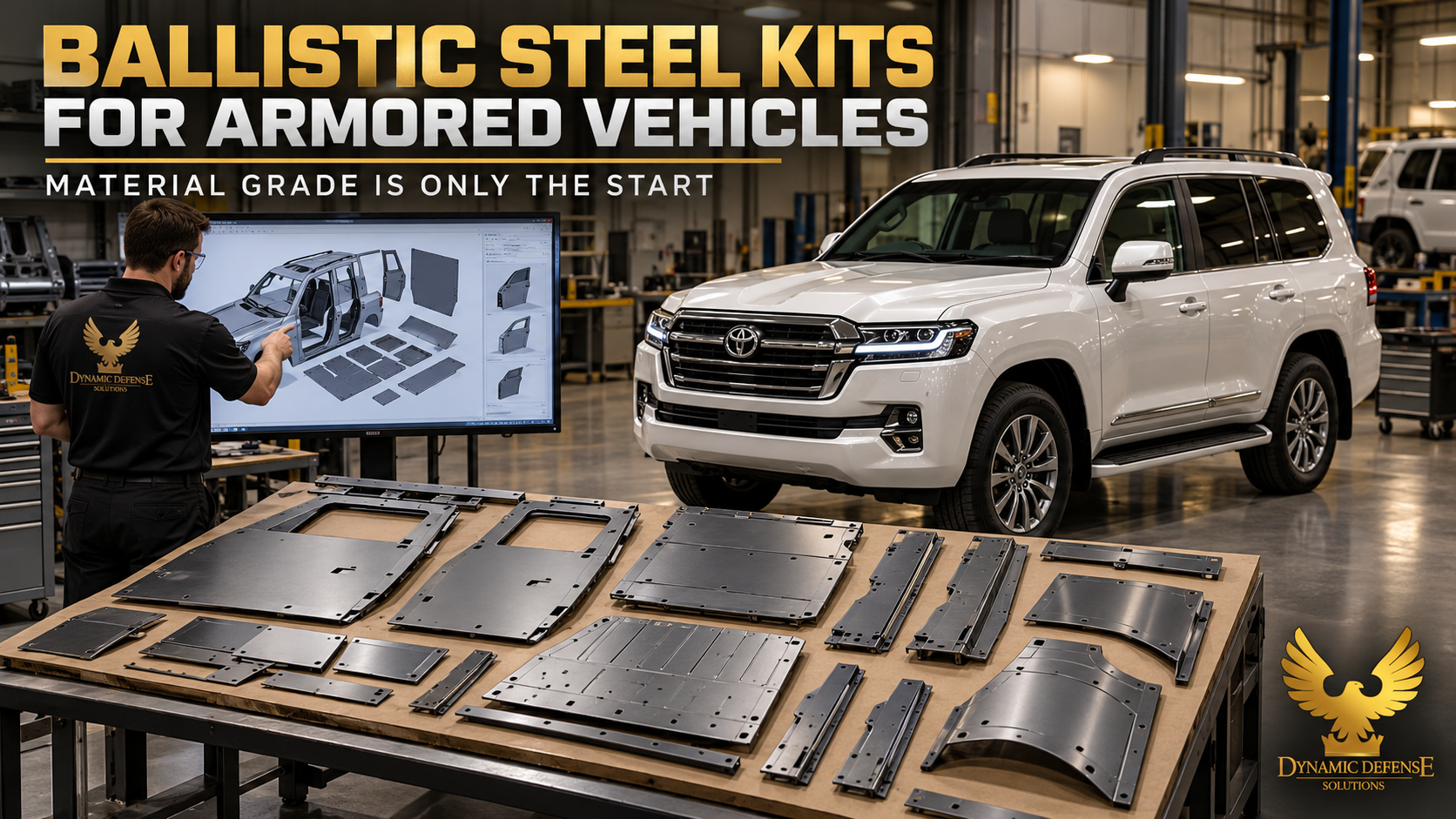
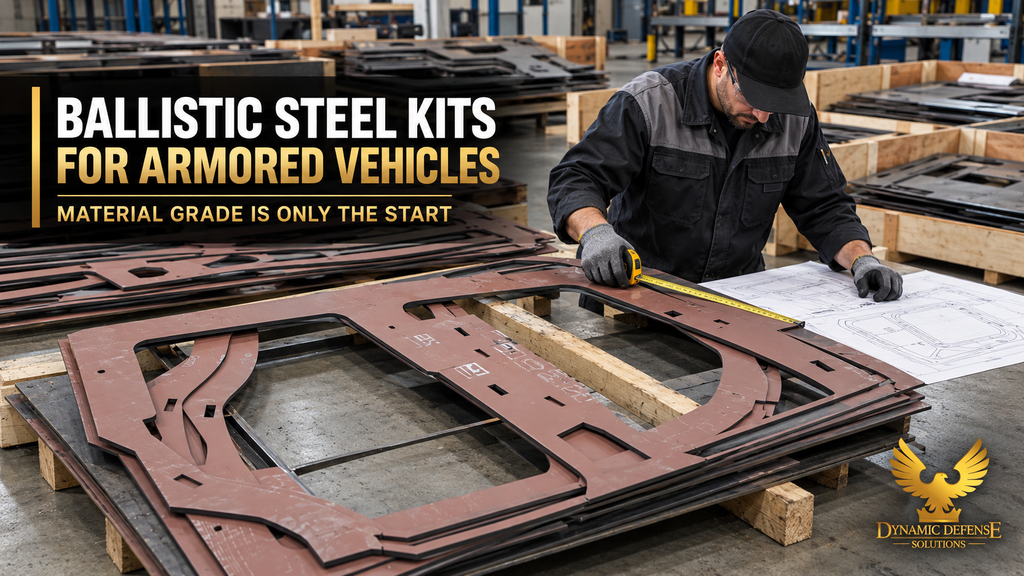
Ballistic Steel Kits for Armored Vehicles: From Verified Material to Correct Fitment
Ordering protection steel by hardness or thickness alone may appear straightforward. In practice, however, the steel plate is only one part of an effective vehicle-protection structure.
Material certification, plate thickness, vehicle-specific drawings, cutting quality, formed components, protected overlaps and installation procedures all influence the finished result. A certified plate can perform as intended during material testing yet still be used incorrectly inside a vehicle.
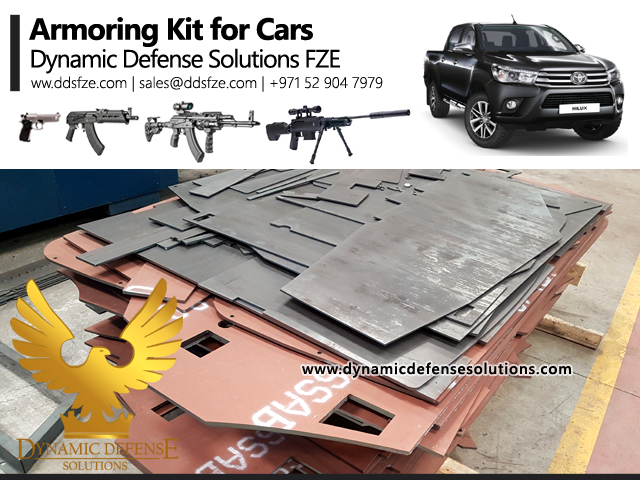
That is why ballistic steel kits for armored vehicles should be developed as engineered component packages—not simply as collections of steel sheets.
For armoring companies, vehicle converters and protected-mobility integrators, the commercial value of a pre-cut kit comes from reducing fabrication time while maintaining material traceability and consistent fitment.
Material Grade Is Only the Starting Point for Ballistic Steel Kits for Armored Vehicles
Protection steels are commonly described using their nominal hardness. Grades around 500 HBW are widely used in vehicle protection because they combine high hardness with the toughness required for demanding applications.
However, “500-grade steel” is not a complete specification.
For example, SSAB currently lists Armox 500T with a hardness range of 470–540 HBW, while Ramor 500 is listed at 490–560 HBW. These products also have defined thickness ranges, mechanical properties, delivery conditions and processing recommendations.
A buyer should therefore confirm:
- Exact manufacturer and steel grade
- Plate or sheet thickness
- Delivered hardness range
- Production batch or heat number
- Mechanical-property documentation
- Surface and dimensional tolerances
- Relevant ballistic test documentation
- Processing and welding recommendations
Two steels with a similar nominal hardness are not necessarily interchangeable without an engineering review. Their toughness, chemical composition, flatness, thickness tolerance and processing behaviour may differ.
The selection of ballistic steel kits for armored vehicles should begin with the required threat, vehicle design and approved material specification—not with a generic hardness description.
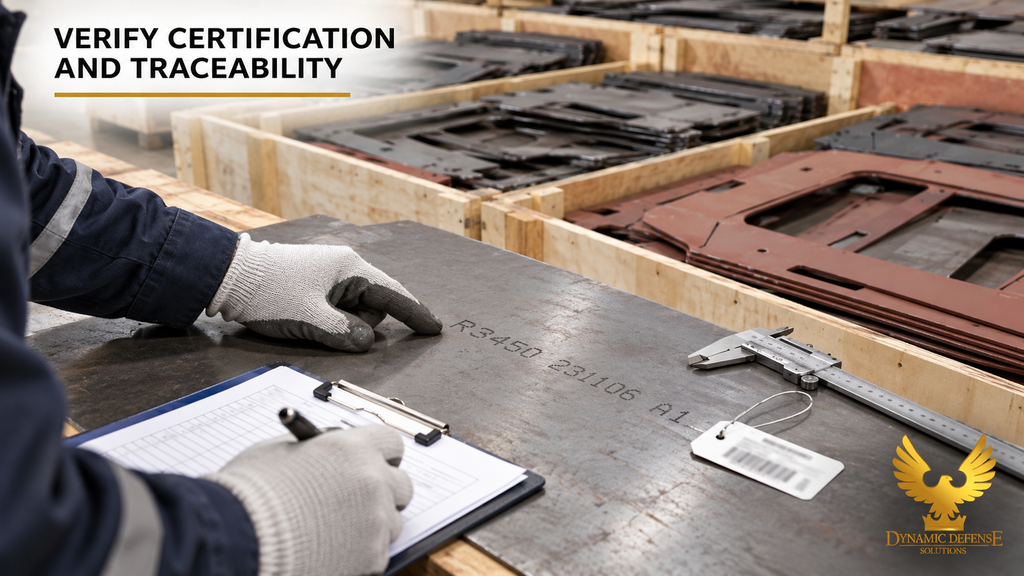
Certification and Traceability Must Follow the Material
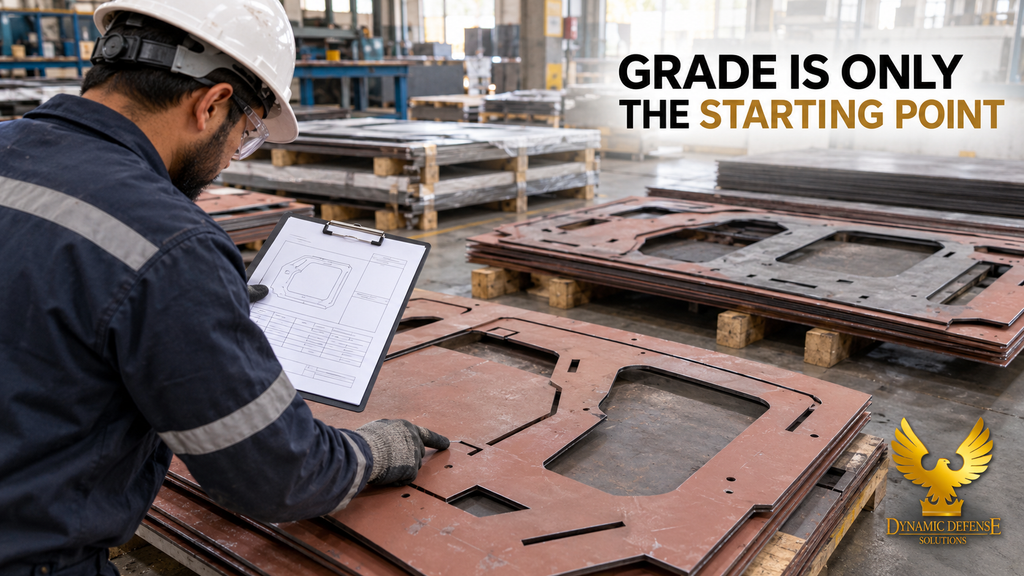
Traceability connects a finished component to the original steel batch and its supporting documentation.
Where possible, supplied panels should remain identifiable through a batch number, heat number, component code or controlled production record. This allows the purchaser to connect the delivered parts to the appropriate mill documentation and available ballistic test evidence.
SSAB states that ballistic certifications can be included with test certificates for relevant Armox orders, providing traceability between the supplied protection plate and its documented properties.
This documentation should not be separated from the physical material during cutting, packing or subcontracted processing.
A practical traceability system for ballistic steel kits for armored vehicles may include:
- Material receipt records
- Mill test certificates
- Ballistic test reports where applicable
- Heat or batch identification
- Cutting-plan references
- Individual panel numbers
- Inspection records
- Packing lists connected to the vehicle kit
It is also important to understand what the certification actually covers.
A ballistic test report for a steel grade and thickness confirms performance under the stated test configuration. It does not automatically certify a completed vehicle, door, roof, floor or passenger compartment.
Complete-vehicle protection depends on the design and integration of the steel, ballistic glass, joints, overlaps, mounting points and other protective components. VPAM’s vehicle guideline exists separately from its general material and product testing principles, reflecting the distinction between testing a material and evaluating a protected vehicle.
Steel Thickness Must Match the Actual Requirement
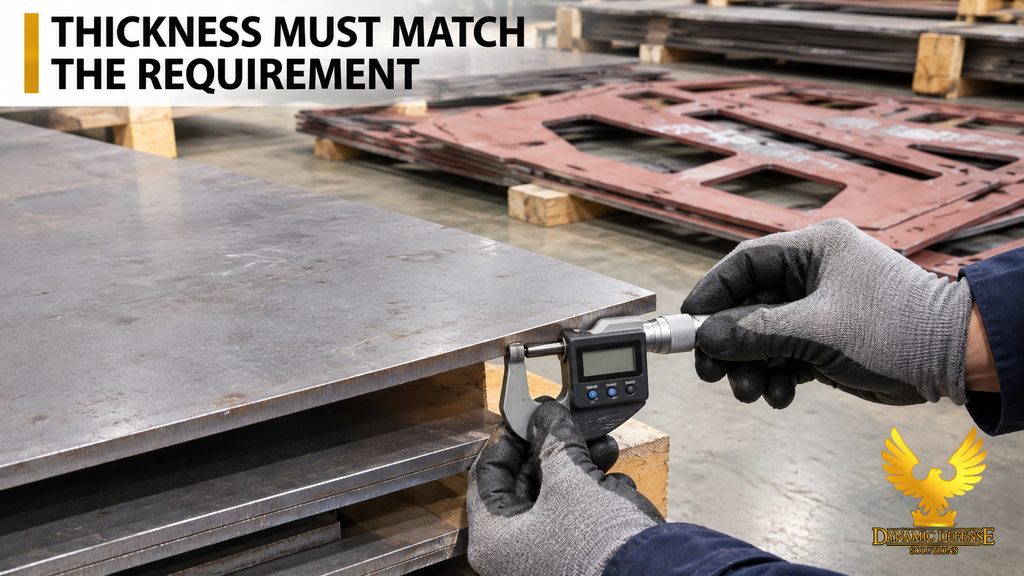
Increasing steel thickness normally adds weight, while reducing thickness can affect the intended protection performance. The objective is not simply to use the thickest available plate but to specify a material-and-thickness combination supported for the project requirement.
Thickness selection should consider:
- Required protection specification
- Steel grade and documented performance
- Test conditions
- Angle and geometry of the protected area
- Whether the panel is flat or formed
- Support and mounting arrangement
- Permitted vehicle weight
- Interaction with surrounding components
The hardness number alone does not define an approved protection level. A buyer should not assume that every plate described as 500 HBW will provide the same result at the same thickness.
For example, SSAB offers several protection-steel grades with different hardness and thickness ranges. The company also states that customers remain responsible for verifying required plate thickness and its suitability for their application.
Accordingly, ballistic steel kits for armored vehicles should be quoted against a defined material specification and thickness schedule.
Where different areas of a vehicle require different components or thicknesses, each panel should be identified clearly. Mixing visually similar plates during installation can create avoidable quality-control problems.
Correct Fitment and Protective Overlaps Matter
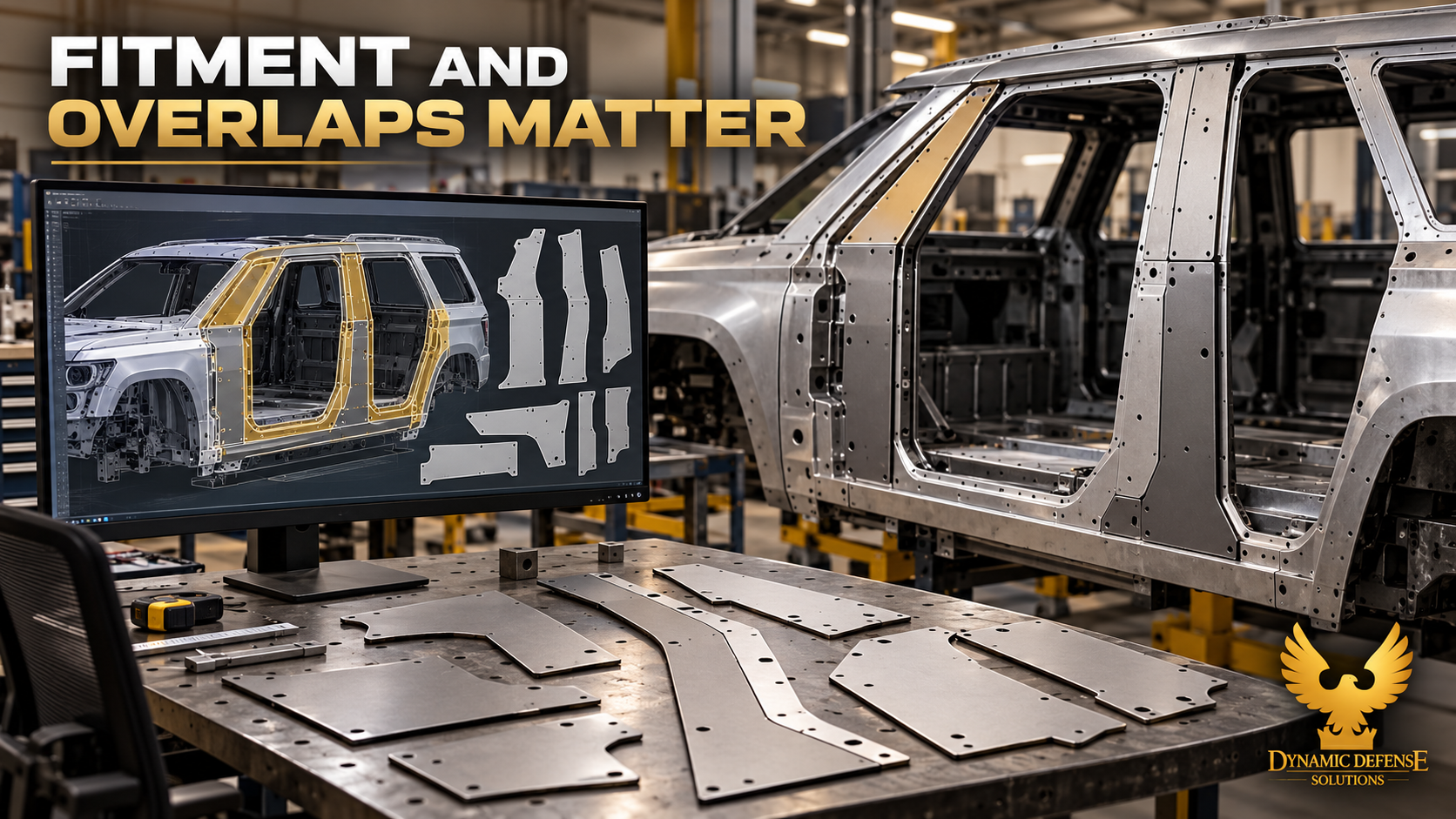
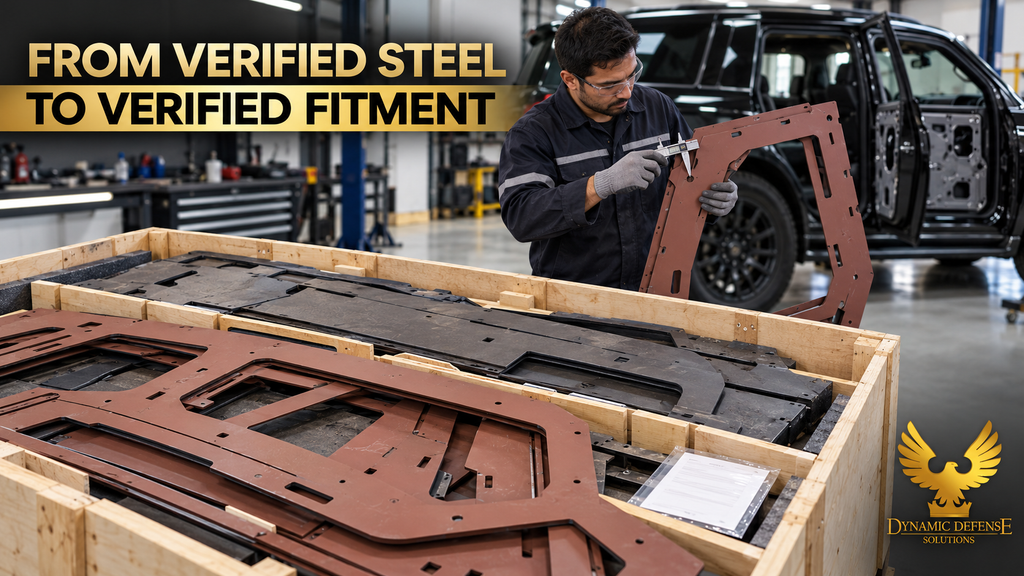
A pre-cut steel kit is commercially useful because it can reduce measuring, templating and cutting work at the receiving workshop. But this advantage depends on the accuracy of the vehicle data and cutting drawings.
The supplier may need:
- Exact make, model and production year
- Body style and wheelbase
- Left- or right-hand-drive configuration
- Door and window arrangement
- Interior and seat configuration
- Photographs of the stripped vehicle
- OEM body drawings where available
- Physical templates or sample components
- Any vehicle-specific modifications
Model names alone can be insufficient. A manufacturer may change door stampings, pillar profiles, wiring routes, brackets or interior packaging without making the difference obvious from the outside.
CAD data for ballistic steel kits for armored vehicles should also account for the intended installation method. Panels may require mounting holes, relief cuts, cable clearances, formed edges or separate closure pieces.
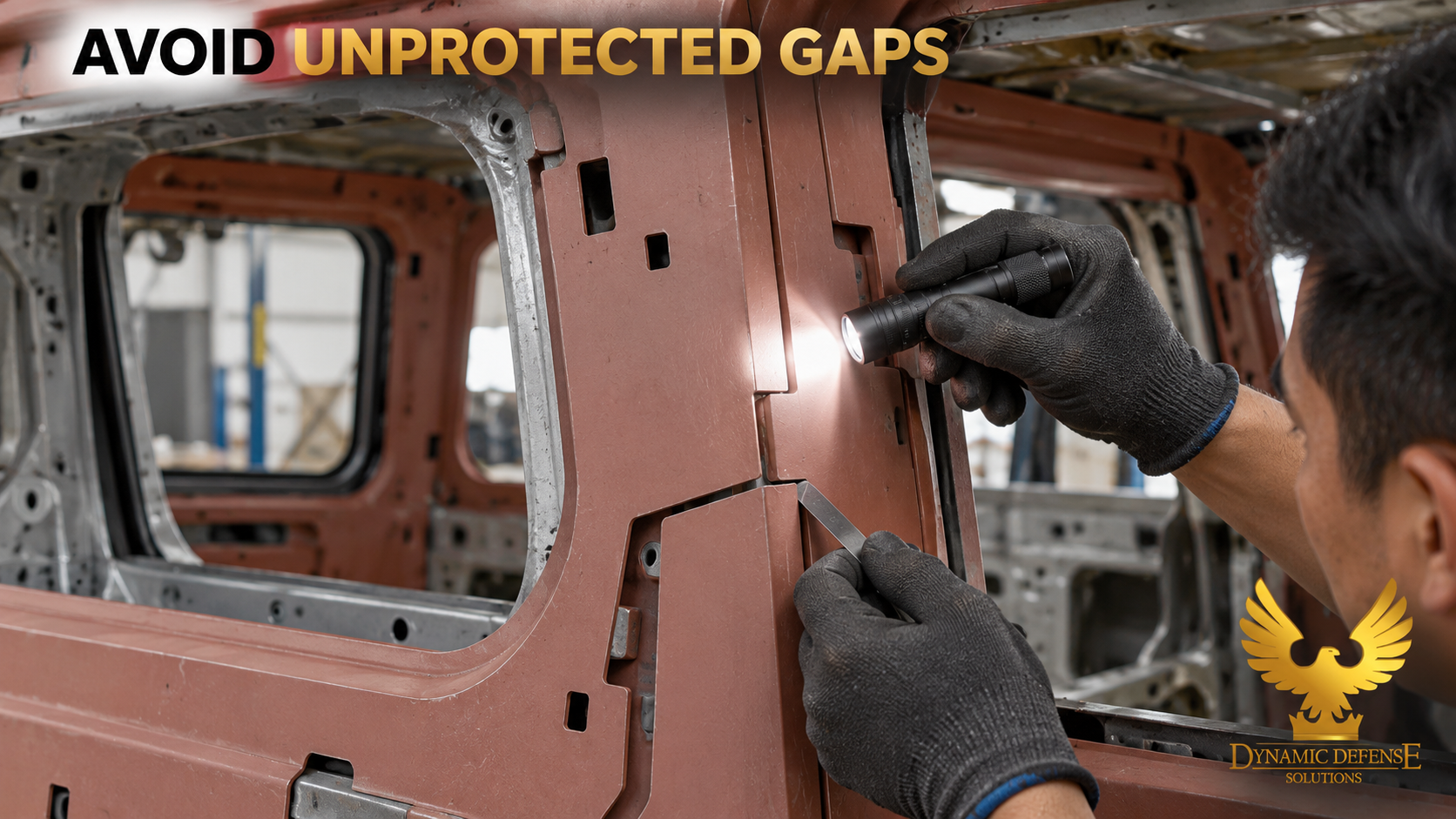
Protection continuity is particularly important around:
- Door apertures
- A-, B- and C-pillars
- Roof-to-pillar connections
- Floor edges
- Firewall interfaces
- Rear bulkheads
- Wheel-arch areas
- Ballistic-glass frames
Simply cutting each panel to the visible opening can leave lines where adjacent components do not provide sufficient continuity. The installer must follow the project’s approved overlap and joint design.
At the same time, excessive overlap adds unnecessary mass and can interfere with trim, window mechanisms, locks, wiring and door operation. The correct arrangement must balance protection continuity, installation space and vehicle weight.
Cutting, Forming and Welding Require Process Control
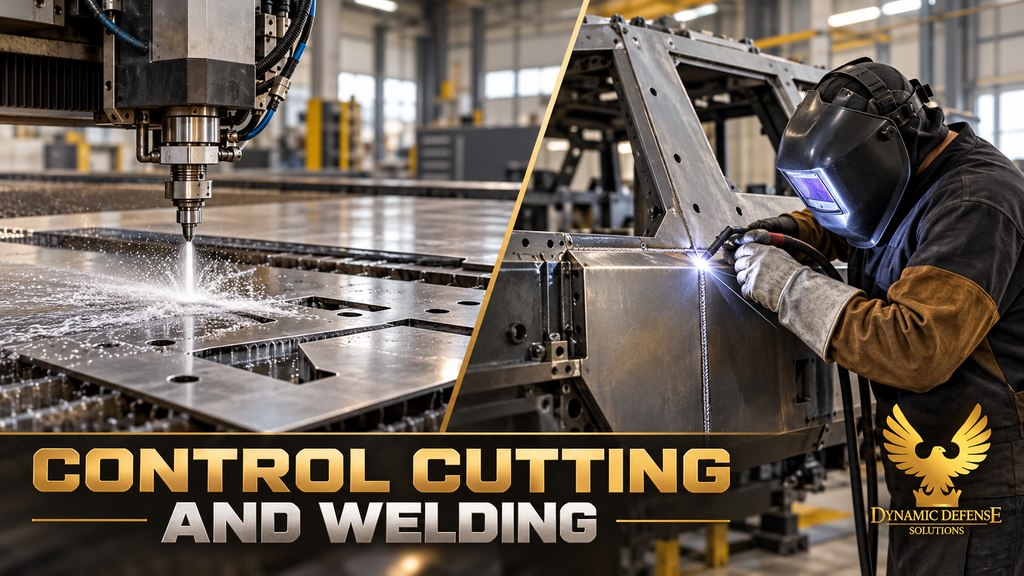
High-hardness protection steel must be processed according to the material manufacturer’s recommendations.
Depending on the grade and thickness, suitable cutting methods may include abrasive waterjet, laser, plasma or controlled thermal cutting. SSAB’s current Armox workshop guidance specifies different cutting recommendations according to grade and thickness rather than treating every protection plate in the same way.
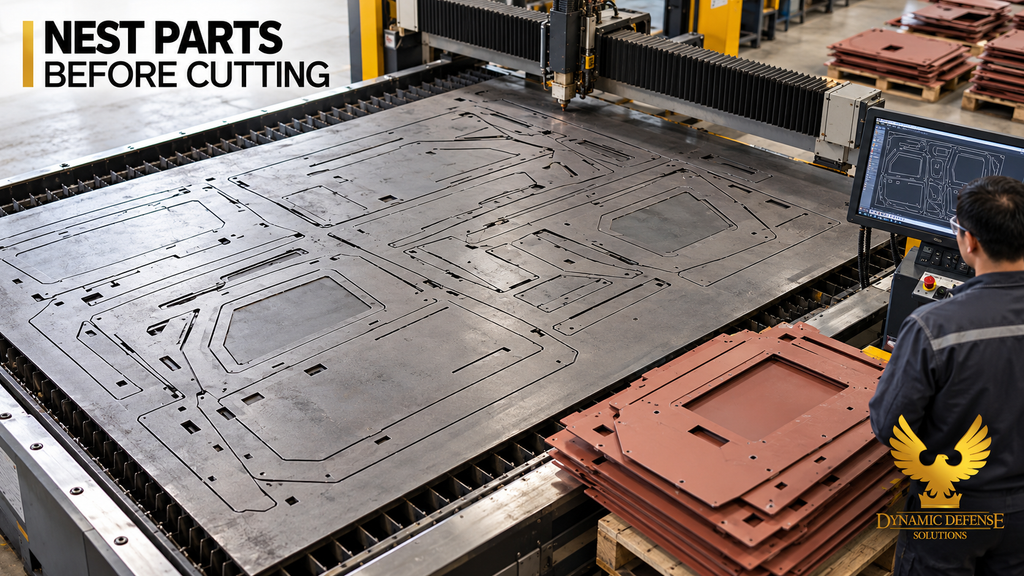
Poorly controlled thermal processing can affect the area close to the cut edge. Edge quality, heat input, cooling conditions and any required preheating therefore need to be considered.
The same principle applies to welding.
Recommended heat input, consumables, joint preparation and preheat conditions depend on the material and fabrication arrangement. SSAB notes that welding heat input affects the mechanical properties of the joint and recommends clean edges and good component fit to reduce stress and cracking risk.
Fabrication control for ballistic steel kits for armored vehicles should include:
- Verified cutting files and revision numbers
- Approved cutting method
- Dimensional inspection after cutting
- Edge inspection
- Controlled bending radius and direction
- Correct joint preparation
- Suitable welding consumables
- Manufacturer-recommended heat control
- Inspection of completed joints
- Protection against corrosion after fabrication
Quenched protection steels should not be subjected casually to further heat treatment. Both Armox 500T and Ramor 500 are supplied in heat-treated conditions, and their product information states that they are not intended for further heat treatment.
If panels require bending or forming, the minimum radius, tool condition and rolling direction should be reviewed for the selected grade.
Added Steel Weight Affects the Whole Vehicle
Protection steel provides structural coverage, but every panel adds permanent vehicle mass.
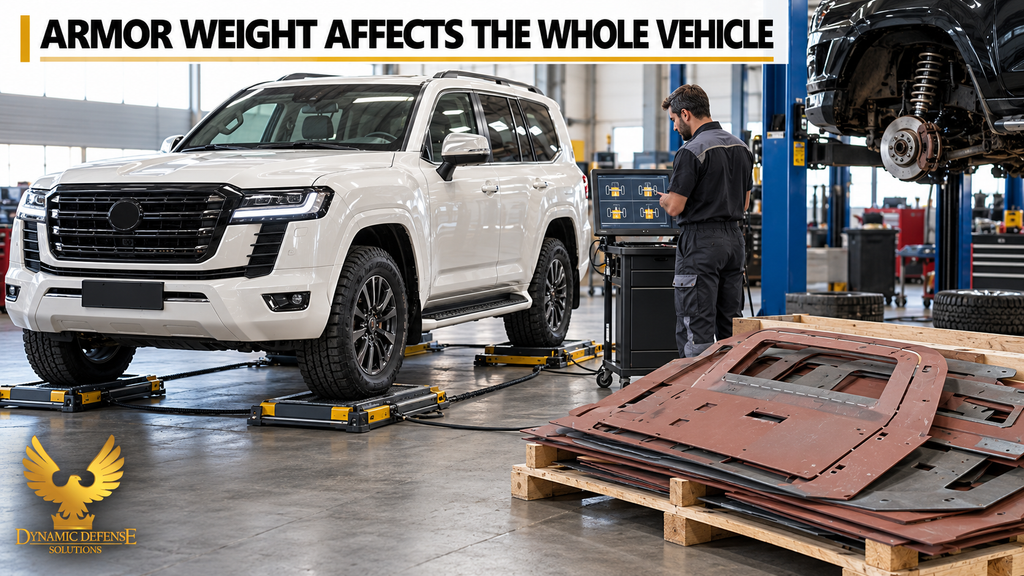
The final effect depends on steel thickness, total protected area, ballistic-glass weight and additional reinforcements. Concentrated weight in doors and around the passenger cell can influence much more than payload capacity.
When planning ballistic steel kits for armored vehicles, manufacturers should also consider:
- Front- and rear-axle loads
- Door weight and hinge capacity
- Door-frame reinforcement
- Suspension spring rates and damping
- Brake performance
- Tyre and wheel load ratings
- Run-flat compatibility
- Vehicle ride height
- Centre of gravity
- Gross vehicle and axle ratings
A well-nested cutting plan can reduce material waste, but it does not reduce the weight installed in the vehicle. Weight control comes from an engineered protection design using the correct materials and thicknesses in the appropriate locations.
Completed vehicles should be weighed by axle after installation. The resulting data helps confirm whether suspension, braking, wheels and tyres remain suitable for the actual operating mass.
Higher-rate springs or stronger hinges also do not automatically increase the vehicle manufacturer’s weight rating. The vehicle must be assessed as a complete system.
How DDS Supports Project-Specific Steel Kits
Dynamic Defense Solutions supplies specialized components for protected-vehicle manufacturers, armoring companies, integrators and qualified workshops.
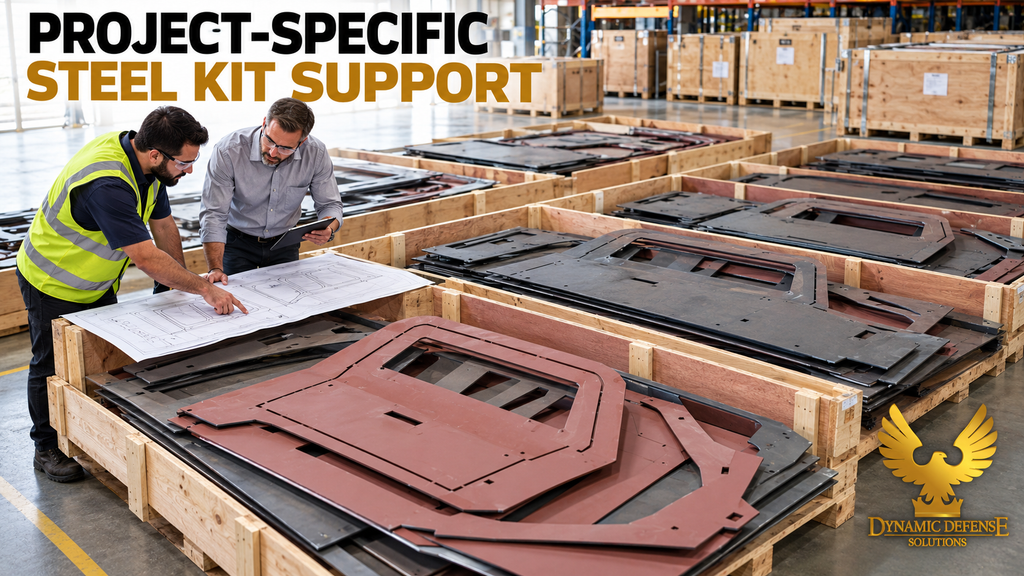
DDS can support ballistic steel kits for armored vehicles using project information such as the base vehicle, required steel specification, thickness schedule, body configuration and available drawings or templates.
Depending on the project, support may include:
- Ballistic steel sheets or plates
- Vehicle-specific pre-cut panels
- Identified component sets
- Material documentation
- Packing organized by installation area
- Related ballistic glass
- Heavy-duty machined hinges
- Suspension, braking and run-flat solutions where relevant
DDS should be positioned as the component supply and project-support partner—not as the company responsible for certifying every completed conversion.
Final vehicle protection depends on the armoring design, installation quality and validation performed by the manufacturer or integrator. Supplying certified material does not, by itself, confirm a particular complete-vehicle protection level.
For an accurate steel-kit proposal, buyers should provide the vehicle make, model, year, body configuration, protection requirement, preferred steel grade, thickness schedule, quantity and available CAD files or physical templates.
Conclusion
Material grade is essential, but it is not the complete specification. Effective ballistic steel kits for armored vehicles require verified steel, the correct thickness, controlled traceability, accurate vehicle-specific fitment, suitable overlaps and disciplined fabrication.
When these elements are handled together, pre-cut kits can reduce workshop time, improve repeatability and simplify component control across multi-vehicle projects.
Armored-vehicle manufacturers, conversion companies, security-vehicle builders, integrators and workshops can contact Dynamic Defense Solutions to discuss their steel-kit and related component requirements.
Send Us Your Inquiries Today
SIMILAR PRODUCTS
SUCCESSFULL STORIES
LOGISTICS SERVICES
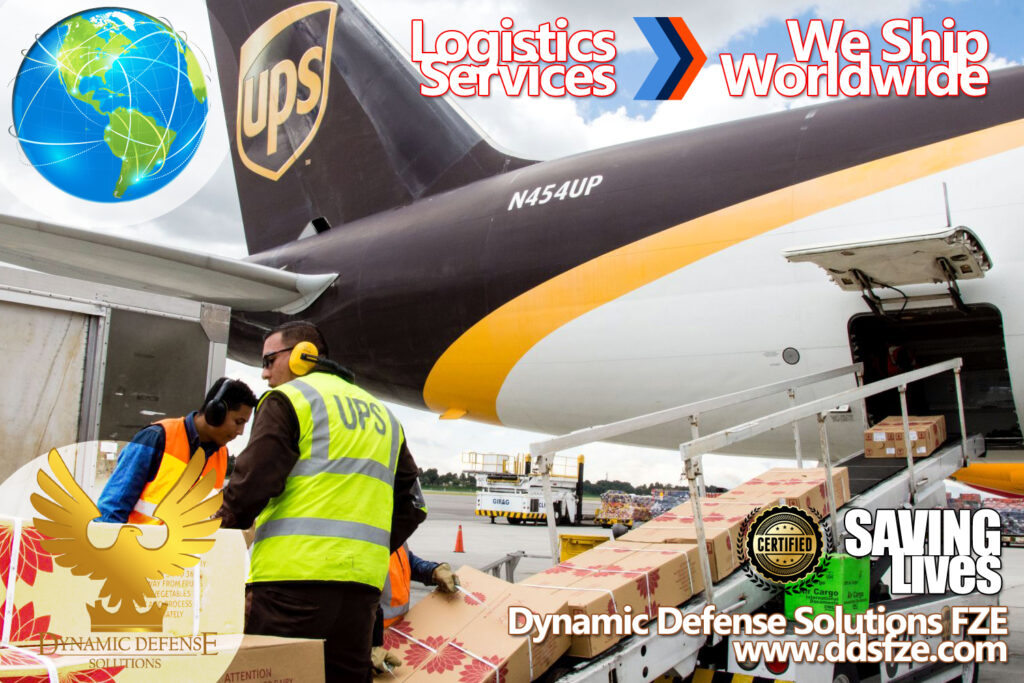
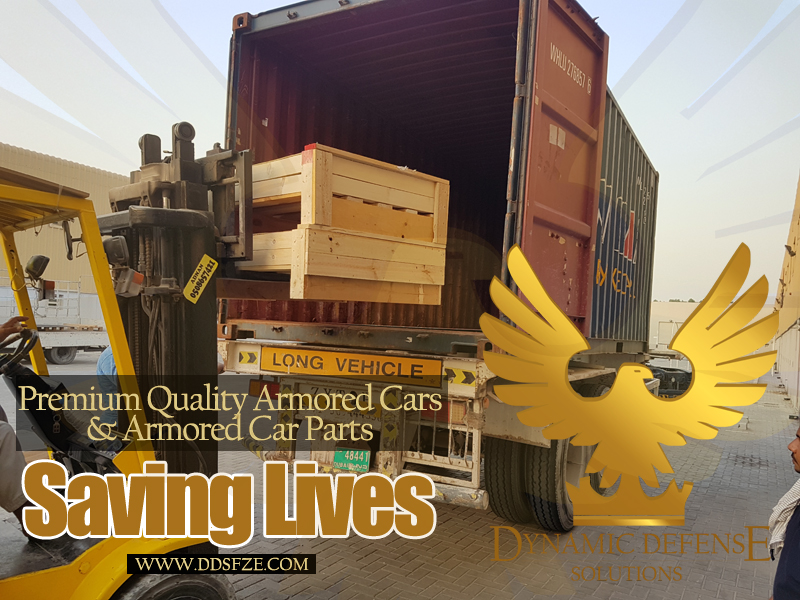
Supply Chain is core of our operational efficiency providing logistics services anywhere in the world for Armored cars and Armored cars parts. To date we have successfully shipped our products to many countries around the Globe. Our supply chain is supported by a dedicated team of highly capable and experienced logistic professionals. Offering freight by air, land or sea within efficient time frame
HAVE SUCCESSFULLY SHIPPED OUR ARMORED CARS PARTS TO MANY COUNTRIES AROUND THE GLOBE


RELATED BLOGS
Armored Vehicle Parts Ukraine: Complete Guide for TLC 76, 78, 79, Hilux & L200
Armored Vehicle Suspension Systems: Why They Matter More Than You Think
Prado 250 Armored Car Parts & Protection Kit